
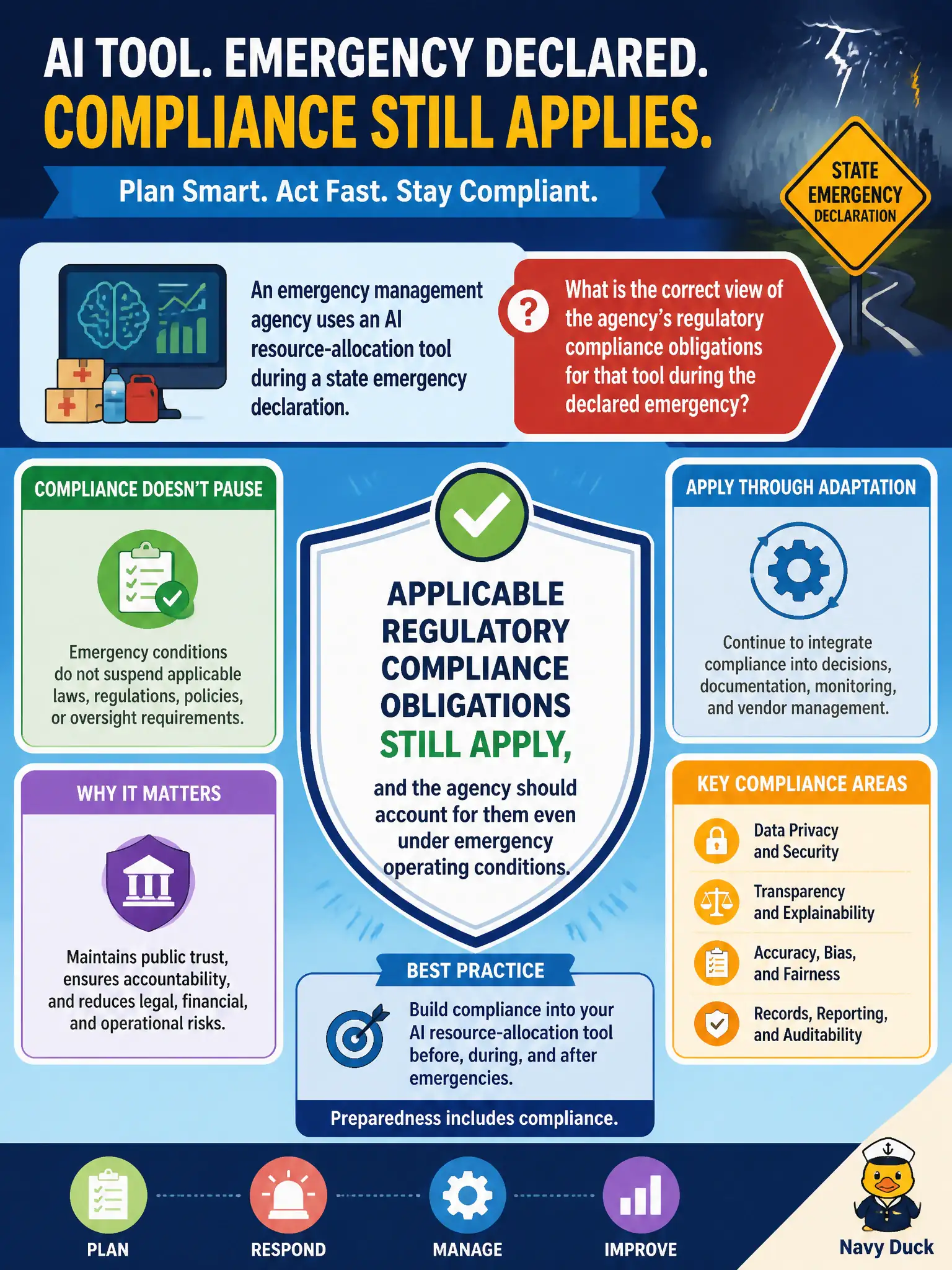
An emergency management agency uses an AI resource-allocation tool during a state emergency declaration. What is the correct view of the agency's regulatory compliance obligations for that tool during the declared emergency?
Select an answer to reveal the explanation.
Short Explanation
Emergency powers speed up decisions, not erase the rulebook. Think of it like a hospital in a mass-casualty event: triage moves fast, but the chart still gets documented and the rules of care still apply. An AI resource-allocation tool used under a declaration still has to answer to the same compliance obligations the agency always carries.
Full Explanation
Regulatory compliance obligations attach to the AI system's use and its impact on the public, not to the administrative status of an emergency declaration, so a declared emergency does not create a compliance exemption. An emergency management agency should design its AI governance so that obligations such as data handling, documentation, and oversight continue to be met even while operational tempo increases, because a resource-allocation decision made under pressure still affects real people and real accountability. Treating the declaration as a suspension of compliance conflates operational urgency with legal exemption, which is a dangerous assumption if the tool's decisions are later reviewed. Assuming obligations transfer to the declaring state agency misunderstands how compliance responsibility works; the agency operating the tool remains accountable for its own system's behavior regardless of who issued the declaration. Believing compliance obligations only resume once the declaration lifts would mean a gap in accountability during exactly the period when the tool's decisions carry the highest stakes. A scope caveat: some jurisdictions do grant limited procedural flexibility during emergencies, such as expedited approvals, but that is different from waiving compliance outright. A concrete operational check is to confirm the agency's emergency operations plan explicitly states that AI governance controls remain active during a declaration rather than being silent on the question.