
A city AI strategy office is setting requirements for AI-generated resident communications. How should accessibility compliance be treated in that governance process?
Select an answer to reveal the explanation.
Short Explanation
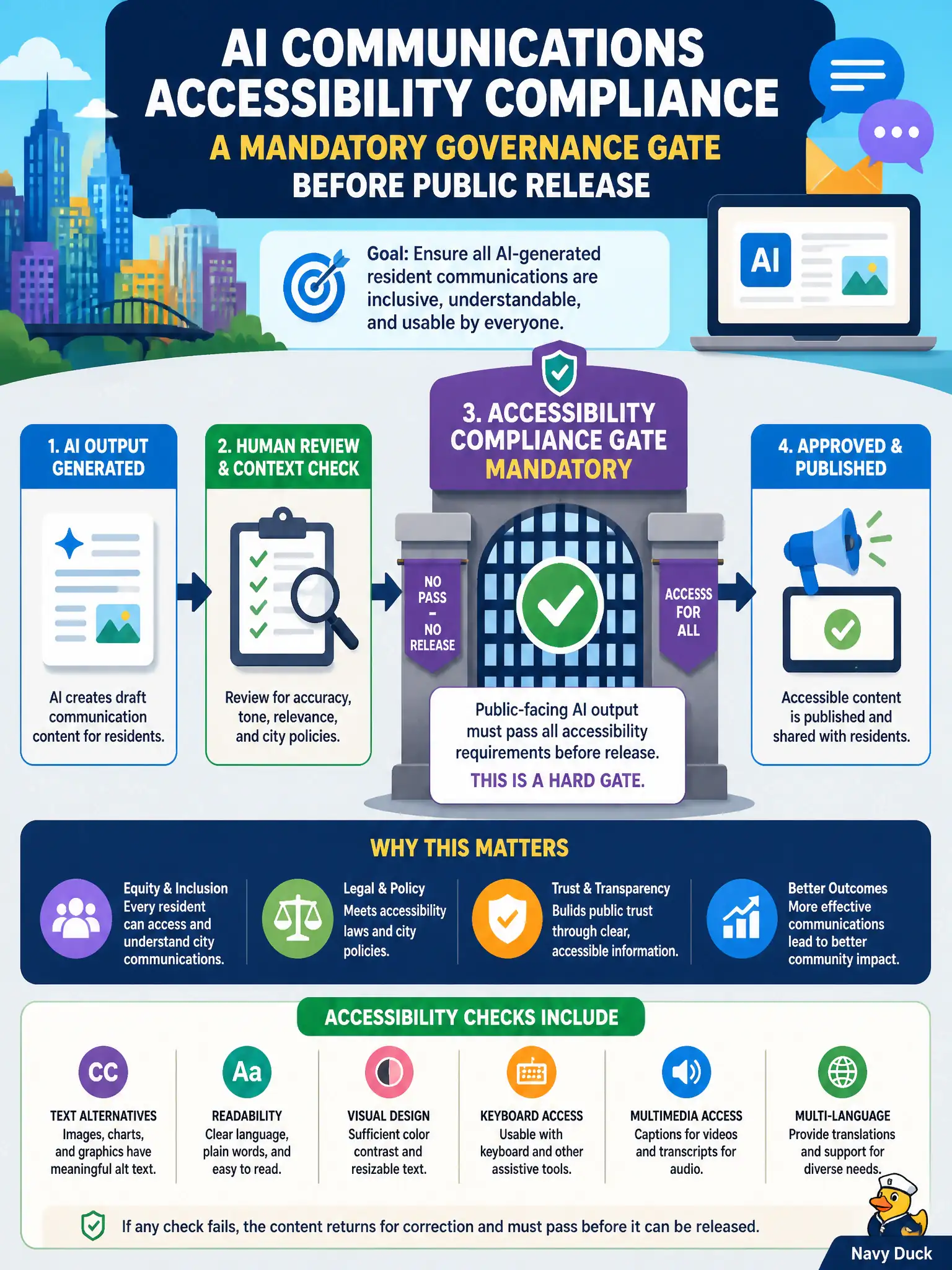
Picture accessibility like a building's ramp: nobody calls it optional once the building is open to the public. A city's AI-generated resident communications carry the same obligation, so accessibility belongs as a gate the content has to clear before it ever reaches residents, not a nice extra bolted on afterward.
Full Explanation
Governance-by-design treats legally and civically required standards, like accessibility, as mandatory checkpoints built into the release process for public-facing content, rather than optional enhancements left to individual discretion. For a city AI strategy office, that means AI-generated resident communications should be checked against accessibility requirements before publication, with release blocked if they fail. Framing accessibility as a voluntary best practice each department can adopt if time permits treats a governance obligation as a scheduling preference, which produces inconsistent compliance across departments and real risk for residents who rely on accessible formats. Extending it as a selective courtesy based on which department asks undermines the point of a citywide governance standard, since accessibility needs do not vary by which office happens to request support. Pushing it to the design team only after publication reverses the correct order entirely, since a gate that runs after release has already let noncompliant content reach the public. A scope caveat: accessibility standards themselves are typically set by existing legal frameworks the city already follows, so the governance office is enforcing an existing requirement, not inventing a new one. A concrete operational check is to require an accessibility-compliance checkbox signed off in the publication workflow before any AI-generated resident communication goes live.