
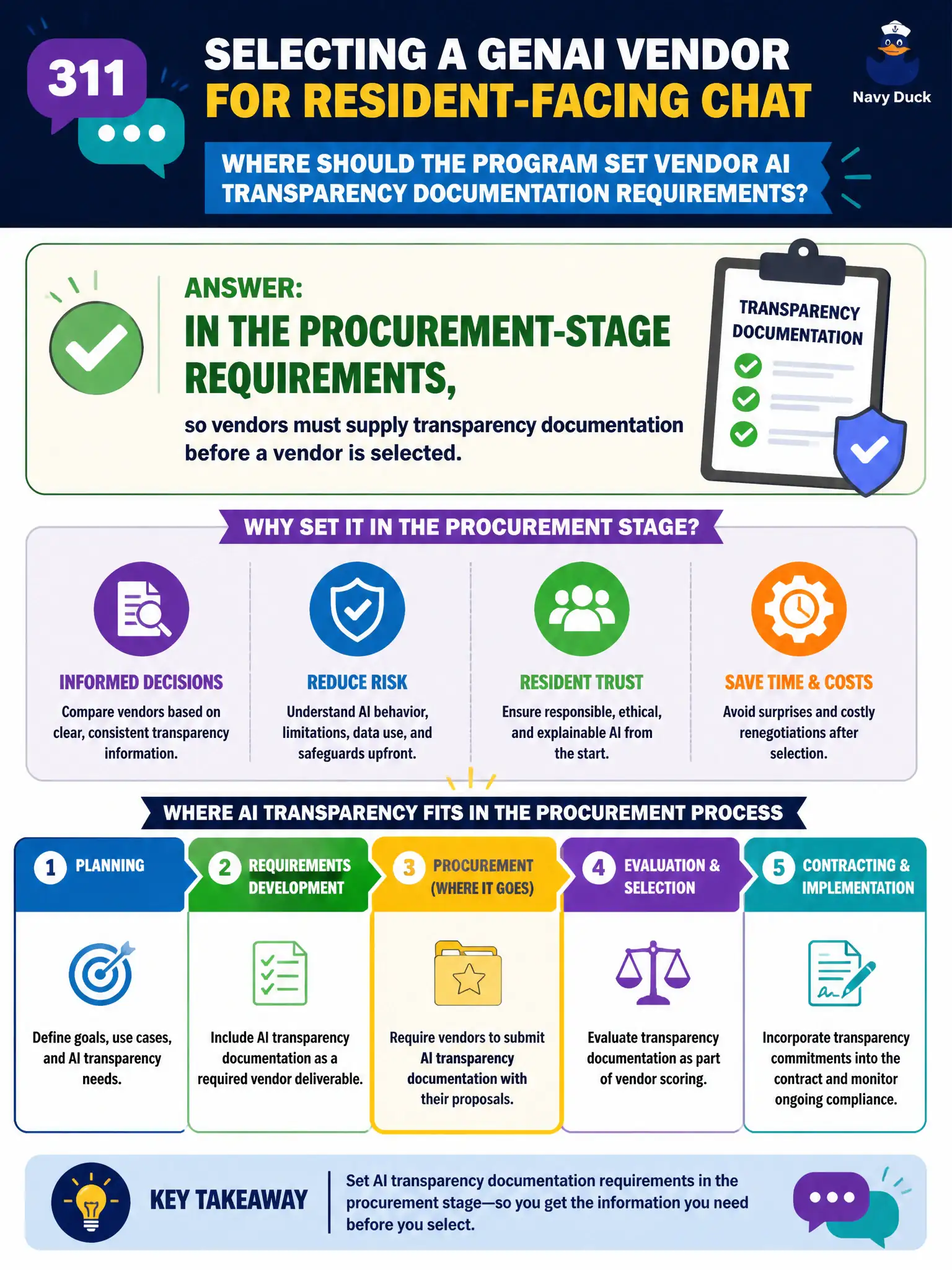
A 311 program is preparing to select a GenAI vendor for resident-facing chat. Where should the program set vendor AI transparency documentation requirements?
Select an answer to reveal the explanation.
Short Explanation
Think of procurement like a job interview: you ask the hard questions before you hire, not after the new employee already has the keys. Building transparency documentation into the procurement stage lets the 311 program compare vendors honestly and walk away from one that won't answer. Wait until after the contract's signed, and leverage is gone.
Full Explanation
Embedding AI governance requirements into procurement criteria means transparency documentation, such as how a model was trained, what data it uses, and known limitations, becomes a condition of bidding rather than a request made after a vendor already holds the contract. Setting this expectation before selection gives the 311 program comparative leverage: vendors competing for the deal have incentive to disclose, and the program can score or disqualify based on the answers. Waiting for an internal memo after contract signing addresses the wrong audience, since staff awareness does not change what the vendor is contractually obligated to disclose, and by then negotiating power has shifted to the vendor. Putting transparency information only in a user-facing disclaimer conflates informing residents with the program's own due-diligence obligation; it also assumes residents will read and evaluate documentation that procurement staff should have already vetted. A budget narrative to city council serves a funding-justification purpose, not a vendor-accountability one. A caveat: procurement language still has to be enforceable, so requirements should specify what happens if a vendor's documentation is incomplete or misleading. A concrete operational check is to require transparency documentation as a scored line item in the RFP evaluation rubric before any proposal can advance.