
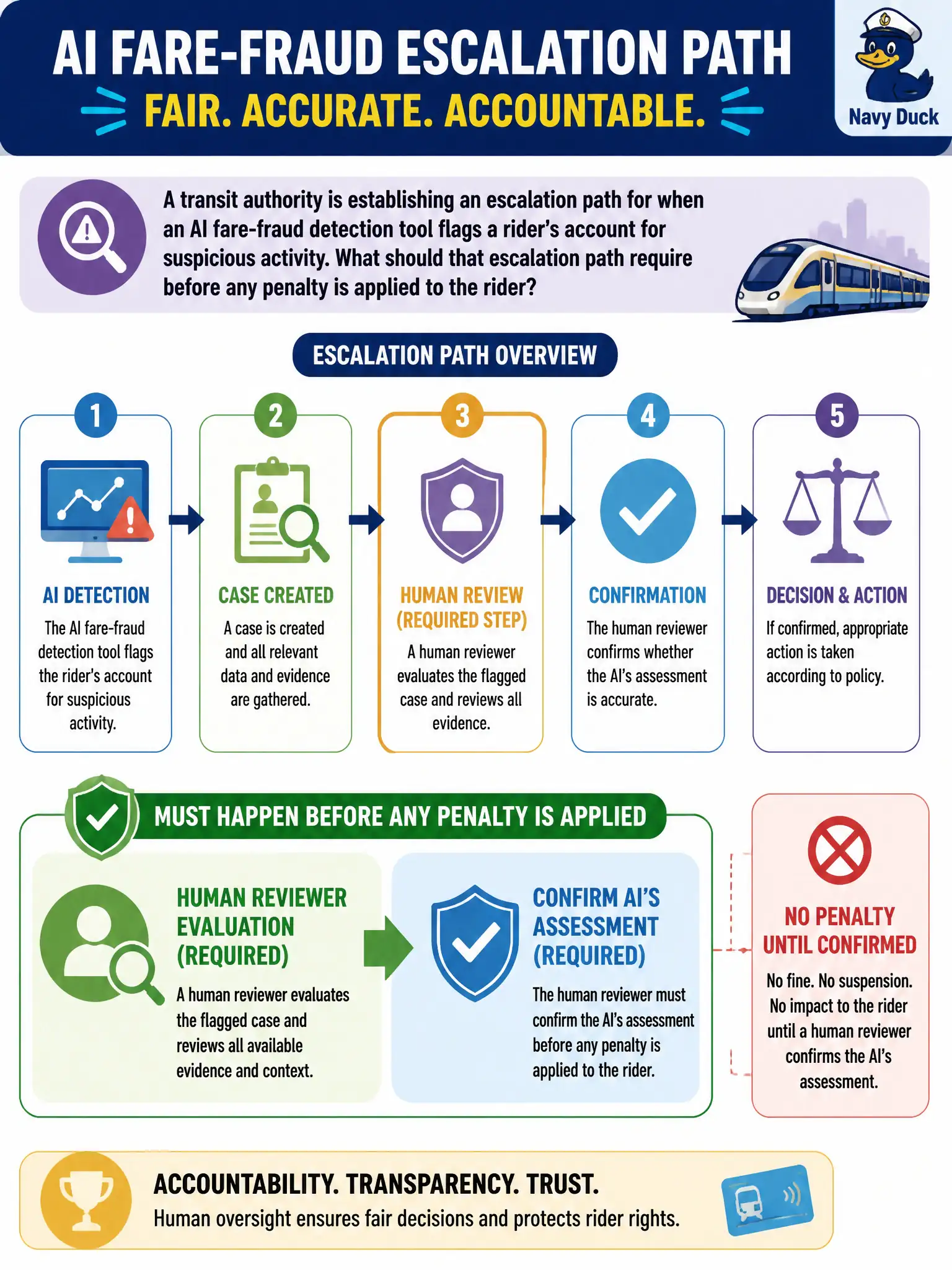
A transit authority is establishing an escalation path for when an AI fare-fraud detection tool flags a rider's account for suspicious activity. What should that escalation path require before any penalty is applied to the rider?
Select an answer to reveal the explanation.
Short Explanation
Think about a store's anti-shoplifting alarm: when it goes off, security checks the bag before anyone gets accused of stealing, they don't just fine the shopper on the spot and sort it out later. A fare-fraud flag deserves the same sequence, a human confirms what actually happened before any penalty lands on the rider, not after.
Full Explanation
A responsible escalation path routes a disputed AI flag to a human reviewer who confirms the underlying assessment before any penalty, such as a fine or suspension, is applied, because fare-fraud detection models can misread legitimate behavior, like a technical glitch in a transfer scan or a shared household fare card, as fraudulent. Applying the penalty automatically and handling disputes afterward through a separate appeals process inverts the correct sequence, since the rider bears the burden and consequence of the penalty first and has to fight to undo it, rather than the system confirming the flag is accurate before acting. Requiring the rider to proactively contest the flag places the entire burden of catching a possible AI error on the person least equipped to know it happened, since a rider often won't know they've been flagged until a penalty already appears. Applying penalties only after multiple flags treats a first flag as inherently low-risk, but a single flag can already reflect a serious and consequential misread that deserves review the first time it happens, not only once a pattern accumulates. A scope caveat: the review threshold and process can differ for low-value, easily reversible actions versus higher-consequence penalties like account suspension, but human confirmation belongs before enforcement either way. A concrete check: confirm the fare system technically holds any penalty action pending human reviewer sign-off rather than executing it immediately upon flag generation.