
A library system is deciding whether an AI content-recommendation tool that influences which titles are promoted on its public catalog homepage needs a transparency statement about how it filters or promotes titles. What consideration should most inform this decision?
Select an answer to reveal the explanation.
Short Explanation
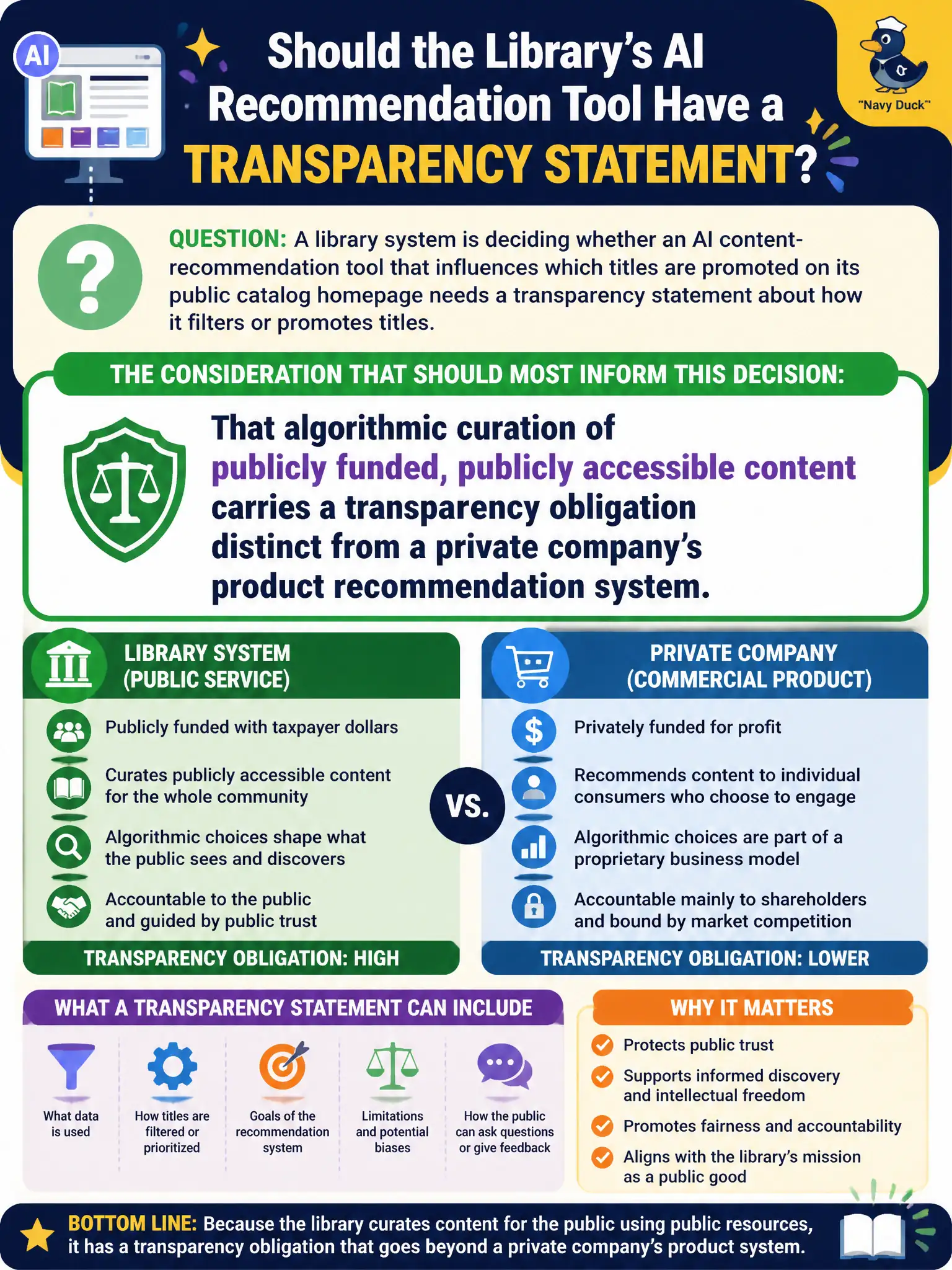
Think about a private bookstore curating its window display to sell more copies versus a public library shaping what patrons see at the door: one's a business choice, the other touches an institution built on open access. Because the library's homepage is publicly funded, how its algorithm decides what gets promoted deserves an openness a private recommendation engine was never expected to provide.
Full Explanation
Public institutions curating content for a publicly funded, publicly accessible platform carry a transparency obligation that a private company's recommendation system doesn't automatically share, because the library's mission around open, equitable access to information means patrons have a legitimate interest in understanding how algorithmic promotion decisions are made, not just what gets shown. Arguing transparency is unnecessary because the tool doesn't restrict direct search access understates the influence of promotion; what appears on a homepage shapes discovery and attention even when nothing is technically blocked, so influence over visibility still warrants disclosure. Mirroring a private streaming vendor's practices misapplies a private-sector transparency norm to a public institution whose accountability standards to the community it serves are inherently different and generally higher. Waiting for formal complaints before disclosing anything treats transparency as reactive damage control rather than a proactive governance responsibility, meaning most patrons would never know curation was algorithmic unless they happened to complain. A scope caveat: the transparency statement doesn't need to reveal proprietary technical details, a plain-language explanation of general filtering criteria is sufficient to meet the obligation. A concrete check: confirm the library's public catalog page includes an accessible, plain-language note describing how titles are algorithmically promoted before the recommendation feature launches.