
A 311 program is setting basic prompt engineering guidelines so staff can reliably use a GenAI tool to summarize resident call logs. Which guideline reflects sound prompt engineering practice for this workflow?
Select an answer to reveal the explanation.
Short Explanation
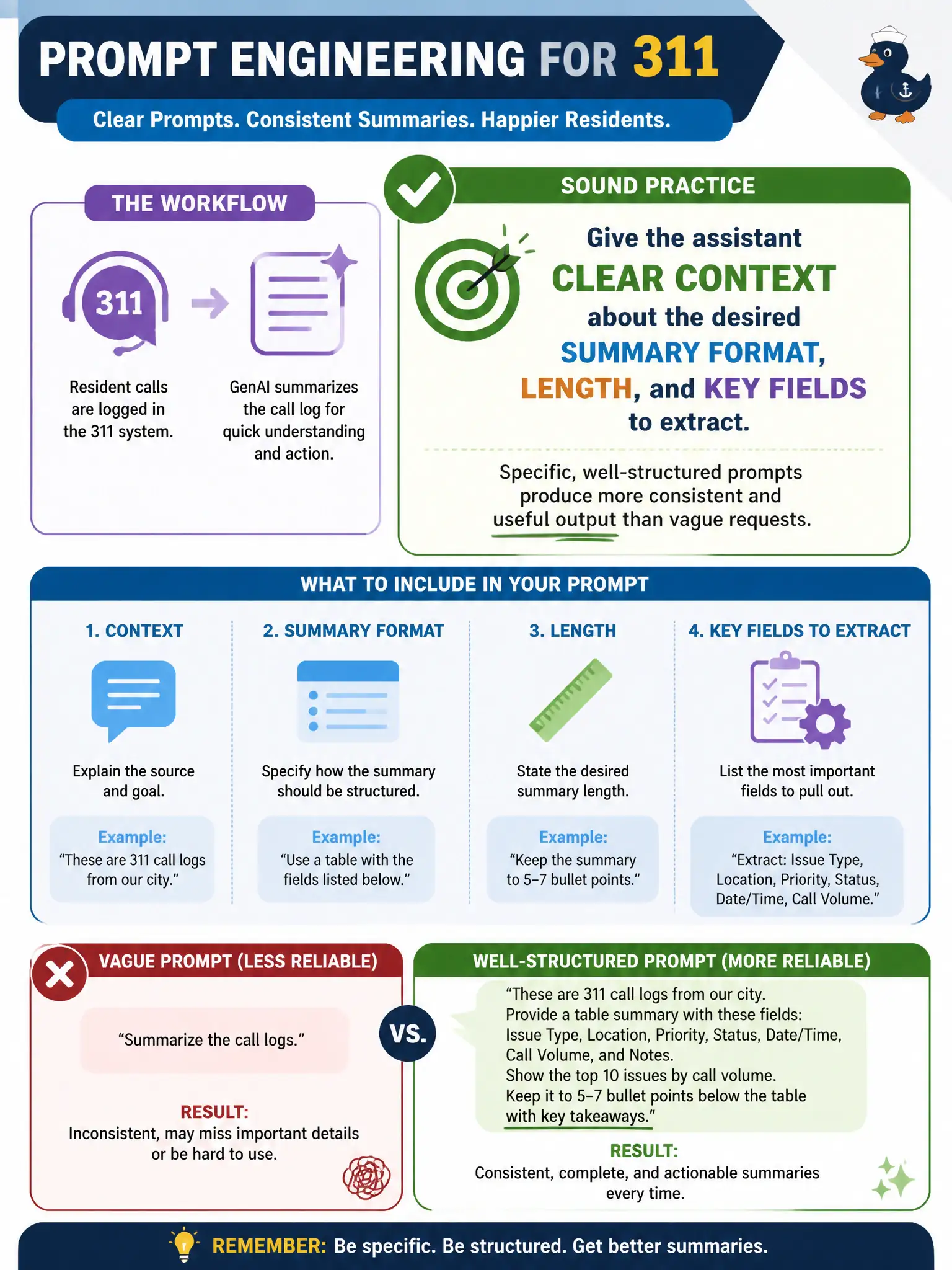
Think of a prompt like a work order handed to a new hire: the clearer you are about the format, the length, and what fields matter, the less guessing they have to do. A specific prompt gets a 311 team consistent call-log summaries; a vague one gets a different surprise every shift.
Full Explanation
Sound prompt engineering means giving the model enough structure to work with — naming the desired output format, an approximate length, and the specific fields to pull from a call log — so the assistant produces summaries that land the same way each time rather than varying by whoever happens to type the request. That consistency is exactly what a high-volume 311 workflow needs, since summaries likely feed downstream reporting or dispatch decisions. Treating brevity alone as the driver of accuracy misreads what makes a prompt effective; a short prompt that omits necessary context typically produces a vaguer, less useful summary, not a more accurate one. Dumping an entire month of call logs into a single prompt ignores a real constraint on these models — a token or context-window limit — and even within that limit, unstructured volume makes it harder for the model to surface the details staff actually need. Deliberately varying prompt structure to avoid repetition sacrifices the very consistency the workflow is trying to achieve, since staff comparing week-over-week summaries need a stable format, not creative variation. A scope caveat: guidelines like this work best paired with a lightweight reusable template staff can adapt, rather than a rule they have to reinvent each time. As an operational check, have two different staff members run the same call log through the assistant and compare whether the summaries come back structured the same way.