
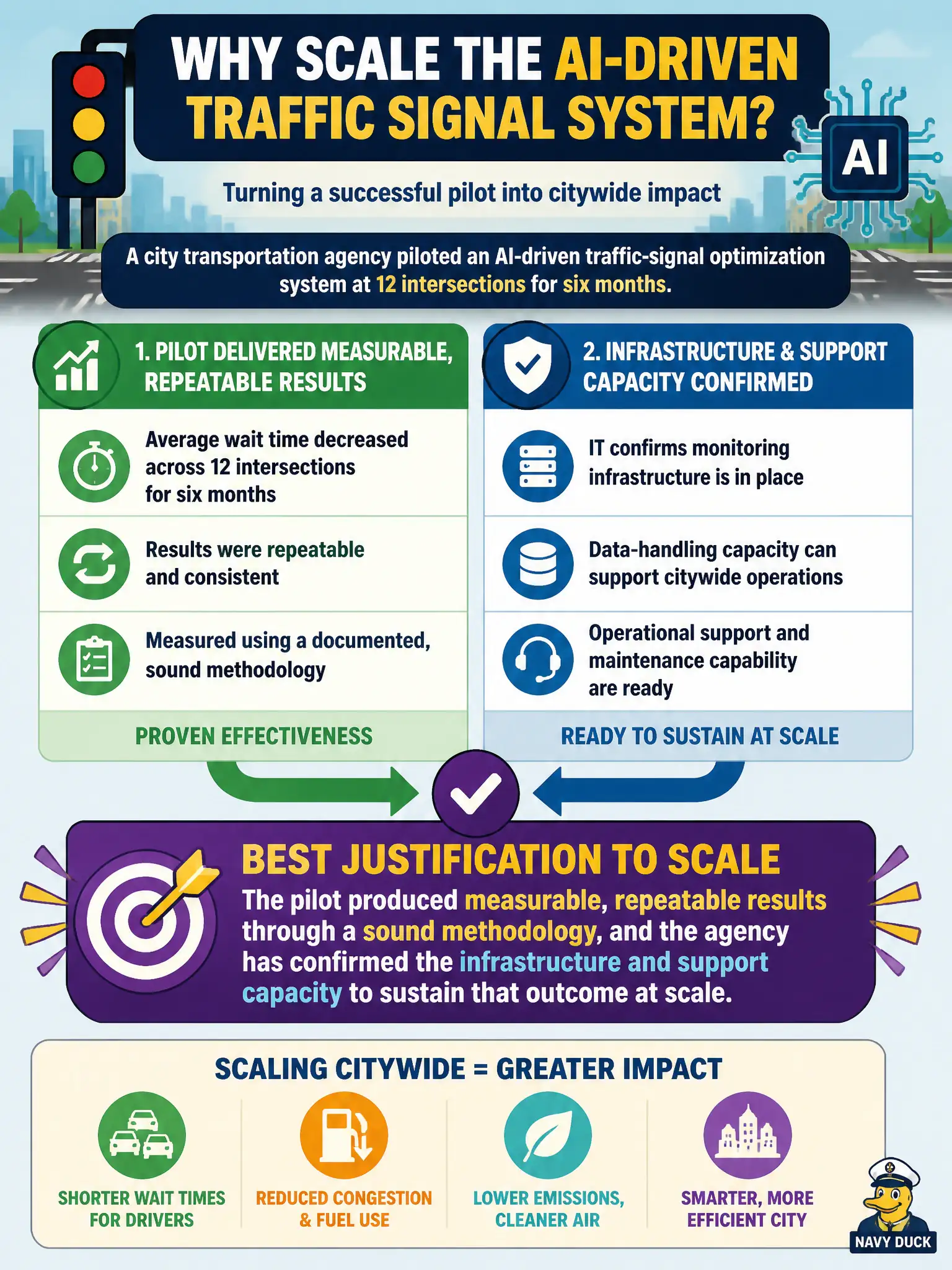
A city transportation agency piloted an AI-driven traffic-signal optimization system at 12 intersections for six months, producing measurable, repeatable reductions in average wait time using a documented measurement methodology, with IT confirming it has the monitoring and data-handling capacity to support the system citywide. What best justifies the agency's decision to scale the pilot to all signalized intersections?
Select an answer to reveal the explanation.
Short Explanation
Scaling a pilot is like deciding to open a second store: you don't do it just because the first one has been open a while, you do it because the numbers held up and you've confirmed you can actually staff and supply a second location. Here the wait-time gains are real and repeatable, and IT has checked that it can handle the citywide load. That's what makes scaling the right call, not the calendar or a discount.
Full Explanation
A sound scale decision rests on two things: whether the pilot's results are measurable and repeatable under a credible methodology, and whether the organization has verified it can sustain that outcome at the larger scope, since a pilot's success at a small footprint does not automatically transfer to hundreds of additional intersections without adequate monitoring and data capacity. Here both conditions are met, giving the agency real evidence the citywide rollout will reproduce the pilot's gains rather than just its cost. Treating the pilot's scheduled end date as the trigger confuses a calendar milestone with an evidentiary one; a pilot that ran its full course without producing solid results would not deserve scaling just because time elapsed. A vendor discount tied to a rollout deadline is a financial incentive external to the pilot's actual performance, and letting pricing pressure drive a scale decision risks locking in a system before its citywide readiness is confirmed. Pointing to peer cities' deployments substitutes someone else's context for this agency's own evidence, since another network's traffic patterns and IT capacity may differ substantially. A scope caveat: repeatable results at 12 intersections still warrant a phased rollout rather than an all-at-once switch, to catch issues the pilot's smaller footprint could not reveal. A concrete check: confirm the monitoring dashboards can actually ingest the full citywide signal data volume before go-live.