
A county administrator's office publishes a shared AI glossary, grounded in a recognized international framework, before letting individual departments launch separate AI pilots. What business value does this sequencing provide?
Select an answer to reveal the explanation.
Short Explanation
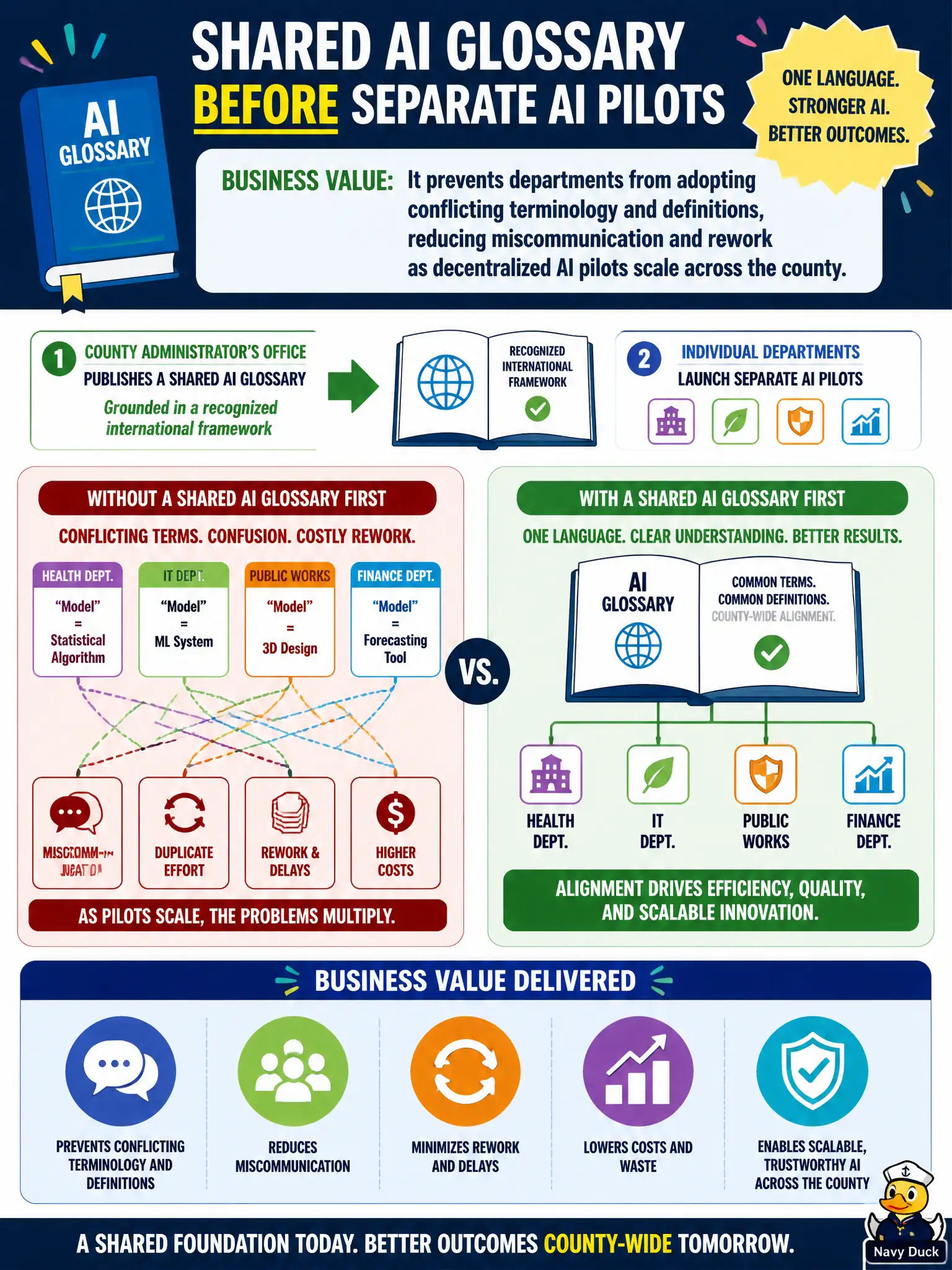
Publishing the glossary first is like agreeing on the rules of the road before anyone starts driving, rather than sorting it out after several departments have already collided over what "model" even means. That early alignment is what keeps decentralized pilots from creating a mess to untangle later.
Full Explanation
Publishing a shared, framework-grounded glossary before departments launch pilots gets everyone using the same definitions from day one, which prevents the miscommunication and rework that happens when separate teams unknowingly diverge on basic terms and later discover their pilots can't be compared, integrated, or discussed clearly. That value compounds as more departments adopt AI independently, since a common vocabulary is what lets a later review actually make sense of what each pilot did. Believing the glossary removes the need for governance approval confuses vocabulary with authority; agreeing on what a term means says nothing about who signs off on a project. Assuming it forces every department toward the same vendor and architecture overreaches what a glossary does; shared terminology doesn't standardize technical choices, only the language used to describe them. Claiming it shifts legal liability to the administrator's office misunderstands what the glossary accomplishes; publishing shared definitions is a communication step, not a legal transfer of responsibility for how any single department's pilot actually performs. As a concrete check, the administrator's office should require each pilot proposal to reference the glossary's definitions explicitly, since that's the clearest evidence departments are actually using the shared vocabulary rather than defaulting back to their own terms.