
An enterprise AI initiative is about to kick off. Why is stakeholder alignment treated as critical to project success rather than optional project-management overhead?
Select an answer to reveal the explanation.
Short Explanation and Infographic
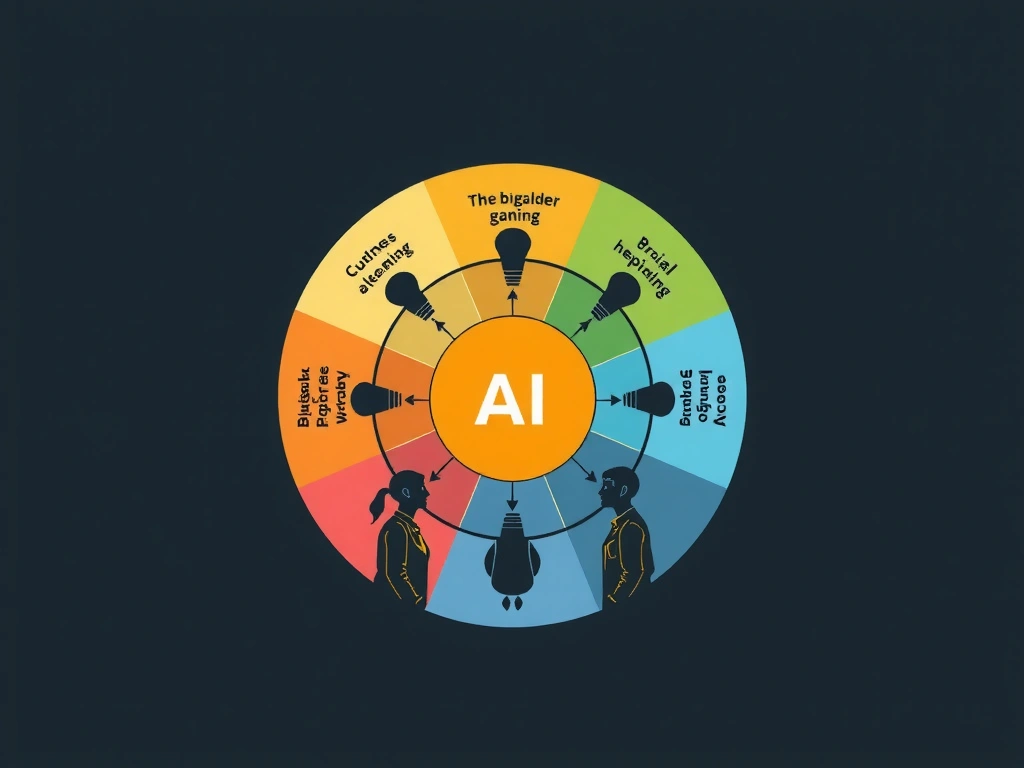
Here's the deal: stakeholder alignment isn't paperwork fluff—it's how you stop building a brilliant model that nobody asked for. Think of it like this: you wouldn't start cabling a data center without knowing which racks go live first, right? Same idea. If product, legal, ops, and leadership aren't locked on goals, metrics, and risks, your team optimizes the wrong target and ships something that dies in pilot. Imagine your boss walks in Friday and says the model is "done"—but sales never agreed on what "good" means. That's the trap. Alignment means business needs drive objectives and the right people stay in the loop. Skip it on big projects and you pay later. Got it? Sweet—treat alignment as a first-class deliverable, not a meeting you can cancel.
Full explanation below image
Full Explanation
Stakeholder alignment is the process of ensuring that AI project objectives, constraints, success metrics, and decision rights are shared and accepted by the people who fund, build, use, govern, and are affected by the system. In practice that group usually includes business sponsors, domain experts, data owners, engineering and ML teams, security and compliance, operations, and often front-line users. When these parties agree on the problem statement, the definition of value, acceptable risk, and how success will be measured, the technical work has a stable north star. When they do not, teams commonly optimize offline accuracy, latency, or novelty while missing adoption, fairness, cost, or regulatory requirements that determine real-world success.
The correct option captures both halves of that idea: objectives must map to business needs, and stakeholders must remain involved. Alignment is not a single kickoff slide; it is continuous communication as data quality, model behavior, and organizational priorities change. Large initiatives are especially sensitive because more groups hold veto power and incentives diverge. Treating alignment as "only for small projects" reverses the risk profile. Calling it a skippable formality confuses ceremony with substance: you can skip a status template, but you cannot skip shared intent without paying later in rework, shadow IT alternatives, or failed rollout. Claiming architecture choices dominate is another common misconception. Model capacity and tooling matter, yet a sophisticated system pointed at the wrong KPI still fails its sponsor.
Best practice is to document problem framing, target users, primary and guardrail metrics, data access, ethical constraints, and go/no-go criteria early, then revisit them at major milestones. Involve domain experts in labeling guidelines and error analysis, not only in final demos. Surface trade-offs explicitly—for example higher recall versus false-positive burden on operations. On the exam and in production, remember that AI project failure is frequently organizational before it is algorithmic. Stakeholder alignment is how you keep the technical path attached to organizational reality.