
When studying for a technical certification, what is the main educational benefit of taking realistic practice exams?
Select an answer to reveal the explanation.
Short Explanation and Infographic
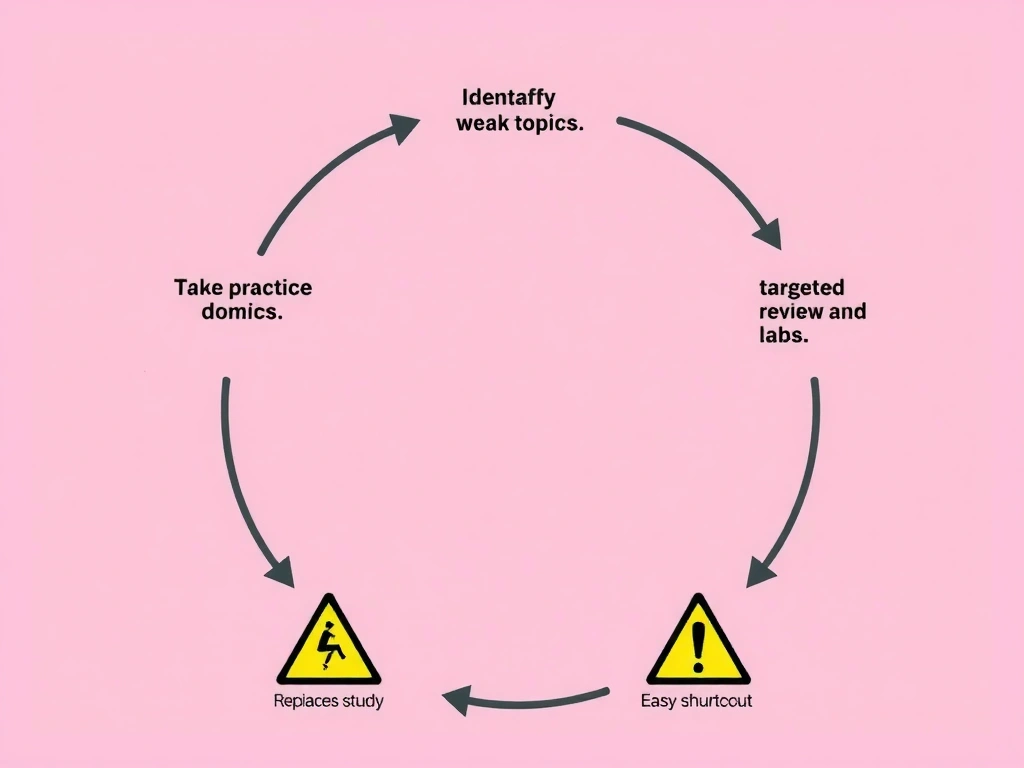
Here's where it gets real for you. Practice tests aren't magic cheat codes—they're diagnostic tools. You sit down, take a timed set, and boom: you see which domains you own and which ones still wobble. Think of it like a practice scrimmage before the big game—you find the weak coverage, not pretend the season is already won. Boss of your calendar says you only have two weeks? Use practice exams to prioritize study time where it hurts most, then retest to watch the score climb. Exam trap: believing practice tests replace studying, guarantee a perfect score, or make the cert "easy" without work. Land it: identify weaknesses, track progress, fix gaps. Trust me on this—review every miss. Got it? Sweet.
Full explanation below image
Full Explanation
Effective exam preparation combines conceptual study, hands-on practice, and formative assessment. Realistic practice tests serve primarily as formative assessment: under time pressure and question styles similar to the target exam, they reveal which topics a candidate has mastered and which still produce errors. Reviewing incorrect items with explanations turns mistakes into a prioritized study plan. Repeating practice exams after remediation provides a progress signal—scores should trend upward as weak areas improve—and builds familiarity with pacing, distractors, and question phrasing so cognitive load on test day is lower.
The correct answer emphasizes these diagnostic and tracking benefits. Candidates learn where to invest limited study hours, confirm that review actually closed gaps, and gain confidence calibrated to evidence rather than hope. High-quality practice also surfaces misread stems and common misconception patterns, which is valuable even when content knowledge is strong.
Distractors describe misuse or overclaiming. Practice tests do not replace reading objectives, documentation, labs, or structured courses; without underlying knowledge, score gains plateau and transfer to the real exam is weak. They cannot guarantee a perfect score because real exams sample differently, stress varies, and content evolves. Framing them as an easy path that removes the need for deliberate practice is counterproductive: the learning happens in the review cycle after each attempt, not in collecting answer keys.
Best practices include spacing practice sessions, simulating real timing, analyzing errors by domain, logging recurring miss themes, and only then returning to targeted materials. Use multiple independent sources when possible to avoid overfitting to one item bank. Treat rising practice scores as necessary but not sufficient evidence of readiness, and pair them with hands-on fluency for engineering certifications.
Principle: measure, remediate, remeasure. Memory aid: practice tests are a map of your weak spots—not the destination, not a free pass, and not a substitute for the journey of actual learning.