
A writer uses a large language model to draft richer creative pieces. Which prompt-engineering practice is most likely to elicit more detailed, thorough responses?
Select an answer to reveal the explanation.
Short Explanation and Infographic
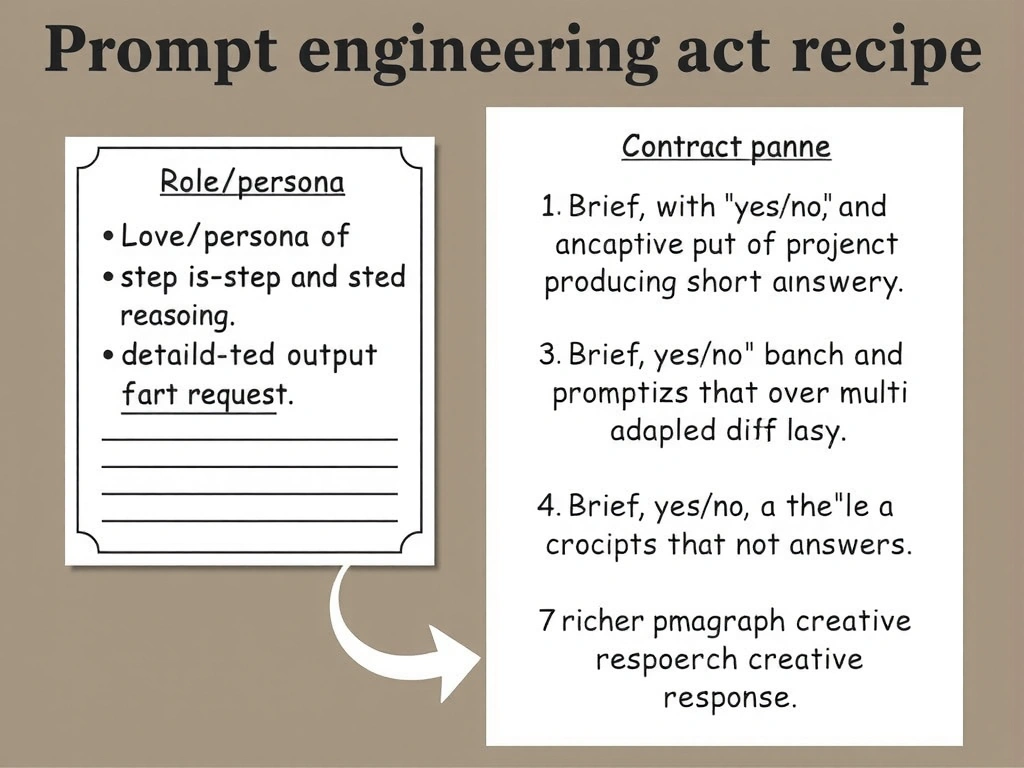
Let's talk prompts like production configs—garbage in, garbage out. If you want an LLM to go deep on creative work, don't whisper 'yes or no?' and hope for a novel. Give it a role ('you are a seasoned story editor') and tell it to think step by step, outline, then expand. That chain-of-thought style nudges longer, more organized answers. Exam trap: negative keywords, 'be brief,' or binary questions. Those clamp the model down. Think of it like briefing a junior writer: persona, goals, process, then deliverable. You'll get essays instead of shrugs. Try it in your next session—you'll feel the difference immediately. You've got this.
Full explanation below image
Full Explanation
Prompt engineering shapes model behavior without changing weights. When the goal is more detailed, comprehensive creative output, prompts should expand the task specification and the expected reasoning process. Two complementary techniques are especially effective. First, role or persona prompting situates the model as an expert (for example a novelist, marketer, or technical storyteller), which steers style, vocabulary, and depth. Second, instructing the model to work step by step—often called chain-of-thought or structured reasoning prompting—encourages intermediate planning, outlines, and fuller final prose rather than a single terse leap to a shallow answer. Related tactics include specifying audience, length targets, section headings, examples (few-shot), and evaluation criteria. Together these cues reduce ambiguity about what 'good' looks like for the model.
Negative prompting (listing forbidden topics or styles) is useful for safety and brand constraints, but constraints alone do not request elaboration; a model can obey bans and still answer thinly. Commands to be brief or minimal actively suppress detail. Yes/no questions define a tiny output space and rarely produce rich creative text unless followed by explicit expansion requests. In short, restrictions without an expansion request optimize for compliance, not thoroughness.
In practice, iterate: start with role, goal, constraints, and process instructions; inspect outputs; add examples or rubrics where quality gaps appear. Temperature and max-token settings interact with prompts—high-level instructions for depth still need sufficient generation budget. For certification-style items, associate 'more detailed and comprehensive' with role-plus-step-by-step (or similar elaboration scaffolds), and reject options that shorten, binary-close, or only negate content. That mapping reflects widely taught LLM usage patterns and keeps your mental model aligned with how practitioners actually coax better generations from general-purpose models. Remember: ask for structure and reasoning if you want substance, not silence.