
A retailer uses an LLM to draft product descriptions. The prompt team must keep outputs short and centered on standout features. Which prompt design approach best supports that goal?
Select an answer to reveal the explanation.
Short Explanation and Infographic
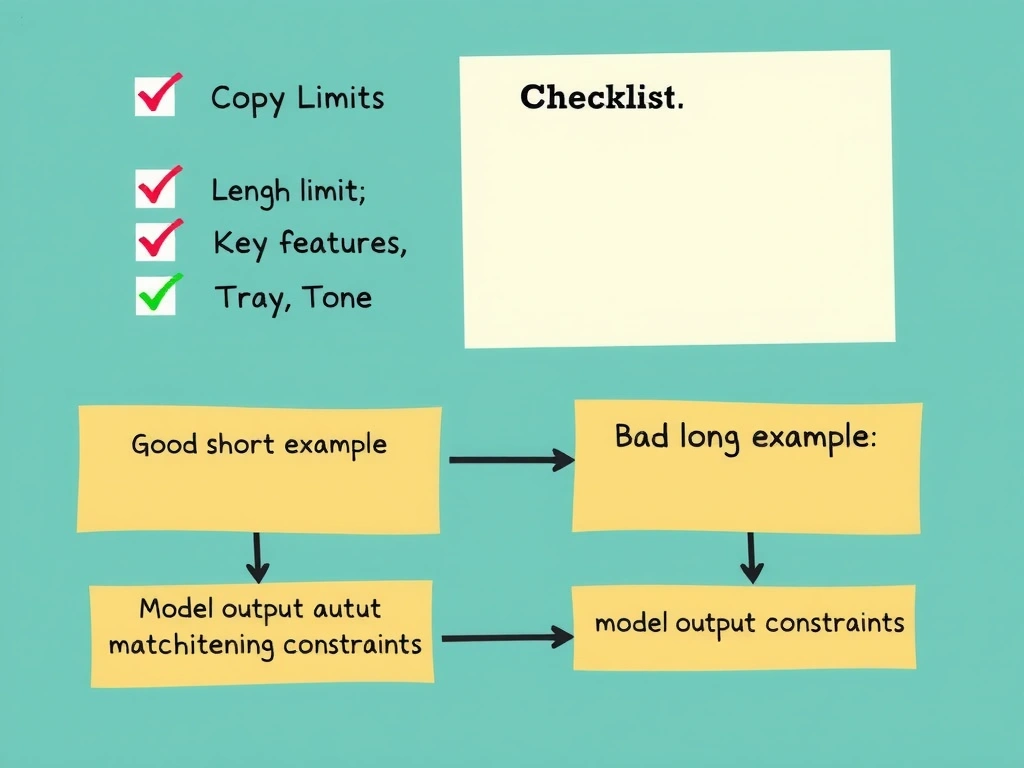
Want short, feature-first blurbs? Tell the model that—out loud in the prompt. "Two sentences max, highlight top three features, upbeat retail tone." Constraints beat vibes. Asking for long essays is the opposite goal. Zero-shot without limits is a coin flip on length. And if your few-shot samples are novels, the model copies the novels. Exam trap: thinking "zero-shot" or "few-shot" magically equals good style regardless of content. In the real world, your examples and instructions are the style guide. Boss wants tight catalog copy by noon—write the brief like a creative director. Got it? Specify length, focus, and tone. Sweet—ship cleaner prompts.
Full explanation below image
Full Explanation
When product description generation must be concise and feature-focused, prompt design should encode those requirements as explicit constraints. Effective prompts typically specify maximum length (word or sentence limits), content priorities (key differentiators, materials, fit, warranty—whatever matters for the catalog), and tone (for example, professional, playful, or luxury). Models respond strongly to clear instructions and to the patterns demonstrated in examples; therefore the surest path to short, on-message copy is to request those attributes directly.
Design choices that conflict with the goal should be rejected. Instructing the model to write long, richly detailed narratives produces the opposite of concise marketing blurbs. Using a zero-shot prompt with no length or focus constraints may occasionally yield short text, but it is unreliable: unconstrained models often add fluff, repeat benefits, or expand into storytelling. Few-shot prompting is powerful, yet examples must match the target style. Providing elaborate, lengthy exemplars teaches the model that verbosity is desirable and undermines the brevity requirement.
Best practices include positive and negative instructions ("do not include shipping policies"), structured templates, and evaluation checks for length and feature coverage. Teams may combine a crisp system message with one or two short gold-standard examples (short-shot, not long-shot). Iterate with automated length filters and human review on brand voice. For exam items, prefer the option that states clear, concise instructions about length and focus over options that encourage length, omit constraints, or demonstrate the wrong style. The governing principle is alignment: every part of the prompt—instructions and exemplars—should model the output you want in production. Measure success with simple gates such as maximum word count, presence of named features, and absence of banned claims.