
In consumer and content platforms, what is a recommendation engine?
Select an answer to reveal the explanation.
Short Explanation and Infographic
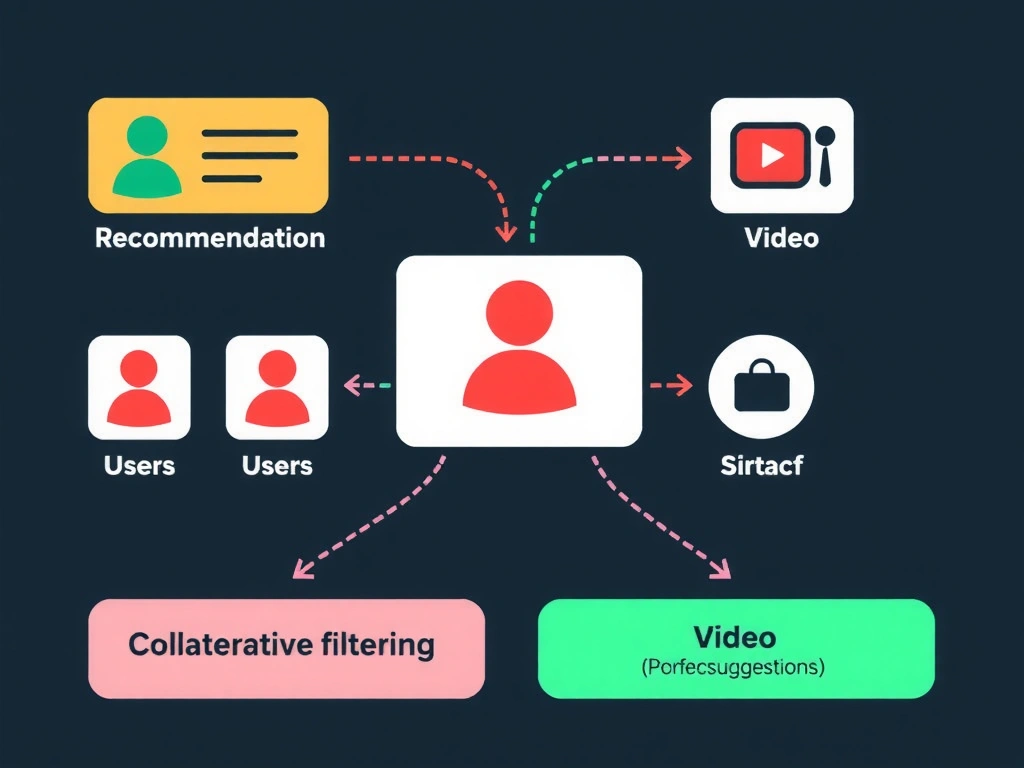
Pay close attention — this one's easy if you stay in the real world. Recommendation engines are why your streaming app knows what to queue next and your store homepage feels "weirdly personal." They look at what you (and people like you) did, then suggest products, songs, videos, or services. Think of a sharp store clerk who remembers your last visits — scaled by AI. Not a stock-picking robot. Not a doctor. Not an AutoML algorithm chooser. Those are different products. Exam trap is grabbing any "AI that predicts something" option. Nope — the keyword is personalized suggestions from preferences and behavior. Land it: recommenders match users to items they'll care about.
Full explanation below image
Full Explanation
A recommendation engine (or recommender system) is an AI application that ranks, filters, or proposes items such as products, articles, videos, music, jobs, or services to users based on preferences, context, and observed behavior. Classic families include collaborative filtering, which finds similar users or items from interaction matrices; content-based methods, which match item attributes to a user profile; and hybrids that combine both, often with contextual bandits or deep learning rankers in production systems at scale.
The business goal is typically relevance and engagement under constraints such as diversity, fairness, freshness, and inventory availability. Inputs may include clicks, purchases, ratings, dwell time, demographics, and session context. Outputs are ordered lists, carousels, or next-item suggestions that change as the user interacts. Evaluation uses offline metrics such as precision at k, NDCG, and recall, plus online A/B tests on engagement and conversion that confirm real-world lift.
Stock-market forecasting systems predict prices or returns; that is supervised or time-series prediction for finance, not user-item matching for personalization. Medical diagnostic models map clinical features to conditions for care decisions; they may use machine learning but are not recommendation engines by definition. Tools that recommend which learning algorithm to run on a dataset are meta-learning or AutoML components serving practitioners, not consumer-facing item recommenders that personalize catalogs or feeds.
For exams and interviews, anchor on the user-item personalization story: suggest what this person will value next from a large catalog. Remember cold-start issues for new users or items, popularity bias that over-promotes head items, and filter bubbles as common design challenges teams actively mitigate. That framing cleanly separates recommenders from unrelated predictive systems that merely use AI without ranking items for people.