
What best describes a knowledge graph in AI and data systems?
Select an answer to reveal the explanation.
Short Explanation and Infographic
Here's where people get fancy with the word "graph." A knowledge graph isn't a training-loss chart and it isn't "the neural net for language." It's a map of things and how they connect—people, products, diseases, companies—joined by labeled links like "works-at" or "treats." Think of it like a giant, machine-readable org chart of the world (or your domain). Search engines and enterprise AI use that structure to answer "how are A and B related?" Exam trap: equating it with NLP models, metric visualizations, or image/video databases. When you hear knowledge graph, think entities + relationships = structured knowledge. That's the takeaway. Nice and clean.
Full explanation below image
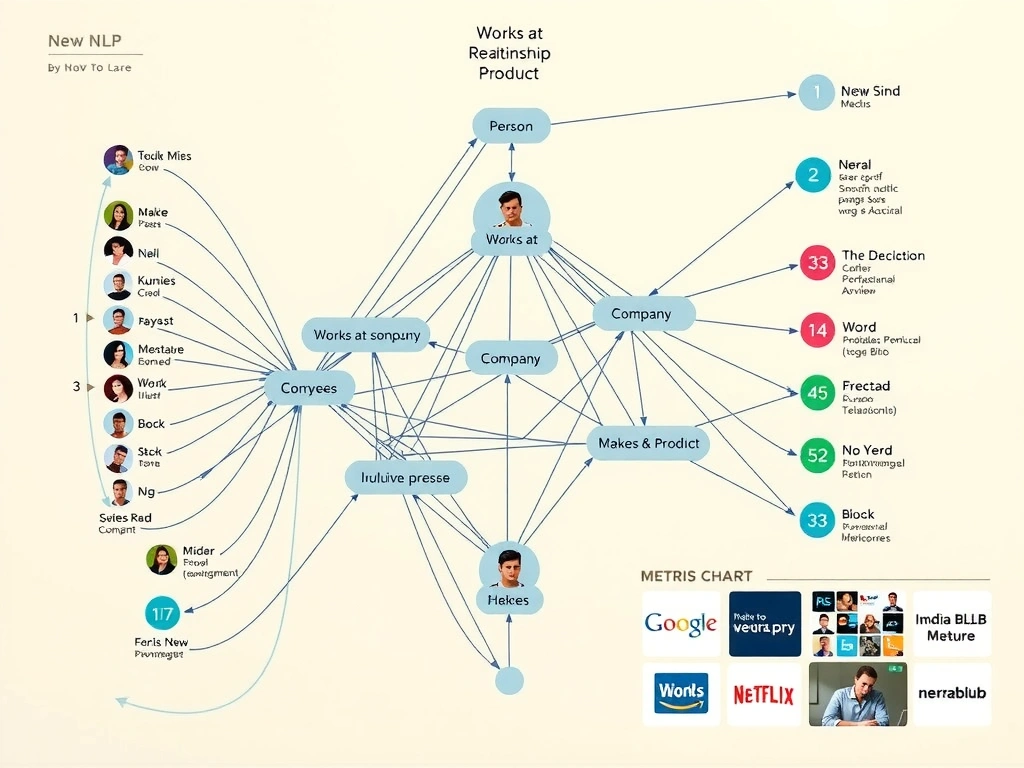
Full Explanation
A knowledge graph represents domain knowledge as a graph: nodes denote entities or concepts, and edges denote relationships (often typed and directed), sometimes with properties and provenance. Canonical examples include public graphs of people, places, and works, and enterprise graphs linking customers, products, policies, and events. The representation supports querying, multi-hop reasoning, entity linking, recommendation, and grounding language systems with structured facts. In short, it is a machine-readable map of what exists and how things relate.
Unlike a neural language model, a knowledge graph is primarily a knowledge representation and storage abstraction—though embeddings and graph neural networks may operate on graphs. Unlike evaluation plots, it does not summarize model metrics such as accuracy or precision. Unlike media stores, its first-class citizens are semantic objects and relations rather than binary image or video files. Confusing the knowledge graph with any of those distractors misses the semantic network idea.
Common implementations use triples (subject–predicate–object), property graphs, or RDF and OWL stacks. Best practices include careful ontology design, entity resolution so the same real-world object is not duplicated under many names, and freshness processes so facts do not go stale. Graphs may feed search ranking, fraud rings analysis, and retrieval-augmented generation as structured context.
Underlying principle: knowledge is encoded as typed relationships among entities, enabling multi-hop queries that tables alone make awkward. Best practice starts from clear entity and relation schemas and invests in data quality at the edges. Memory aid: knowledge graph means who or what is connected to what, and how—a web of facts, not a loss curve, not a CNN, not a video vault.