
A city network team builds a custom ops dashboard that pulls Meraki SSID state and DNA Center wireless health. Which ordered sequence matches the official construction steps?
Select an answer to reveal the explanation.
Short Explanation
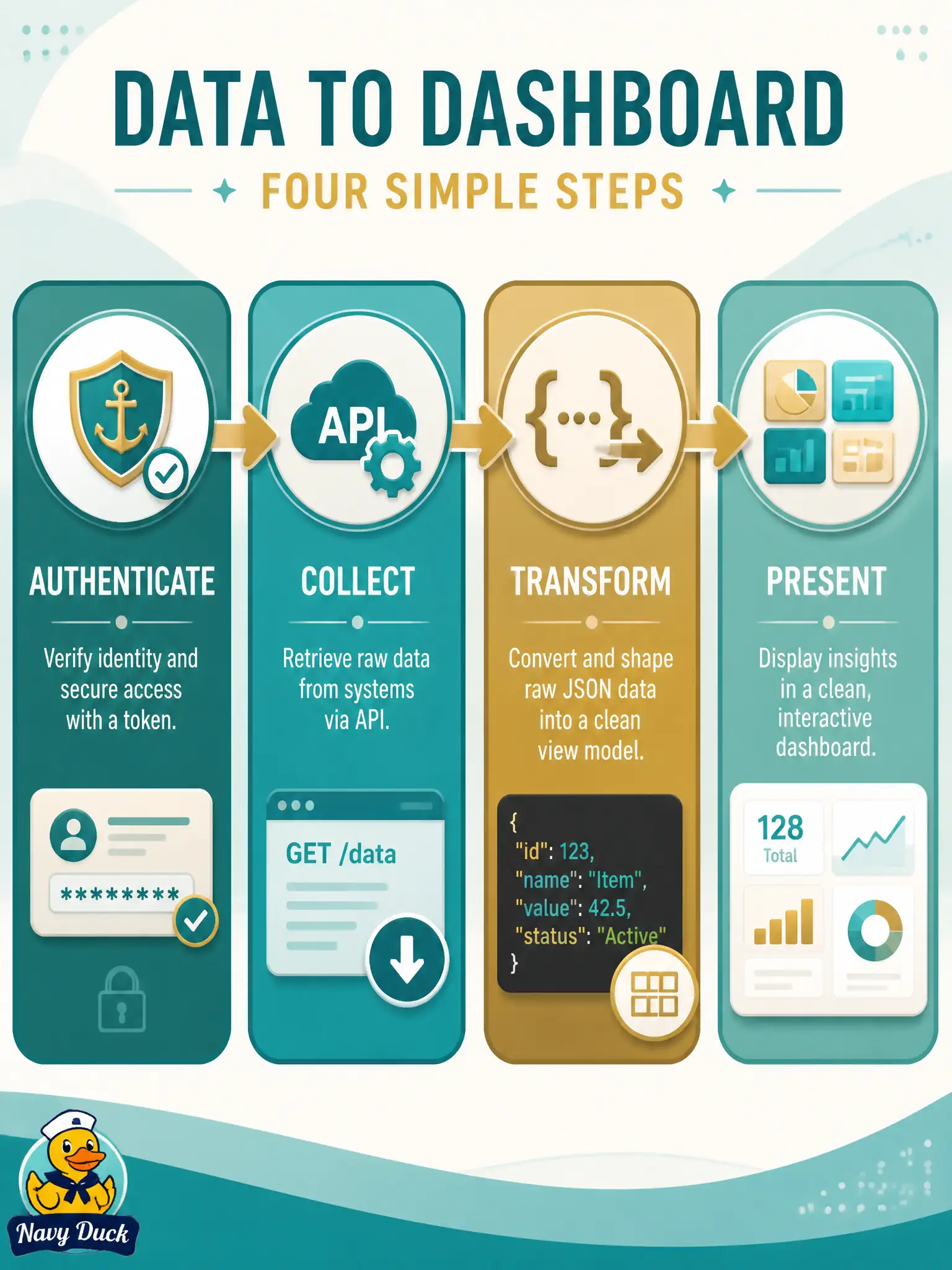
Think of a permit desk: badge in, pull the records, stamp them into a readable form, then put them on the counter. Auth → collect → transform → present is that line; skipping the badge or hanging raw errors on the wall misses a step.
Full Explanation
Constructing a custom ops dashboard against Meraki and DNA Center follows a fixed order: authenticate to each platform with its credential or token, retrieve data (or accept a webhook/push), transform the platform JSON into view-models the UI understands, then present those shaped results. That sequence is what DEVCOR’s Cisco-platform construction objective expects—credentials first so every subsequent call is authorized, collect next so you have real payloads, transform so operators see health and SSID state rather than raw envelopes, and present last so the civic board is complete.
Rendering raw platform error bodies in the browser before credentials exist inverts the workflow: you surface failure artifacts as the primary UI and invent auth afterward, which never yields a trustworthy collect-and-present loop. Skipping authentication to poll “public” endpoints, then dumping unfiltered JSON into a CSS framework, treats presentation libraries as a substitute for auth and shaping—neither Meraki SSID state nor DNA wireless health is meant to be consumed that way for an ops dashboard. Presenting empty tiles immediately while storing Meraki and DNA tokens in localStorage exposes privileged secrets to every browser session and still postpones real collection; client-side token storage is not the server-side collect step the construction pattern requires.
Exam caveat: the tested skill is the ordered construction (auth → collect → transform → present), not which CSS or charting library you pick. Operational check: confirm the collector obtains tokens from a secure server-side store, successful retrieve responses are mapped into view-models, and only those models reach the municipal dashboard tiles.