
The platform team runs containers for a Webex ChatOps bot. Which logging assumption keeps day-2 debug from depending on SSH and tail?
Select an answer to reveal the explanation.
Short Explanation
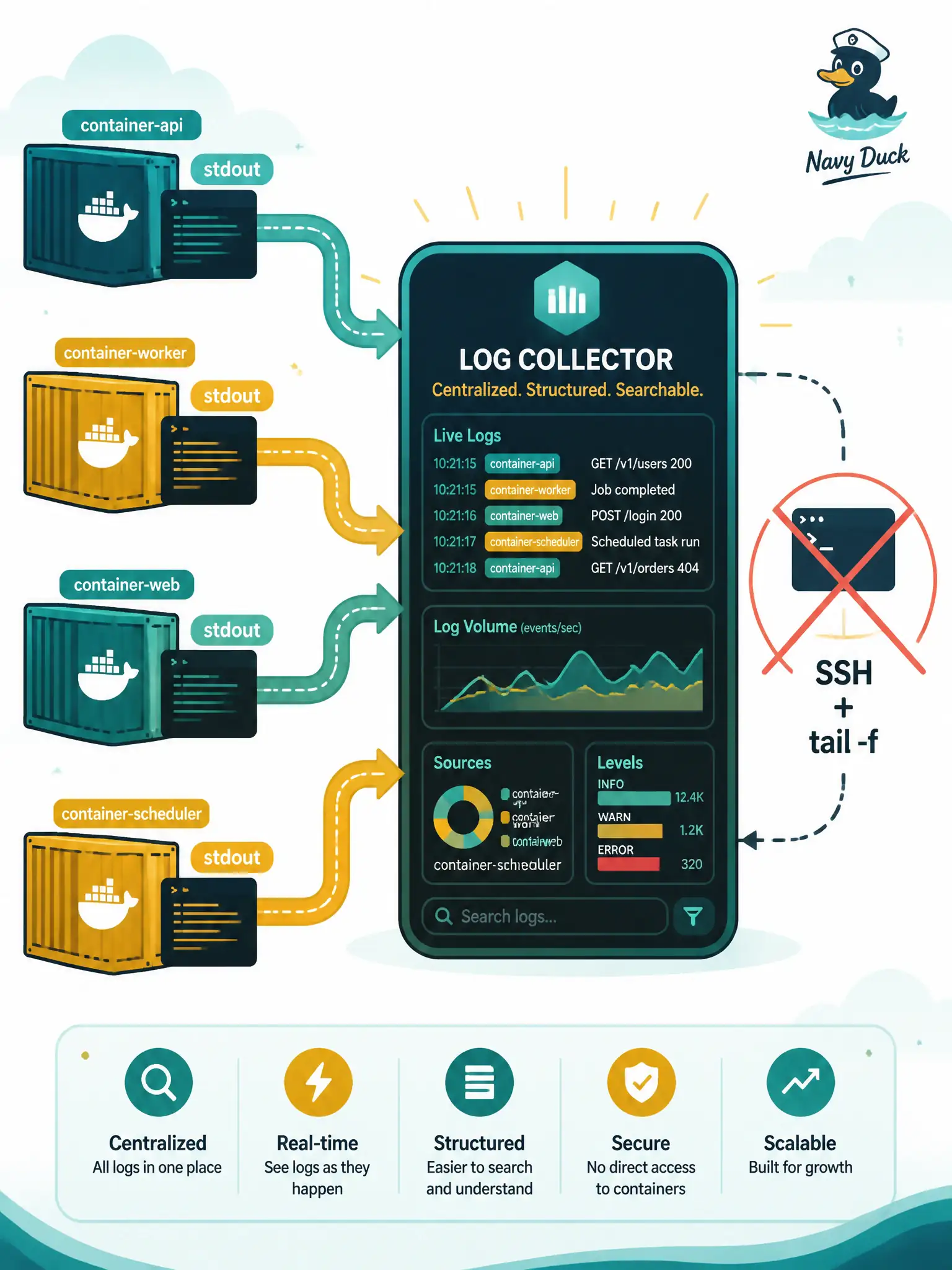
Central collection is the city’s 911 tape—every call lands in one place. Building an app that only debugs via SSH and tail fights both stream logging and operable containers.
Full Explanation
Design for a collector or the container platform’s log driver to ingest stdout for central access. That assumption matches disposable replicas and lets municipal operators debug without node SSH during incidents, keeping forensics in one searchable place instead of on whichever worker ran the pod. Making SSH plus tail on a node-local file the only supported debug path couples operations to specific nodes, breaks when pods move, and fights immutable infrastructure practice. Requiring docker cp of log files from each replica during every incident does not scale across fleets and loses lines already rotated away or trapped in a crashed filesystem. Disabling stdout entirely and emailing binary core dumps as the primary observability channel abandons continuous telemetry for slow, incomplete artifacts that arrive too late. Exam caveat: central ingestion still needs retention limits, access control, and PII redaction—shipping everything to a shared bucket is not automatically a complete observability design. Operational check: generate logs in a test container, delete any local files inside it, and confirm the same events remain visible in the centralized system via the platform driver or sidecar collector.