
A parks inventory database stores citizen equipment locations, and a portal sends those records to staff browsers. Which privacy statement is accurate?
Select an answer to reveal the explanation.
Short Explanation
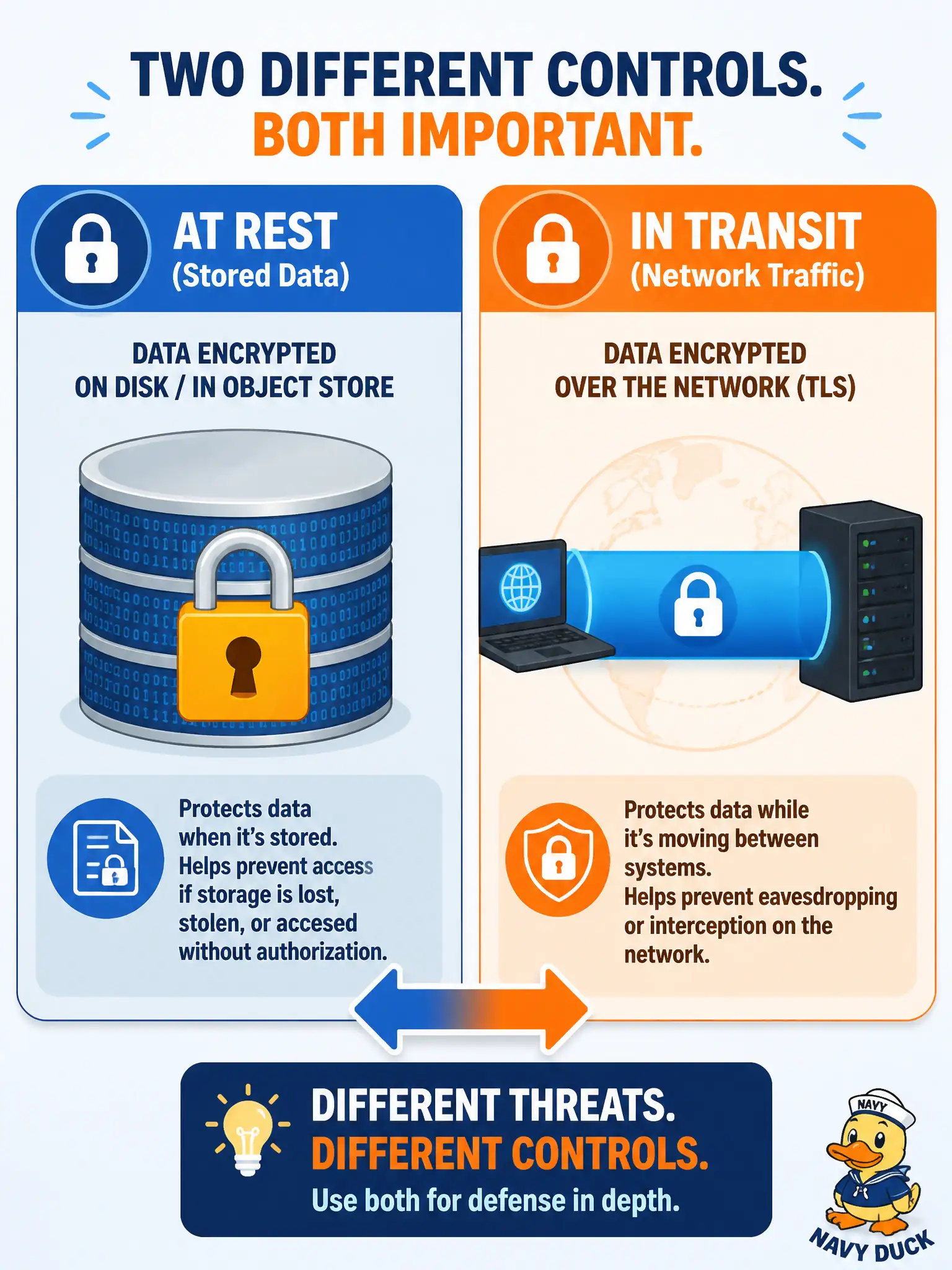
A locked truck on the highway is not the same as a locked warehouse. TLS covers the hop; the disk or object store still needs at-rest controls for location data.
Full Explanation
Protection at rest and protection in transit are separate controls that both matter for civic location data. TLS on the browser hop encrypts data while it moves; it does not encrypt database files, disk volumes, or object-store objects once they are written to durable media. Claiming TLS alone encrypts database files at rest conflates network confidentiality with storage confidentiality and leaves warehouse copies exposed to disk theft or backup leakage. Claiming at-rest disk encryption removes any need to protect the same records on the network ignores interception and tampering on the wire between services. Asserting that privacy applies only during transmission so stored copies of location data need no controls leaves backups and disks as soft targets long after the session ends. Exam caveat: full-disk encryption does not replace application-level access control or field minimization—anyone who can read from a mounted, unlocked volume still sees plaintext while the OS is running. Operational check: verify TLS on the client and service paths, then separately confirm volume or database encryption settings and key custody for the datastore holding location records. Record the outcome in the release or incident notes so the next operator inherits evidence, not tribal knowledge.