
A DNA Center write fails during a scheduled civic sync, but on-call cannot tell what failed amid chatty logs. Which logging practice restores actionable signal?
Select an answer to reveal the explanation.
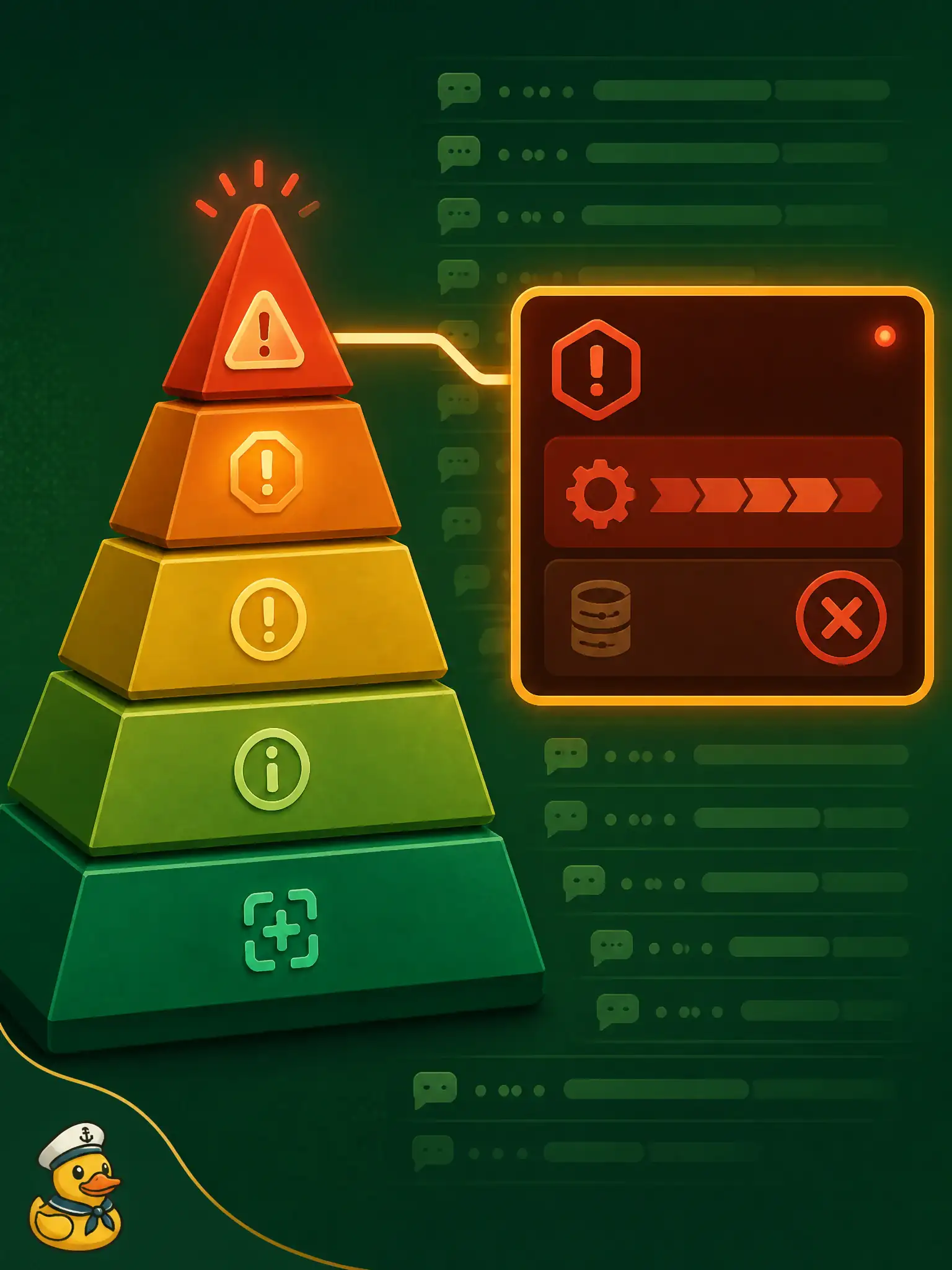
Short Explanation
Severity is the siren volume, and context is the street address on the callout. ERROR naming the DNA write and status stands out; unfiltered DEBUG chatter buries the fire.
Full Explanation
Failed controller writes should emit ERROR with the operation name and status so on-call can see what broke without wading through chatter. Severity separates signal from noise; context names the DNA Center or similar write that failed and the status returned so responders know which change to retry or roll back. Dumping every happy-path DEBUG line at the same urgency as failures removes any operational triage cue and floods paging views until real faults are ignored. Removing severity labels so every line is equal-weight plain text forces humans to re-parse meaning under incident pressure when seconds matter. Logging only the single word “error” with no operation, resource, or status context creates alerts that cannot be actioned or correlated to a civic change ticket. Exam caveat: overusing ERROR for expected client mistakes such as validation failures trains teams to ignore real control-plane faults—reserve ERROR for conditions that need operator attention. Operational check: induce a controlled controller write failure in lab, confirm a single ERROR line carrying operation name and status is queryable in the central store, and verify routine DEBUG remains filterable away from the paging stream.