
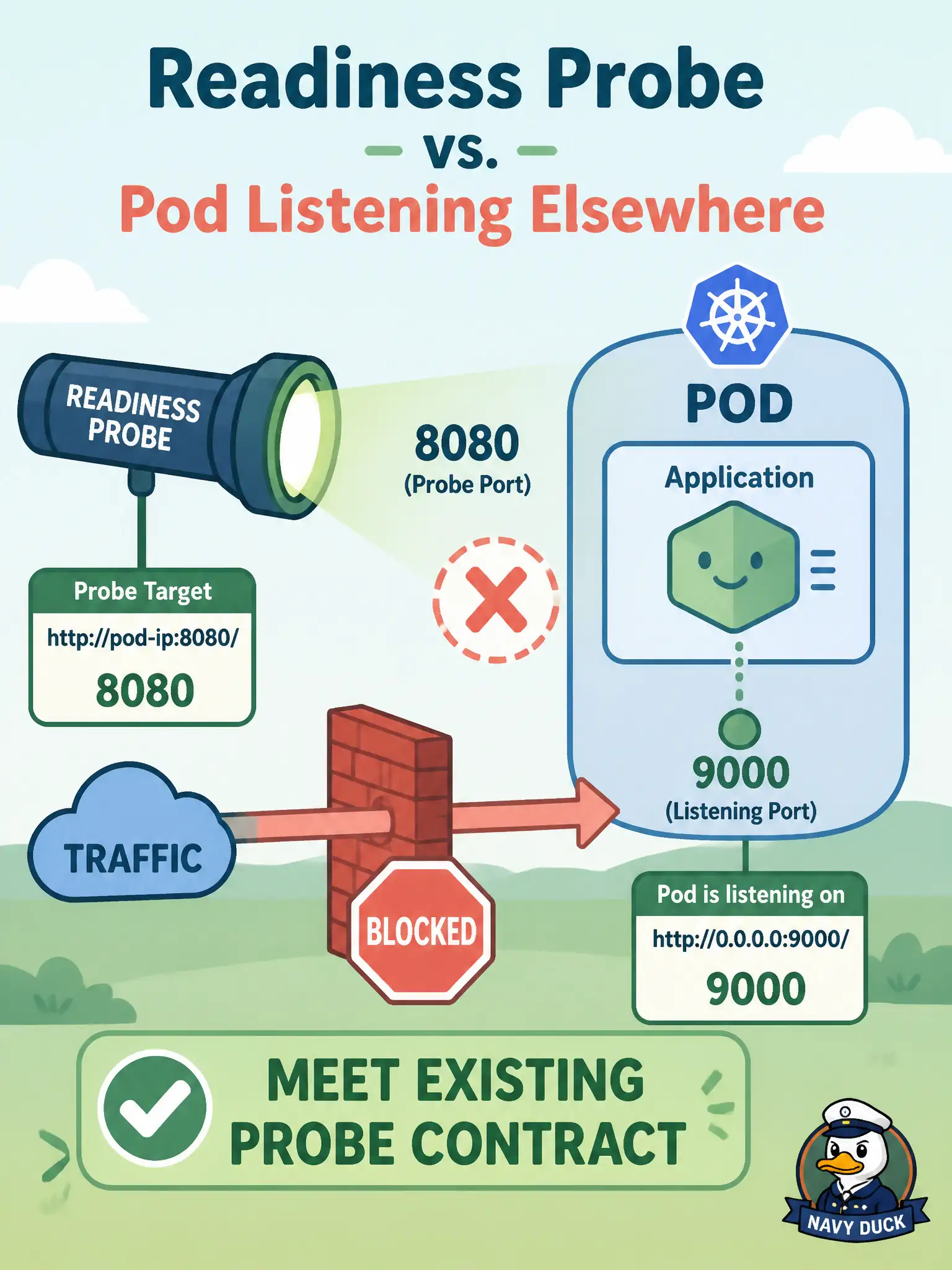
The prebuilt CD only shifts traffic to pods that pass the environment’s existing readiness probe on port 8080. A new image listens only on 9000. What happens and what must the app meet?
Select an answer to reveal the explanation.
Short Explanation
The gate only opens if you knock on the door the city already wired—port 8080 here. An image that never answers that probe is a sealed crate that never gets traffic.
Full Explanation
When the prebuilt CD only shifts traffic to pods that pass the existing readiness probe on port 8080, a new image that listens only on 9000 will never become Ready under that contract. The app must meet the environment’s health-probe contract—listen where readiness checks—or it integrates into a black hole: pods run but receive no Service traffic. Fitting the civic probe is part of integrating into a prebuilt CD path, not an optional afterthought.
Expecting traffic to shift immediately because any listening port satisfies readiness is wrong; readiness is a specific check, here on 8080. Claiming Kubernetes ignores readiness when the image tag is new invents an exception that does not exist—new tags still must pass probes. Disabling the Service and relying on node SSH for traffic abandons the CD path and least-privilege operations entirely.
Exam caveat: “new image” does not waive readiness; the probe contract is an integration input you must satisfy or deliberately change with platform owners. Operational check: ensure the container listens on the probed port (or align the probe with platform approval), confirm Ready status, then verify endpoints populate and traffic reaches the Meraki or DNA consumer pods.