
During a municipal release, the CD must ship a new image tag for the DNA health API consumer without breaking callers that already use the stable ClusterIP name. What should change?
Select an answer to reveal the explanation.
Short Explanation
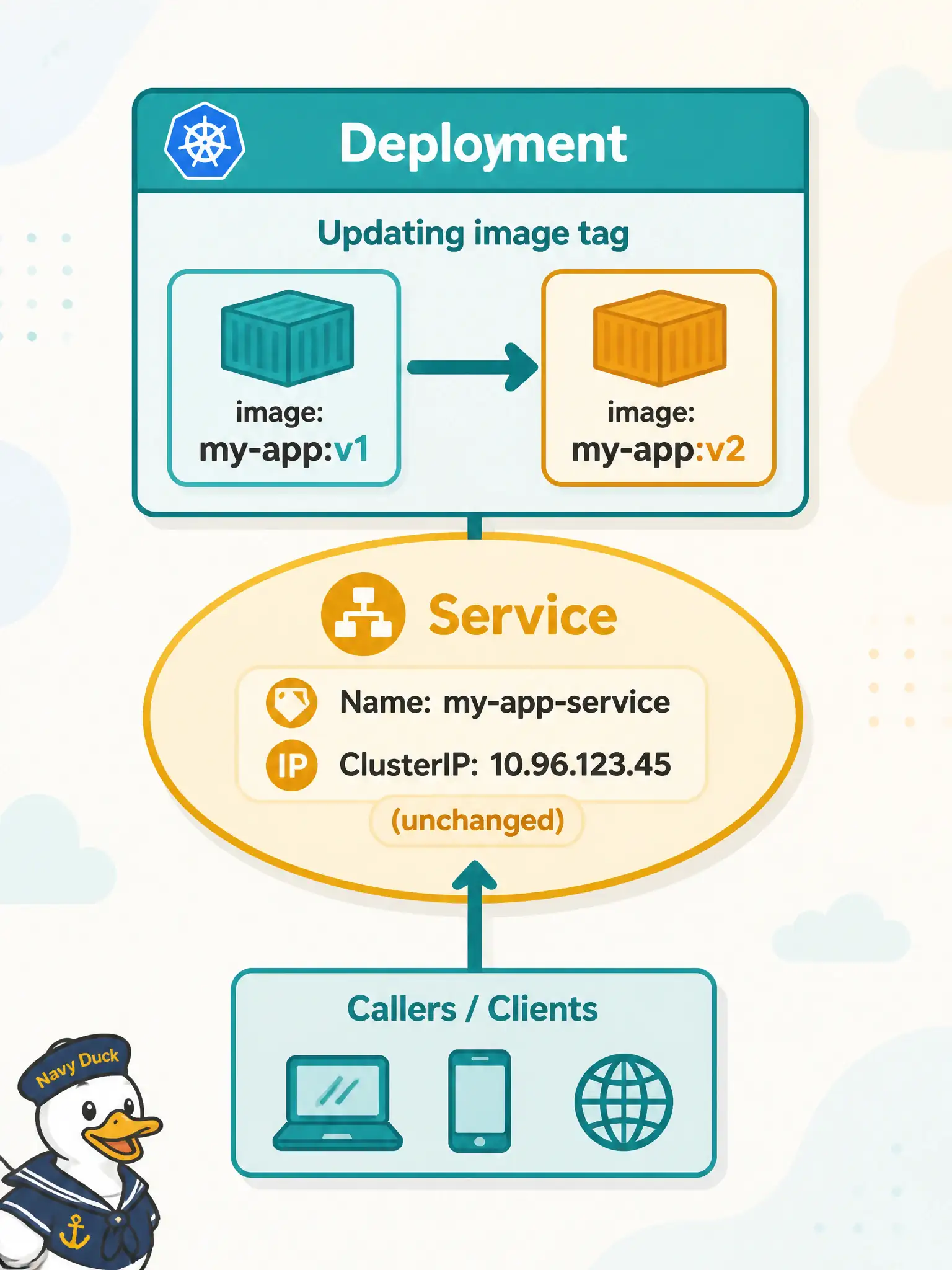
Swap the truck’s cargo; keep the street address on the building. The Deployment rolls the new tag; the Service name stays the front door other hops already call.
Full Explanation
Shipping a new image tag for the DNA health API consumer without breaking callers means updating the Deployment (or equivalent workload) to the new image while keeping the Service’s stable name and ClusterIP. Callers in the municipal cluster resolve the Service; the pods behind it change as the roll proceeds. That separation—mutable workload image, stable service identity—is how CD integrates a new tag without rediscovery churn.
Creating a brand-new Service name on every release forces every caller to rediscover the address and breaks the stable contract the city already published. Replacing the Service with a host-network process and deleting the Deployment each time abandons Kubernetes service discovery and the Deployment roll model. Changing only an HSRP VIP on underlay switches while leaving the workload image unchanged updates L3 redundancy gear, not the application version running in the cluster.
Exam caveat: the Service name and ClusterIP are the stable front door; the image tag on the Deployment is what releases change. Operational check: after the roll, confirm endpoints still back the same Service name, callers still use that name, and the new pods report the intended DNA consumer image tag.