
Citizens report that a permitting Function sometimes fails, sometimes feels slow, and sometimes seems overwhelmed. Which metric mapping is correct?
Select an answer to reveal the explanation.
Short Explanation
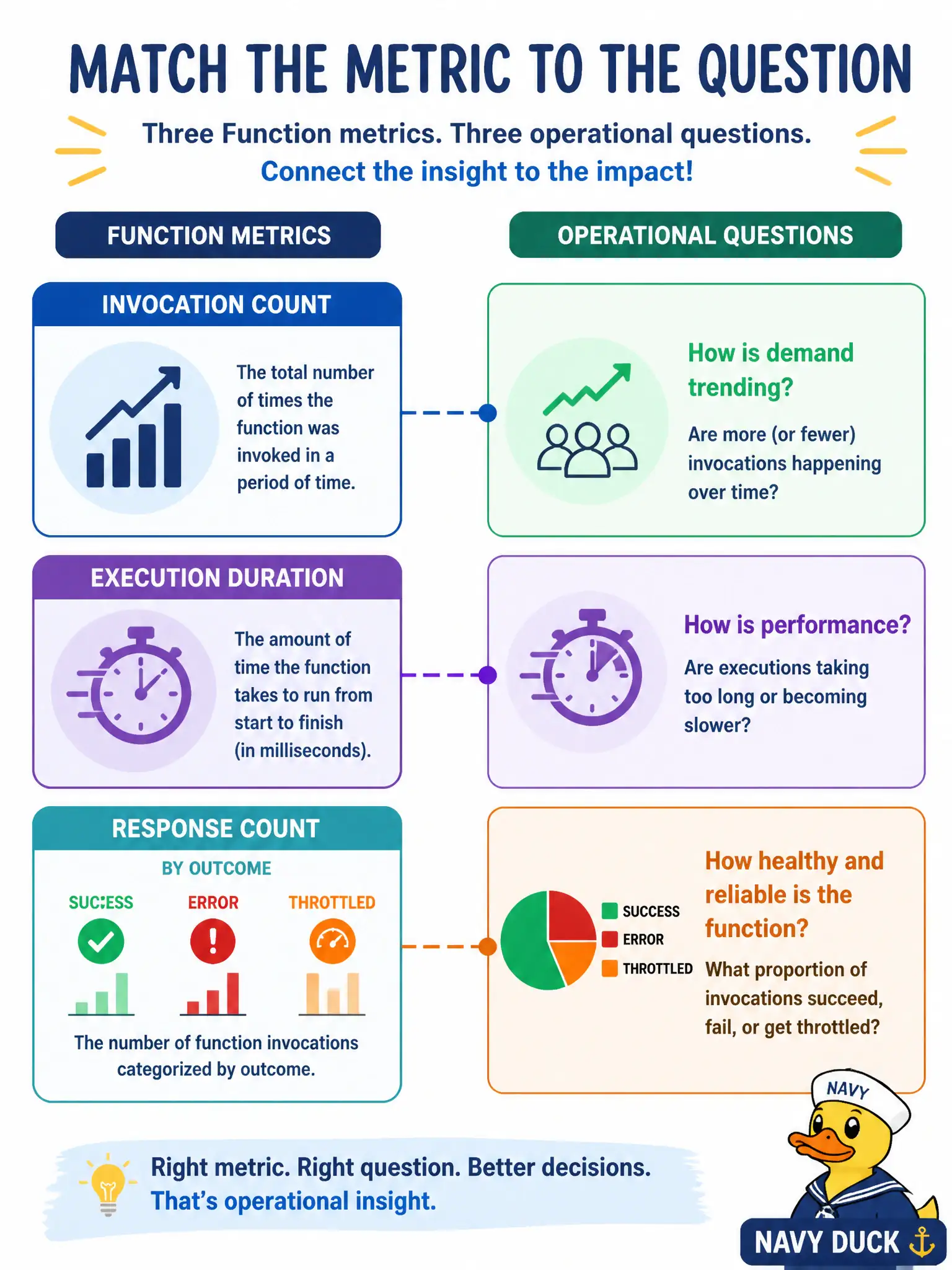
Count is how many times the doorbell rang; duration is how long each visit took; response type says whether the visit succeeded, errored, or got a busy signal.
Full Explanation
For a permitting Function that sometimes fails, feels slow, or seems overwhelmed, map symptoms to the correct oci_faas metrics. FunctionInvocationCount shows how often the function ran. FunctionExecutionDuration shows how long executions took in milliseconds. FunctionResponseCount sliced by responseType separates Success, Error, and Throttled so operators can tell application failures from capacity/rate throttling. That triad separates volume, latency, and outcome class for municipal troubleshooting.
Swapping the meanings so FunctionExecutionDuration counts runs and FunctionInvocationCount measures latency in milliseconds inverts the metrics and leads to wrong alarms. Claiming FunctionResponseCount is only for Detached invokes and never shows Error or Throttled is incorrect; response typing is how Success/Error/Throttled are distinguished for investigation. Interpreting empty Errors and Throttles charts as proof that metrics collection is always broken is unsafe—empty series often mean those outcomes did not occur in the interval.
Exam caveat: duration alone cannot diagnose throttling; a slow success and a 429 throttle are different response classes even if users report “slowness.” Operational check: during a repro window, chart InvocationCount, ExecutionDuration, and ResponseCount by responseType side by side; confirm whether citizen reports align with Error spikes, Throttled spikes, or merely long Success durations before changing code or limits.