
A county analytics function needs GraalVM packaging that the standard FDK runtime images do not cover. What advanced OCI Functions packaging path is documented?
Select an answer to reveal the explanation.
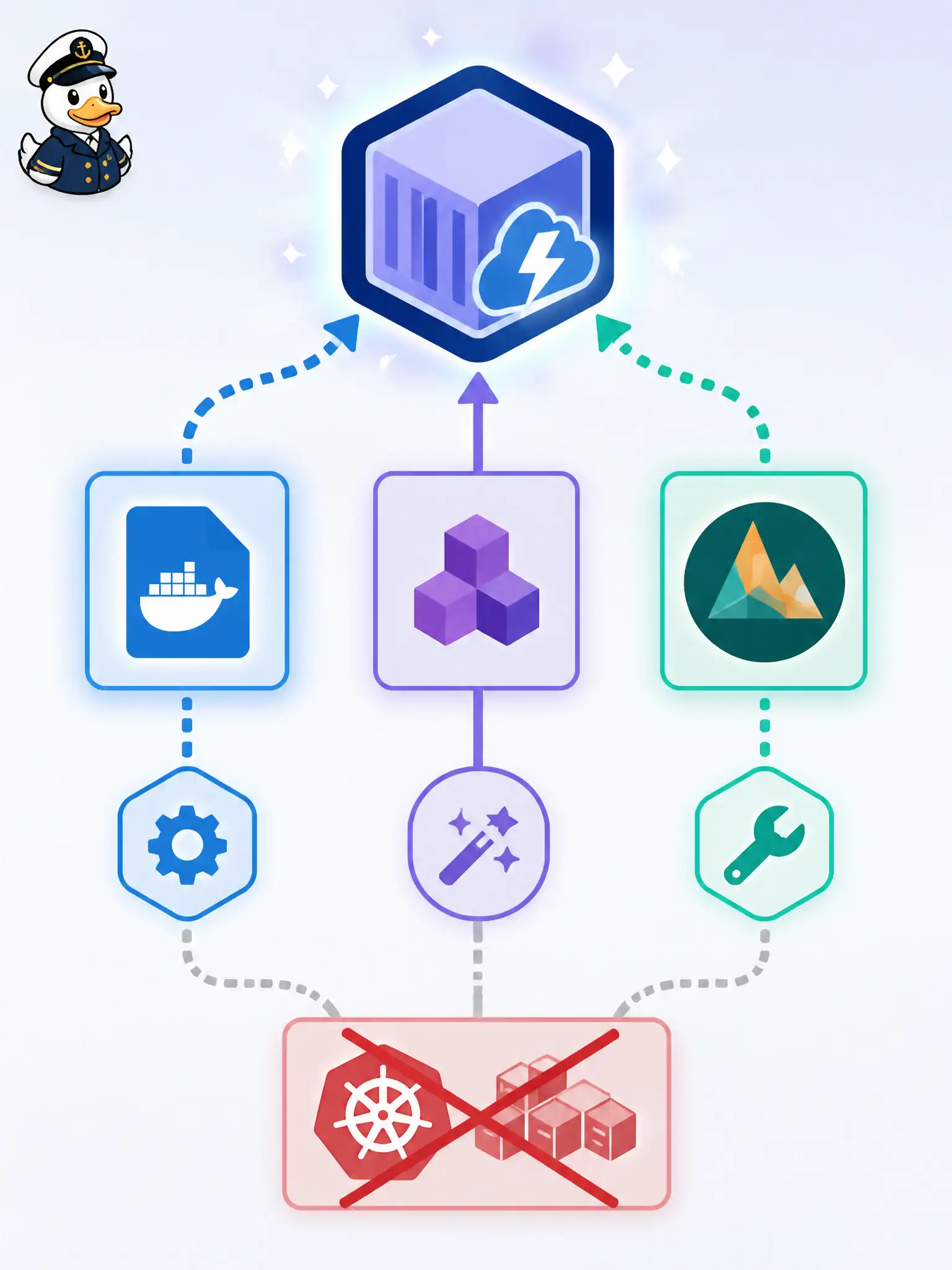
Short Explanation
Bring-your-own Dockerfile is the escape hatch when stock FDK images are not enough—including GraalVM cases. You still ship a function image, not an OKE Deployment.
Full Explanation
When a county analytics function needs GraalVM packaging that stock FDK runtime images do not cover, the documented advanced path is to supply a custom Dockerfile so OCI Functions still runs your image as a function. Bring-your-own Dockerfile is an escape hatch for specialized native-image or other packaging needs while remaining on Functions rather than abandoning the serverless invoke model.
Converting the workload into an OKE Deployment and abandoning Functions fails by concept because the question asks for the Functions packaging path; moving to Kubernetes is a different compute model, not the documented custom-image answer. Uploading raw source tarballs without any container image fails because a deployed function is a container image Functions pulls and runs—not an unpackaged source drop. Forcing the Java FDK and ignoring native-image requirements fails when GraalVM packaging is the actual need; stock FDK images are insufficient for that case by premise.
Exam caveat: custom Dockerfiles are an advanced path, not the default hello-world route, and you still must produce a valid function image that respects Functions’ invoke contract. Operational check: build the custom image locally, deploy it to the Functions application, invoke with a representative analytics payload, and verify cold-start and memory settings before promoting the county workload.