
In OCI Functions, which statement correctly distinguishes the function from its application?
Select an answer to reveal the explanation.
Short Explanation
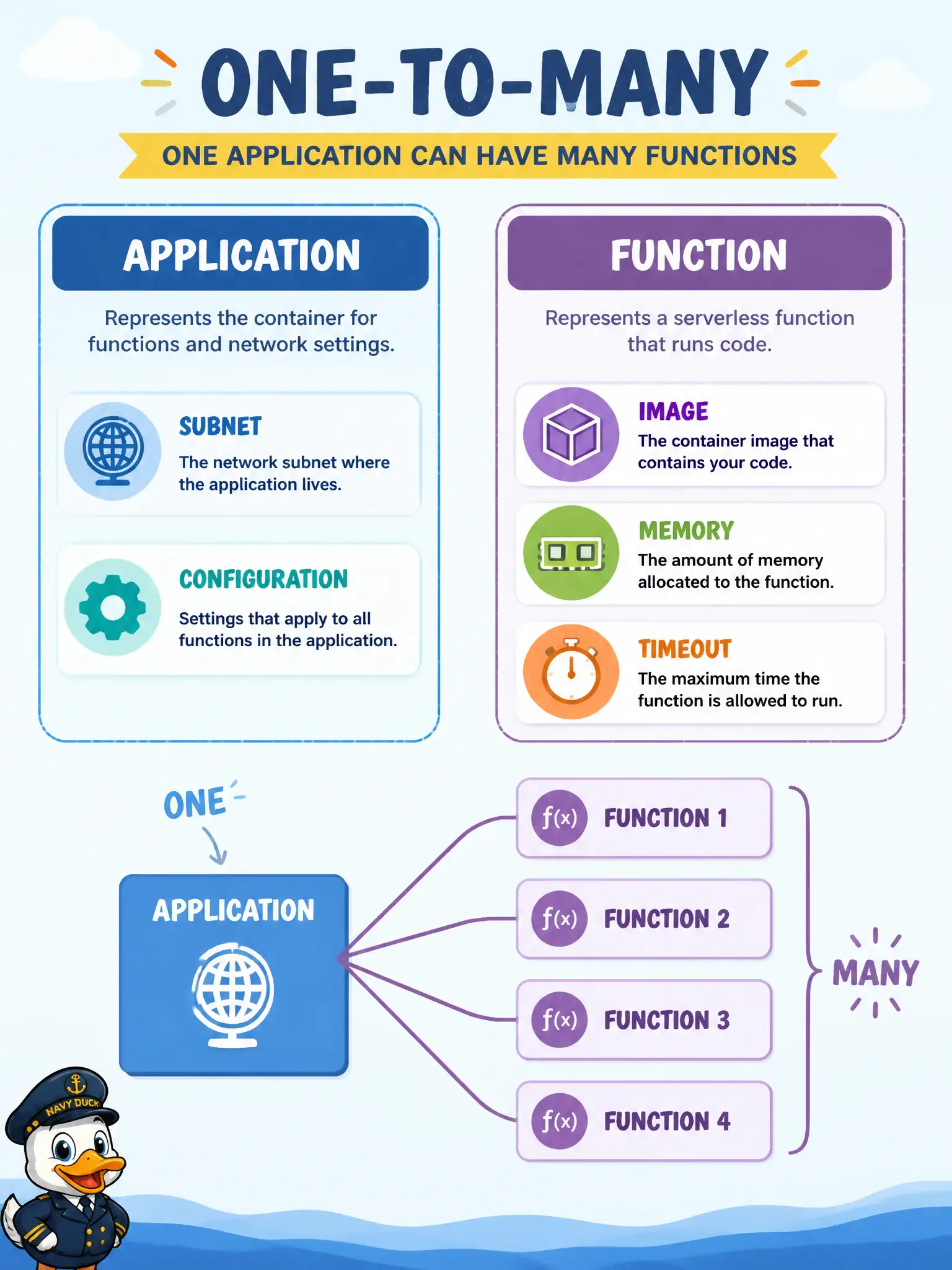
The function is the runner you invoke; the application is the gym it belongs to. Image, memory, and timeout live on the function, but that function always sits inside exactly one application’s network and shared config.
Full Explanation
In OCI Functions, the function is the invoked unit: the container image plus settings such as memory and timeout, and it always belongs to exactly one application. The application supplies the shared neighborhood—subnets and shared configuration—while the function is what callers invoke. That separation lets a municipal team place many handlers under one networked application without treating the application as a mere label.
Claiming the function owns the VCN subnets while the application is only a display name fails by concept because subnet attachment is defined on the application, not owned per function as its primary networking object. Saying a function may float across applications without redeploy because OCIDs are interchangeable fails because a function is bound to one application; moving it is not a casual OCID swap. Treating applications as optional wrappers used only when more than ten functions exist fails because the application is required for Functions—there is no orphan function hanging outside an application.
Exam caveat: changing application-level networking affects every function in that application, so noisy neighbors and shared config collisions are application design concerns. Operational check: inspect a deployed civic function and its parent application, confirm memory/timeout on the function resource and subnets/shared config on the application, and refuse designs that omit the application layer.