
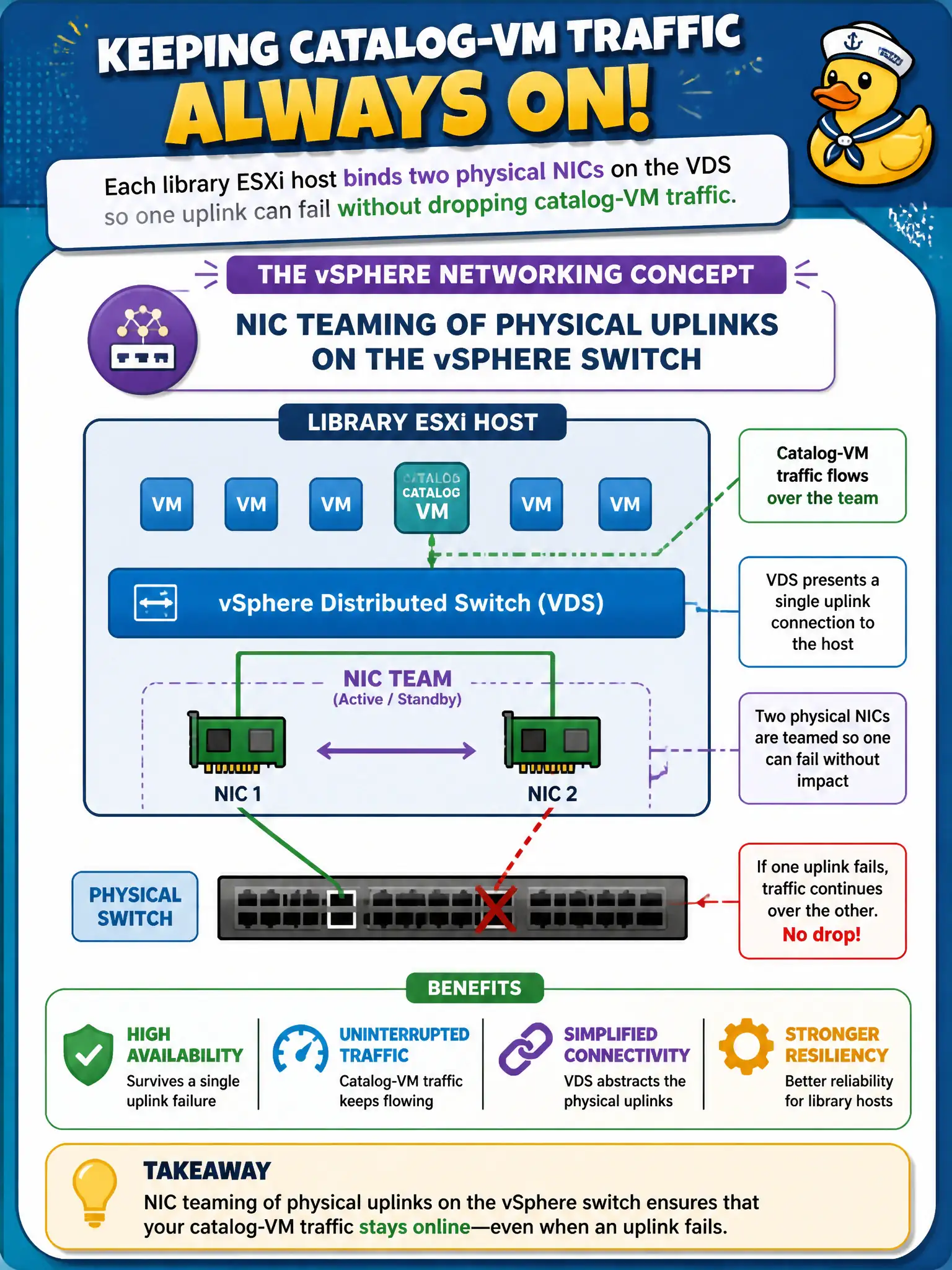
Each library ESXi host binds two physical NICs on the VDS so one uplink can fail without dropping catalog-VM traffic. Which vSphere networking concept is that?
Select an answer to reveal the explanation.
Short Explanation
Two driveway exits for the same library parking lot—that is NIC teaming. If one physical uplink dies, the other still carries the catalog VMs. Geneve, Edge clusters, and Tier-1 timers are NSX ideas, not vSphere uplink redundancy.
Full Explanation
Each library ESXi host that binds two physical NICs on the VDS so one uplink can fail without dropping catalog-VM traffic is using NIC teaming of physical uplinks on the vSphere switch. Teaming is two driveway exits for the same parking lot: if one physical uplink fails, the remaining uplink still carries the catalog VMs according to the teaming and failover policy. Geneve overlay encapsulation between host tunnel endpoints is an NSX overlay transport concept; it does not answer the vSphere uplink-redundancy question by itself. NSX Edge clustering for north-south centralized services provides HA for Edge appliances and services such as NAT—not host pNIC teaming for VM port-group traffic on the VDS. A Tier-1 gateway failover timer on the library segment concerns Tier-1 service failover timing, not binding two physical NICs on the host switch. Exam caveat: NIC teaming is configured on the vSphere switch or uplink profile context; after NSX preparation, uplink teaming may also appear in NSX uplink profiles, but the stem asks for the vSphere networking concept of teaming physical uplinks. Operational check: on the library VDS, confirm two uplinks are assigned, review the teaming and failover order, fail one physical link in a maintenance window, and verify catalog VMs remain reachable on the surviving uplink without requiring Edge or Tier-1 changes.