
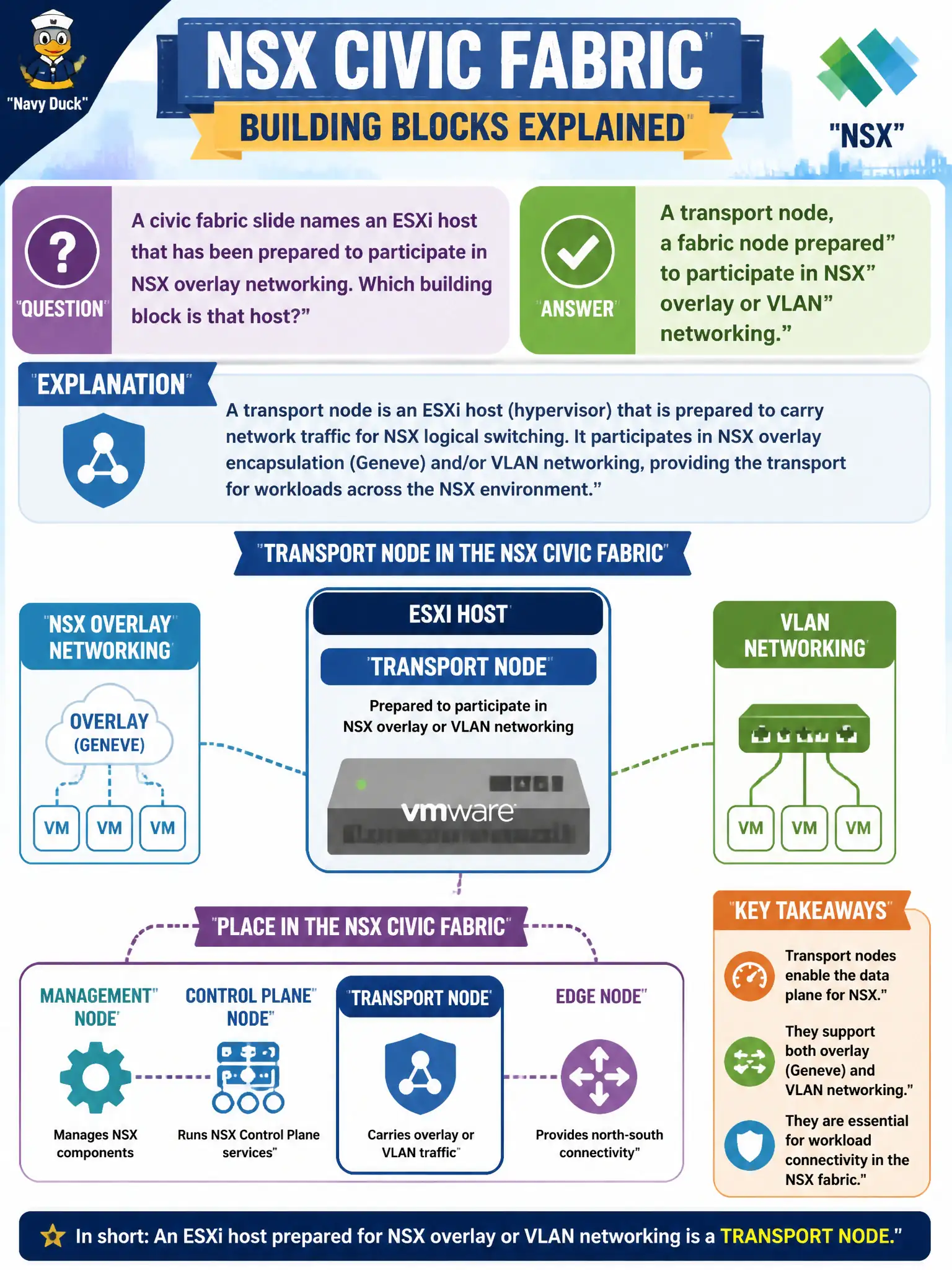
A civic fabric slide names an ESXi host that has been prepared to participate in NSX overlay networking. Which building block is that host?
Select an answer to reveal the explanation.
Short Explanation
A prepared ESXi host is a transport node—the civic on-ramp that can carry overlay or VLAN NSX traffic. vCenter is the compute manager that inventories hosts, not the overlay endpoint itself. Intelligence appliances and segments are different objects on the slide.
Full Explanation
A transport node is a fabric node—commonly an ESXi host—prepared to participate in NSX overlay or VLAN networking. The civic fabric slide naming a prepared host is identifying that building block, not a compute manager, Intelligence appliance, or segment object. vCenter as compute manager supplies inventory; it is not itself the overlay endpoint host object. NSX Intelligence analyzes traffic; it does not "prepare" the host definition. A VLAN-backed segment is a logical network, not the host. Exam caveat: Edges are also transport nodes; preparation and transport zones determine which overlays/VLANs a node can carry. Operational check: in NSX fabric inventory, confirm the ESXi host shows as a transport node with expected transport zones before placing civic VMs on overlay segments. Keep municipal naming and change tickets aligned with the software objects so civic audits can trace intent. Prefer verifying with a non-production agency workload before promoting the same pattern to life-safety systems. Record realization state and underlay health in the runbook used by on-call city operators. Keep municipal naming and change tickets aligned with the software objects so civic audits can trace intent.