
Library consortium leadership asks what “resource pooling” means in an SDDC briefing. What should the candidate identify?
Select an answer to reveal the explanation.
Short Explanation
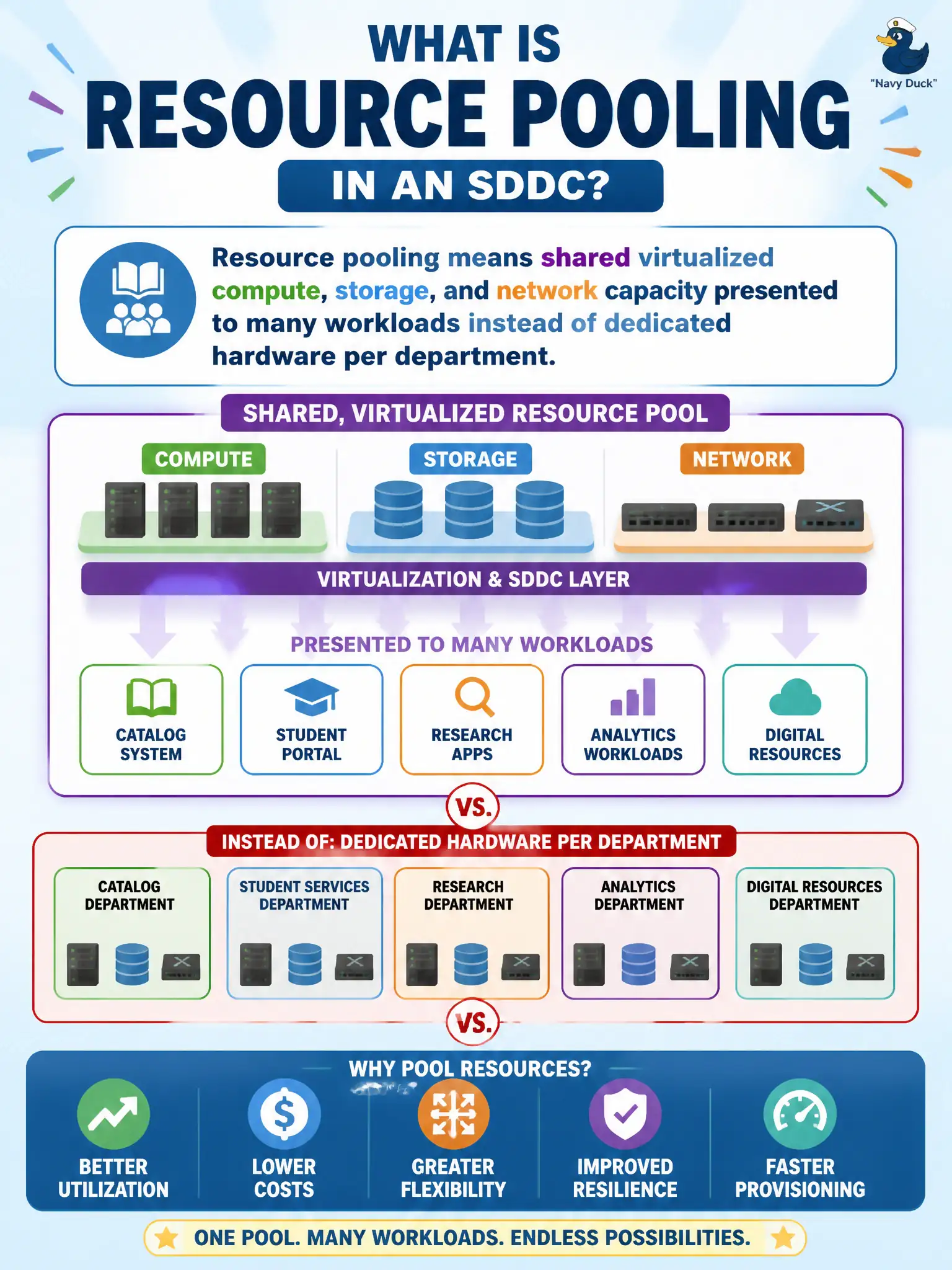
Pooling is the shared civic warehouse, not a locked closet per branch. Compute, storage, and network are virtualized once and presented to many workloads.
Full Explanation
Resource pooling in an SDDC means shared virtualized compute, storage, and network capacity presented to many workloads instead of dedicated hardware per department. Library consortium leadership should picture a shared civic pool where branches consume slices of capacity through policy, not a locked closet of server, array, and switch per branch. Dedicating physical gear per branch is the opposite of pooling. Pooling only Horizon desktop entitlements while leaving the fabric physical addresses EUC licensing, not SDDC resource pools. Combining public SaaS mailboxes does not create pooled on-premises infrastructure for library systems. Exam caveat: pooling does not remove the need for reservations, limits, tenancy isolation, or chargeback conversations in municipal governance. Operational check: show that two library workloads can draw compute, datastore, and segment capacity from the same clusters without each owning a dedicated physical stack, while still remaining isolated by network policy. Keep municipal naming and change tickets aligned with the software objects so civic audits can trace intent. Prefer verifying with a non-production agency workload before promoting the same pattern to life-safety systems.