
Parks helpdesk asks whether thin-client kiosks still need local updates. What should the operator tell them?
Select an answer to reveal the explanation.
Short Explanation
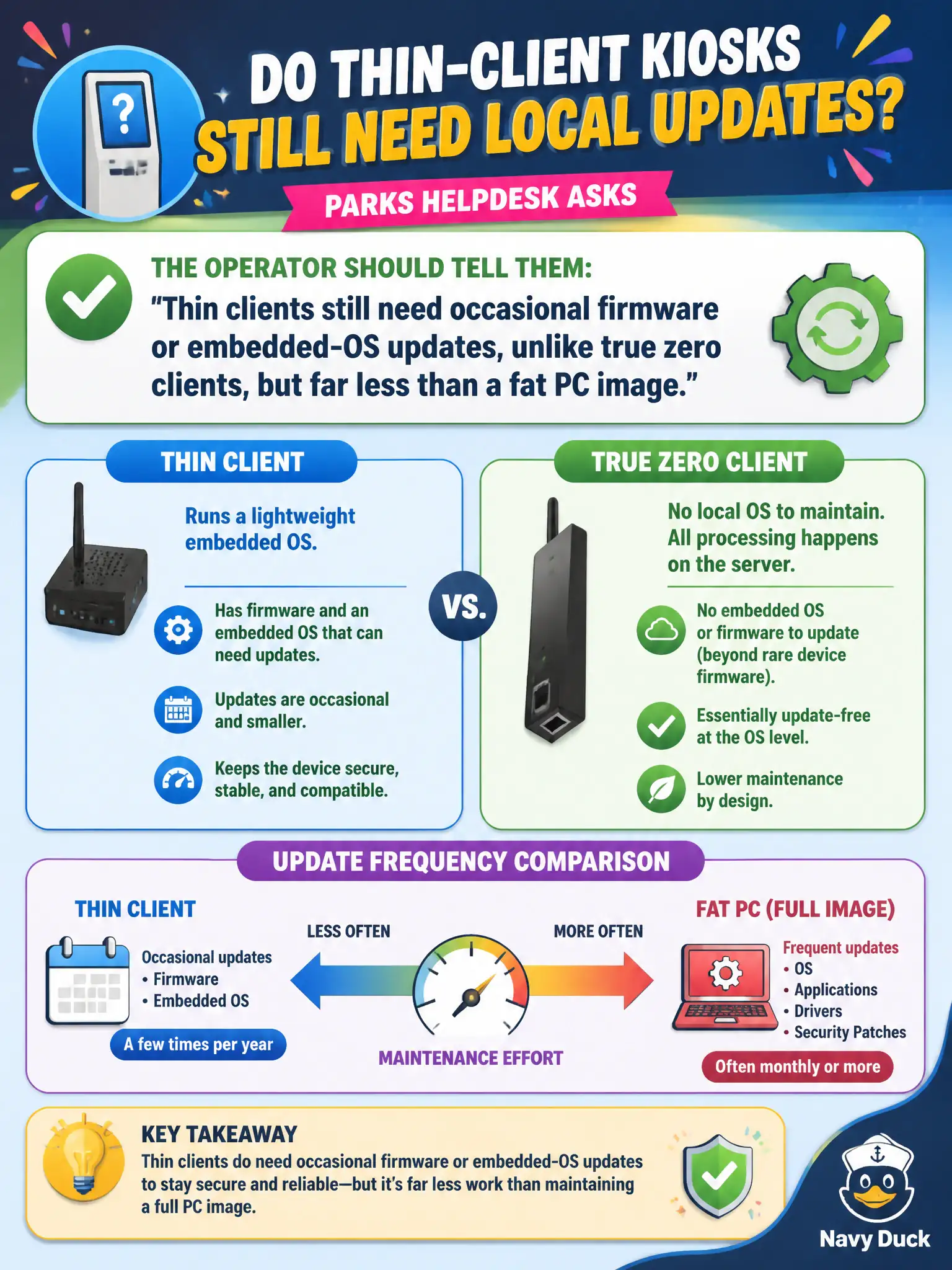
Thin is not zero. A tiny OS still wants an occasional firmware or embedded patch — more than a protocol puck, way less than imaging a parks laptop. App Volumes layers apps onto VDI desktops; it is not how you patch the kiosk OS.
Full Explanation
Thin-client kiosks still need occasional firmware or embedded-OS updates—more than true zero clients, far less than a fat PC image—and they are not the same as zero clients. In municipal EUC terms, treat the endpoint as a window into city systems when the architecture says so, not as the system of record for the files or apps in the stem. Distractor concept: Claiming thin clients never need updates and equating them with zero clients is false. Distractor concept: Thin clients do not require the same full Windows image as city laptops. Distractor concept: App Volumes packages patch VDI desktops, not the kiosk's embedded OS as the primary model. Exam caveat: Thin ≠ zero: still patch the tiny OS/firmware, but do not treat it like a fat image. Operational check: Schedule embedded/firmware maintenance for Parks thin kiosks and show the lighter cadence versus laptop imaging. Record the chosen control and the rejected failure modes in the civic change ticket or runbook so on-call staff and auditors share the same rationale after the next maintenance window. Re-validate after personnel or image changes that the same control still meets the city's continuity, security, and support expectations for this service.