
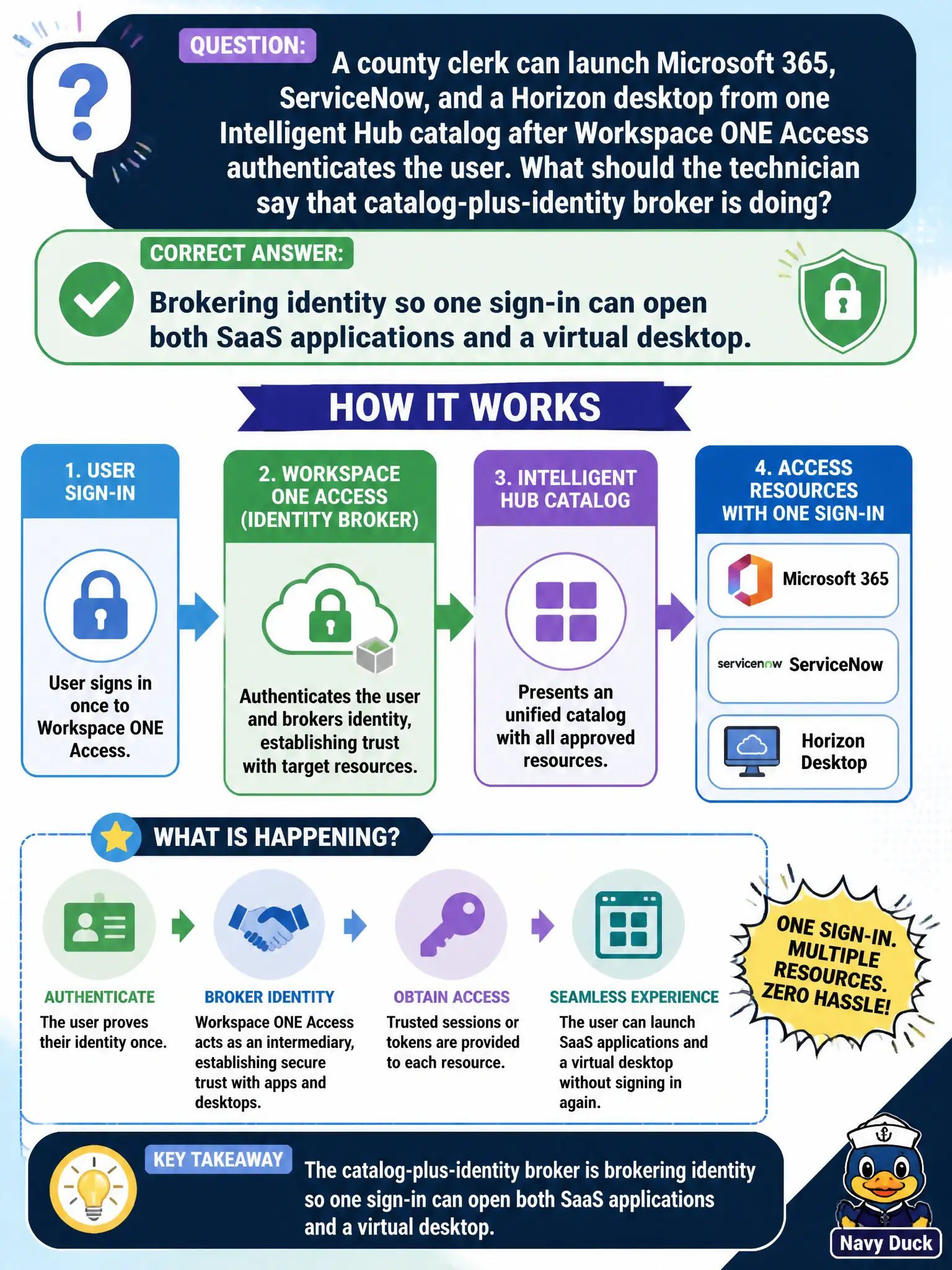
A county clerk can launch Microsoft 365, ServiceNow, and a Horizon desktop from one Intelligent Hub catalog after Workspace ONE Access authenticates the user. What should the technician say that catalog-plus-identity broker is doing?
Select an answer to reveal the explanation.
Short Explanation
Hub after Access is a civic lobby directory: one badge, then tiles for SaaS and the virtual desktop. That is identity brokering, not application layering. App Volumes stacks bits on a desktop; it does not sign the clerk into ServiceNow.
Full Explanation
Intelligent Hub after Workspace ONE Access presenting Microsoft 365, ServiceNow, and a Horizon desktop is identity brokering so one sign-in can open SaaS and VDI. In municipal EUC terms, treat the endpoint as a window into city systems when the architecture says so, not as the system of record for the files or apps in the stem. Distractor concept: App Volumes layers apps into a desktop; it does not sign the clerk into SaaS. Distractor concept: UEM compliance policy does not replace Active Directory as the identity broker story here. Distractor concept: Installing Horizon Agent on a home PC does not turn SaaS apps into VDI via Hub. Exam caveat: Catalog-plus-Access = identity brokering; do not answer with application layering or agent installs. Operational check: Authenticate via Access, launch one SaaS tile and one Horizon desktop from Hub, and confirm a single identity path. Record the chosen control and the rejected failure modes in the civic change ticket or runbook so on-call staff and auditors share the same rationale after the next maintenance window. Re-validate after personnel or image changes that the same control still meets the city's continuity, security, and support expectations for this service.