
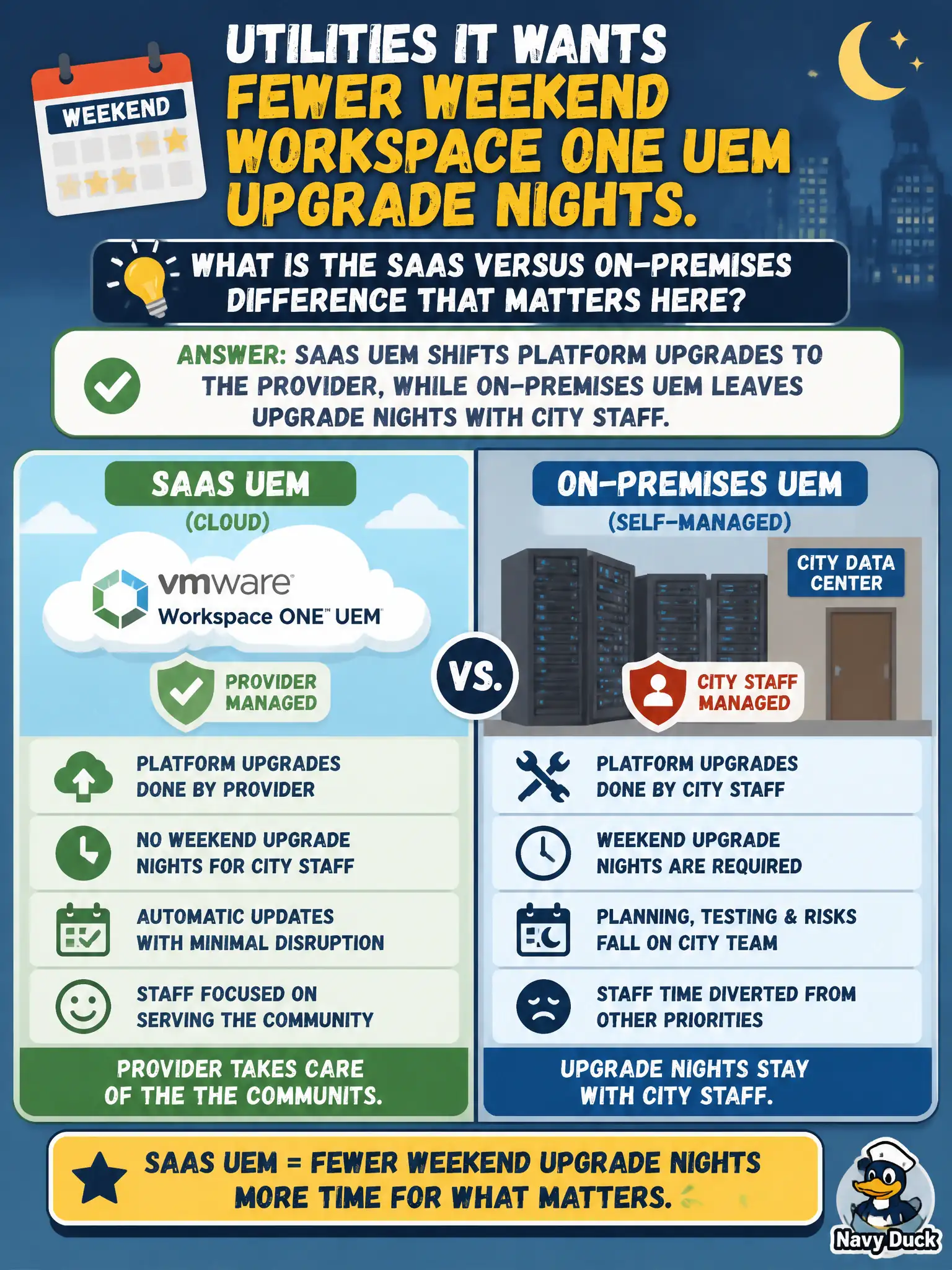
Utilities IT wants fewer weekend Workspace ONE UEM upgrade nights. What is the SaaS versus on-premises difference that matters here?
Select an answer to reveal the explanation.
Short Explanation
Weekend upgrades are like who mows the city-hall lawn. SaaS UEM means the provider handles the platform; on-prem UEM means utilities staff still own Saturday night. That split is about who patches the service, not a writable-volume trick.
Full Explanation
SaaS Workspace ONE UEM shifts platform upgrades to the provider, while on-premises UEM leaves upgrade nights with city utilities staff—that is the difference that reduces weekend console work. In municipal EUC terms, treat the endpoint as a window into city systems when the architecture says so, not as the system of record for the files or apps in the stem. Distractor concept: On-premises UEM does not automatically ship platform upgrades to the vendor so staff never schedule windows. Distractor concept: SaaS UEM does not still require city staff to patch every UEM console VM on Saturday night. Distractor concept: App Volumes writable volumes do not perform UEM platform upgrades for either model. Exam caveat: Upgrade ownership is the SaaS-versus-on-prem signal—do not invent App Volumes as the upgrader. Operational check: Compare the utilities maintenance calendar: SaaS release ownership versus on-prem console VM patch weekends, and brief stakeholders on who stays late. Record the chosen control and the rejected failure modes in the civic change ticket or runbook so on-call staff and auditors share the same rationale after the next maintenance window. Re-validate after personnel or image changes that the same control still meets the city's continuity, security, and support expectations for this service.