
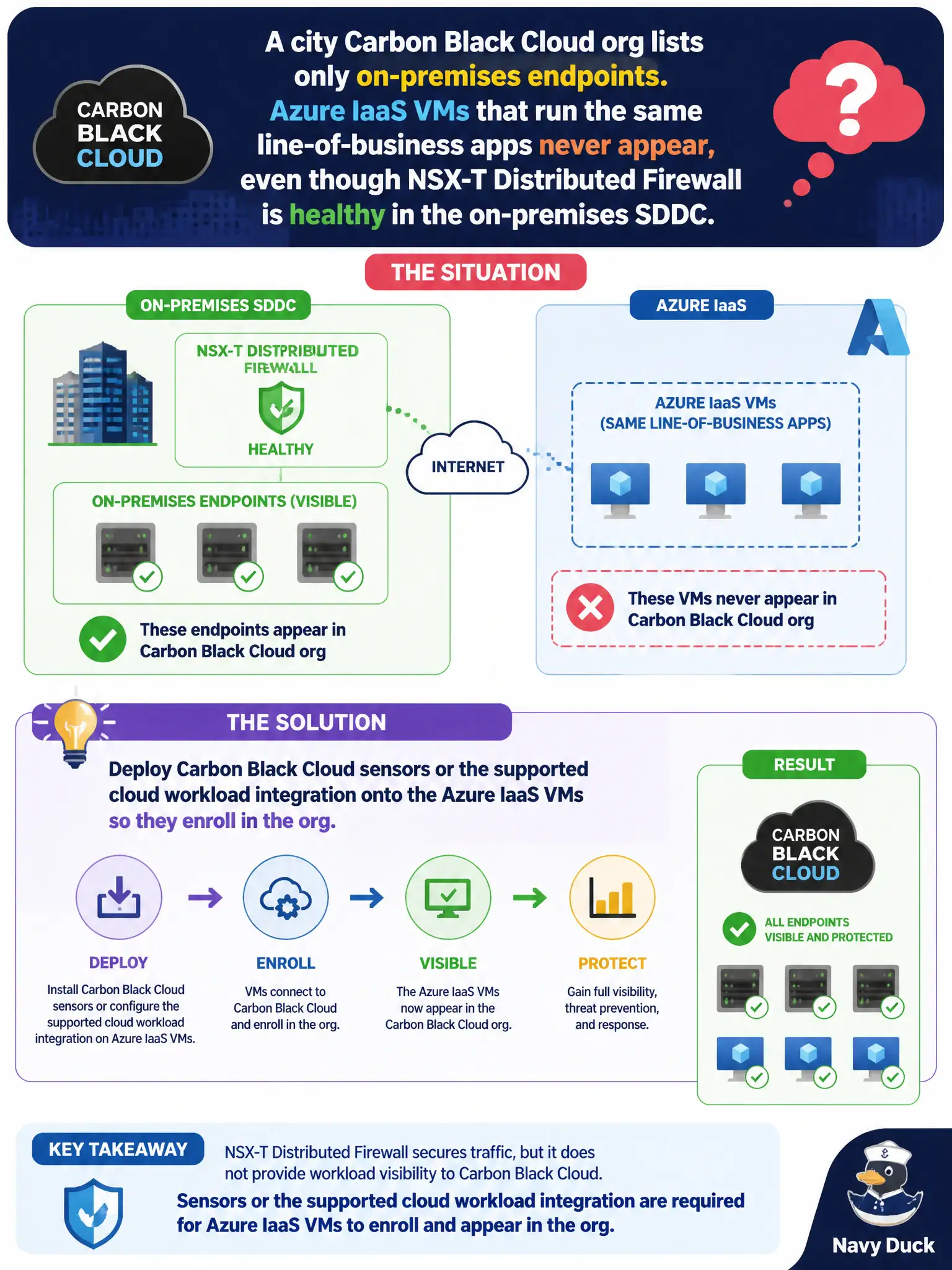
A city Carbon Black Cloud org lists only on-premises endpoints. Azure IaaS VMs that run the same line-of-business apps never appear, even though NSX-T Distributed Firewall is healthy in the on-premises SDDC. What should the administrator do?
Select an answer to reveal the explanation.
Short Explanation
Carbon Black only sees machines that actually run a sensor or a supported cloud connector. Azure VMs are not magically inventoried because on-prem NSX already has DFW. Put a workload sensor on those IaaS guests.
Full Explanation
When a city Carbon Black Cloud org lists only on-premises endpoints and Azure IaaS VMs that run the same line-of-business apps never appear even though NSX-T Distributed Firewall is healthy in the on-premises SDDC, deploy Carbon Black Cloud sensors or the supported cloud workload integration onto the Azure IaaS VMs so they enroll in the org. CBC inventory is not filled by on-premises NSX health; cloud VMs need their own sensor or supported integration. That enrollment brings civic Azure workloads under the same prevention org. Adding the Azure VM private IPs to an on-premises NSX-T group so DFW inventory fills the CBC org fails by concept because NSX groups do not enroll Azure VMs as CBC sensors. Enrolling the Azure VMs in Workspace ONE Access only, because Access substitutes for CBC on IaaS, fails by concept because Access SSO is not Carbon Black Cloud endpoint prevention inventory. Enabling identity firewall toward Azure AD so NSX Manager publishes those VMs as sensors fails by concept because IDFW toward Azure AD does not publish Azure VMs as CBC sensors. Exam caveat: cloud IaaS visibility in CBC requires sensors or supported cloud integration in that cloud—on-prem NSX, Access, or IDFW will not auto-enroll Azure VMs. Operational check: deploy CBC sensors or cloud workload integration on the Azure VMs, confirm they appear in the city CBC org, assign prevention policy, and document hybrid enrollment in the municipal cloud security standard.