
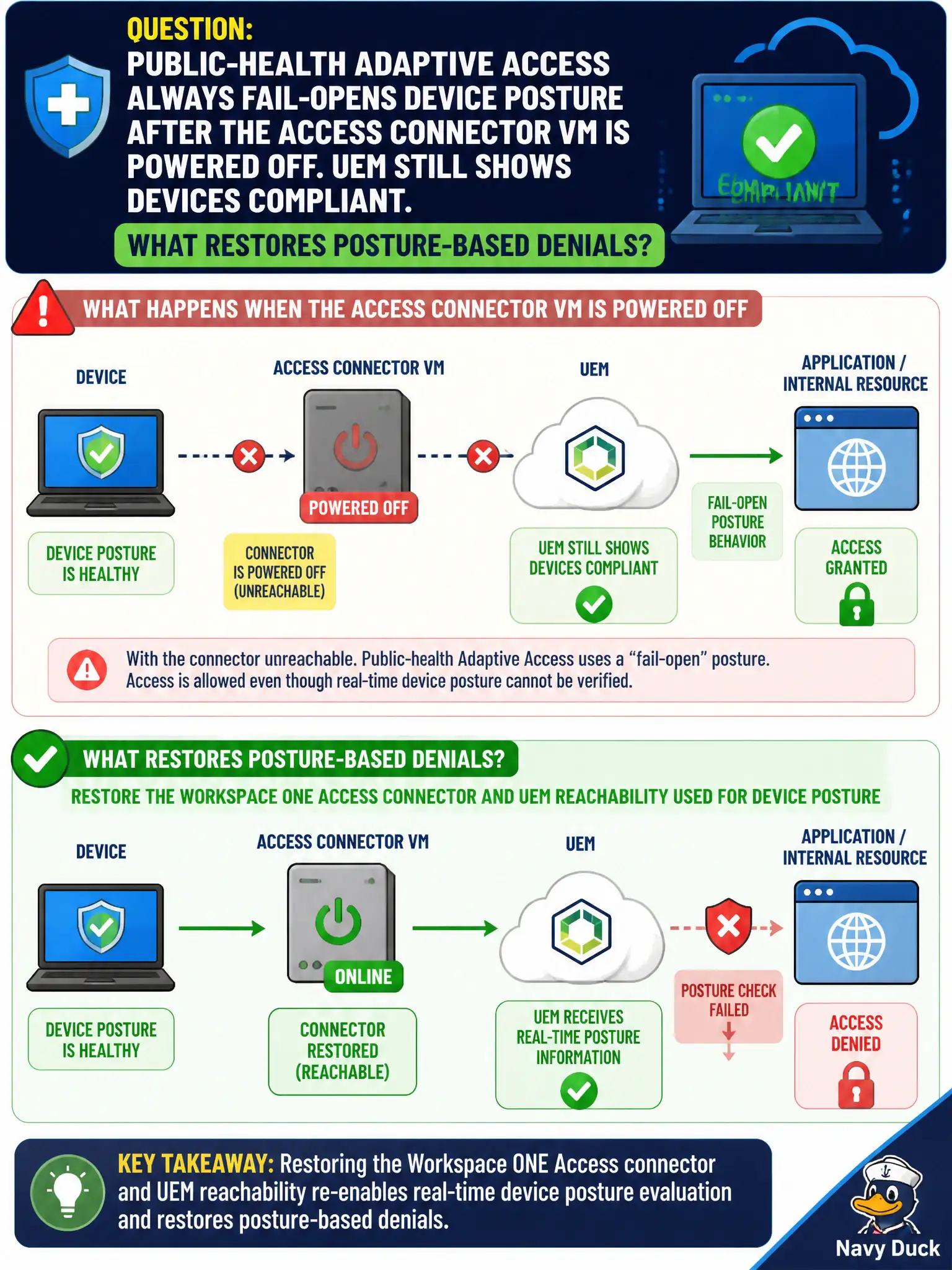
Public-health Adaptive Access always fail-opens device posture after the Access connector VM is powered off. UEM still shows devices compliant. What restores posture-based denials?
Select an answer to reveal the explanation.
Short Explanation
Adaptive Access needs a live connector to hear UEM posture. Power that VM back on and restore UEM reachability instead of fail-opening the clinic door.
Full Explanation
When public-health Adaptive Access always fail-opens device posture after the Access connector VM is powered off while UEM still shows devices compliant, restore the Workspace ONE Access connector and UEM reachability used for device posture. Adaptive Access needs the connector path to evaluate UEM posture; a powered-off connector causes fail-open behavior even when UEM itself is green. Bringing the connector back restores civic posture-based denials. Adding the clinics to an NSX-T default-allow DFW section fails by concept because DFW default-allow does not restore Access connector posture evaluation. Switching Adaptive Access to Carbon Black Cloud sensor groups as the identity provider fails by concept because CBC sensor groups are not the Access device-posture IdP path from UEM. Disabling compliance in UEM so Access no longer queries posture fails by concept because that permanently weakens posture enforcement instead of fixing the connector. Exam caveat: Adaptive Access fail-open after connector power-off means restore connector and UEM reachability—not DFW allows, CBC-as-IdP, or disabling compliance. Operational check: power on and heal the Access connector, verify UEM posture queries succeed, confirm non-compliant clinics are denied, and add connector HA monitoring to the public-health EUC operations checklist for civic clinical access control.