
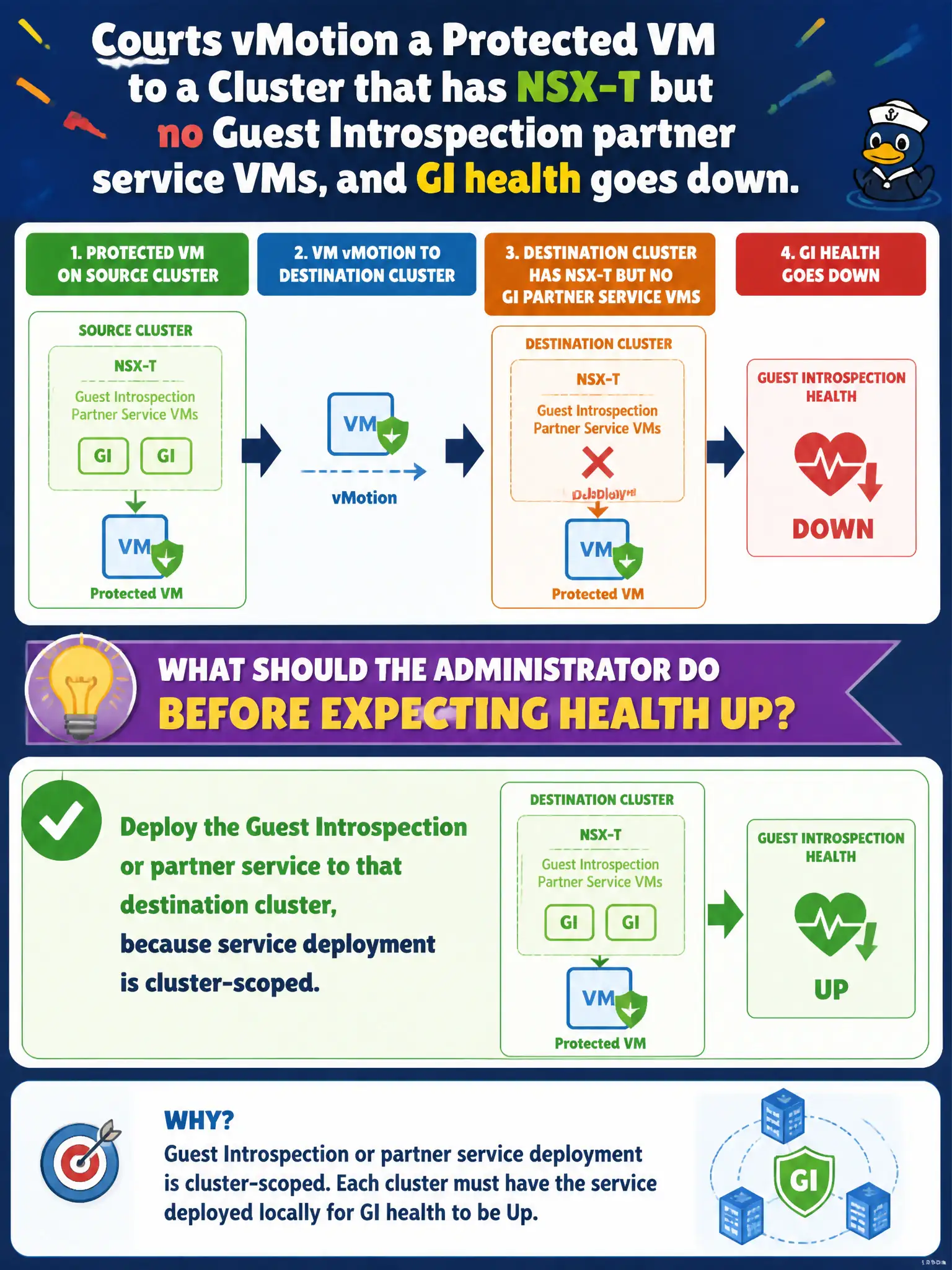
Courts vMotion a protected VM to a cluster that has NSX-T but no Guest Introspection partner service VMs, and GI health goes down. What should the administrator do before expecting health Up?
Select an answer to reveal the explanation.
Short Explanation
The partner SVM does not hitch a ride with vMotion. Each cluster needs its own GI or partner service deployment. Land the VM on a prepared cluster, or deploy the service there first.
Full Explanation
When courts vMotion a protected VM to a cluster that has NSX-T but no Guest Introspection partner service VMs, GI health goes down because service deployment is cluster-scoped. Deploy the Guest Introspection or partner service to that destination cluster before expecting health Up; the SVM does not ride along with vMotion.
Increasing DFW rule count on the destination cluster does not restore GI health. Moving the VM’s Carbon Black sensor into a new device group and skipping GI ignores the GI requirement. Registering Workspace ONE Access as a compute manager on the destination does not deploy GI partner services.
Exam caveat: GI/partner service is per cluster—validate destination preparation before vMotion of protected VMs.
Operational check: deploy GI/partner service on the destination cluster, vMotion a pilot, confirm GI health Up, and add destination GI checks to the courts mobility runbook.
Cluster-scoped GI services must exist on the courts destination before protected vMotion. Encode destination GI checks into the vMotion runbook and reject moves in automation when partner service health is missing on the target cluster. Keep destination-cluster GI service health evidence in the vMotion record so the next on-call engineer refuses unprotected moves without rediscovering cluster-scoped partner deployment under pressure.