
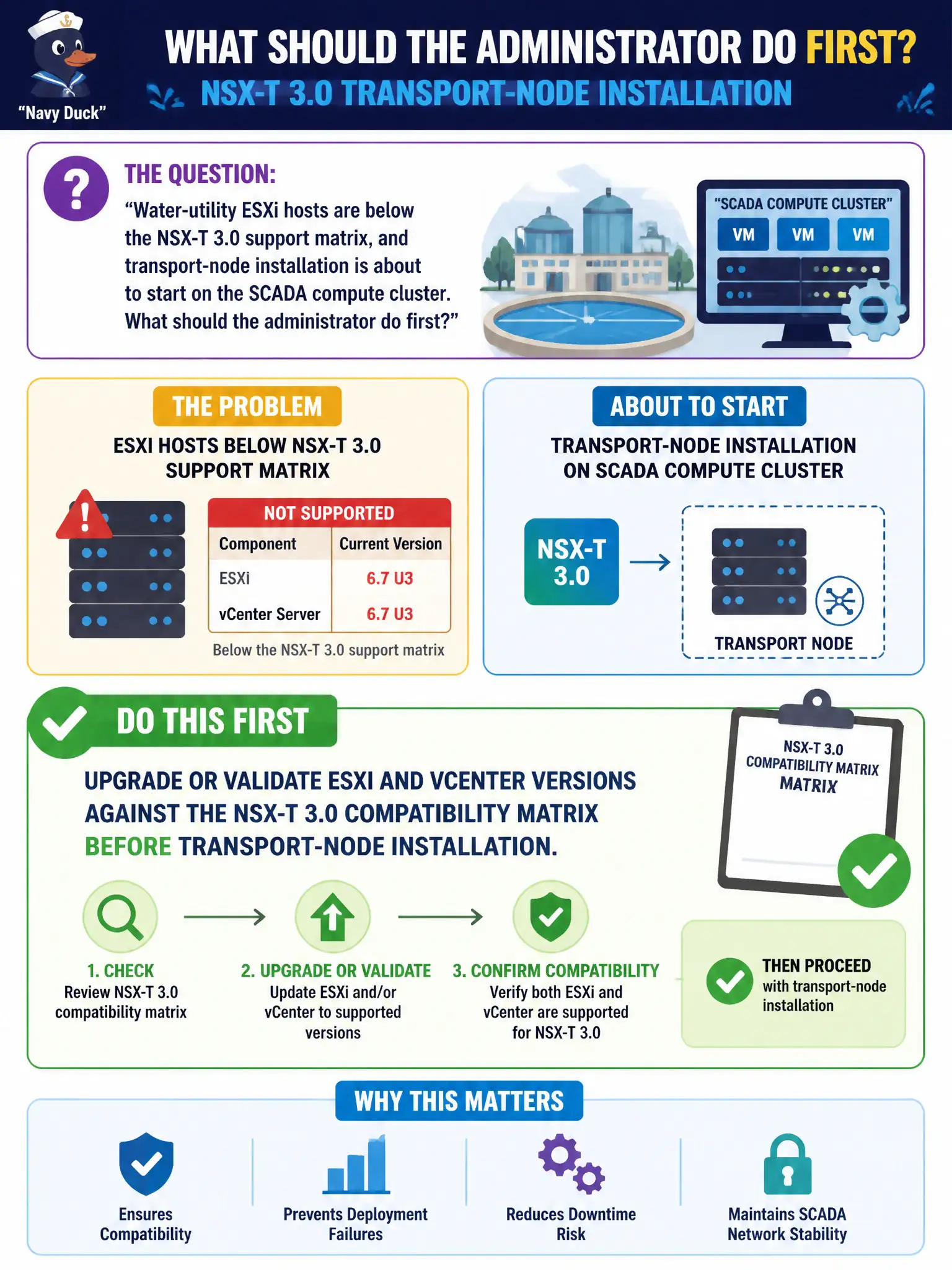
Water-utility ESXi hosts are below the NSX-T 3.0 support matrix, and transport-node installation is about to start on the SCADA compute cluster. What should the administrator do first?
Select an answer to reveal the explanation.
Short Explanation
Think of the compatibility matrix as the weight limit on a bridge—drive the wrong truck and the install collapses. Get ESXi and vCenter onto supported NSX-T 3.0 versions before you push transport-node bits. Forcing VIBs onto old hosts is how you get a half-built security fabric.
Full Explanation
Water-utility SCADA compute hosts below the NSX-T 3.0 support matrix must be upgraded or validated against the official compatibility matrix before transport-node installation. Unsupported ESXi/vCenter versions risk failed vib installs and unsupported Distributed Firewall behavior on critical OT-adjacent workloads.
Forcing NSX VIBs onto unsupported hosts to “start DFW today” violates supportability and invites unstable preparation. Ignoring host versions and increasing Carbon Black Cloud sensor size does not prepare NSX transport nodes. Moving SCADA VMs to a vSphere standard switch and skipping NSX-T abandons the intended distributed security path.
Exam caveat: compatibility matrix checks come before transport-node install—especially on SCADA or other sensitive civic clusters.
Operational check: compare ESXi and vCenter builds to the NSX-T 3.0 matrix, upgrade where required, re-validate, then start transport-node preparation on a pilot host before fleet rollout.
Compatibility matrix discipline protects SCADA-adjacent water hosts from unsupported vib gambles. Record matrix evidence in the change ticket, upgrade a canary host first, confirm transport-node success and DFW realization there, then proceed cluster-wide—never mark “forced vibs” as an accepted civic risk without vendor support.