
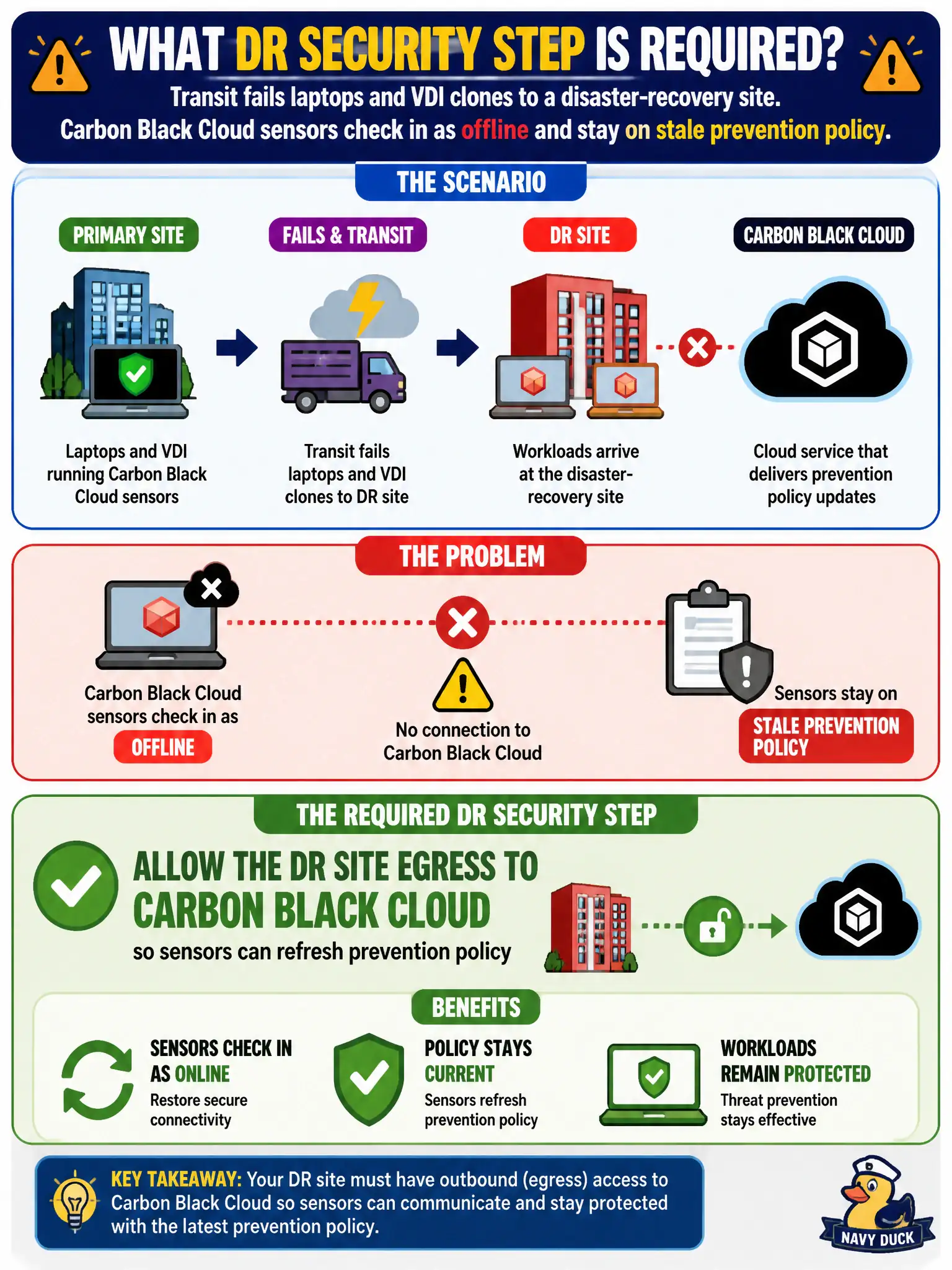
Transit fails laptops and VDI clones to a disaster-recovery site. Carbon Black Cloud sensors check in as offline and stay on stale prevention policy. What DR security step is required?
Select an answer to reveal the explanation.
Short Explanation
Carbon Black Cloud is a cloud dispatch desk. If the DR garage has no phone line out, the patrol cars keep last week's orders. Open DR egress to the cloud so sensors can pull fresh policy.
Full Explanation
When transit fails laptops and VDI clones to a disaster-recovery site and Carbon Black Cloud sensors check in as offline and stay on stale prevention policy, the required DR security step is to allow the DR site egress to Carbon Black Cloud so sensors can refresh prevention policy. Treat CBC as the transit safety radio network that sensors must reach from the warm site, or they keep yesterday's orders. Rebuilding a local Carbon Black appliance at DR because the cloud product cannot be used from a second site fails by concept because Carbon Black Cloud is a cloud service; DR needs egress and connectivity, not a forged on-prem appliance assumption. Disabling sensors at DR until the primary site returns fails because disabled sensors leave recovered endpoints without prevention during the outage. Pointing sensors at NSX Manager as a substitute for Carbon Black Cloud fails because NSX Manager is not the CBC cloud prevention control plane. Exam caveat: DR for CBC-managed endpoints requires DR egress so sensors check in and refresh policy; local appliance myths, sensor disable, and NSX Manager substitution are wrong. Operational check: open required HTTPS egress from DR to Carbon Black Cloud, fail a test laptop, confirm sensor online and policy refresh, and document CBC connectivity in the transit DR checklist.