
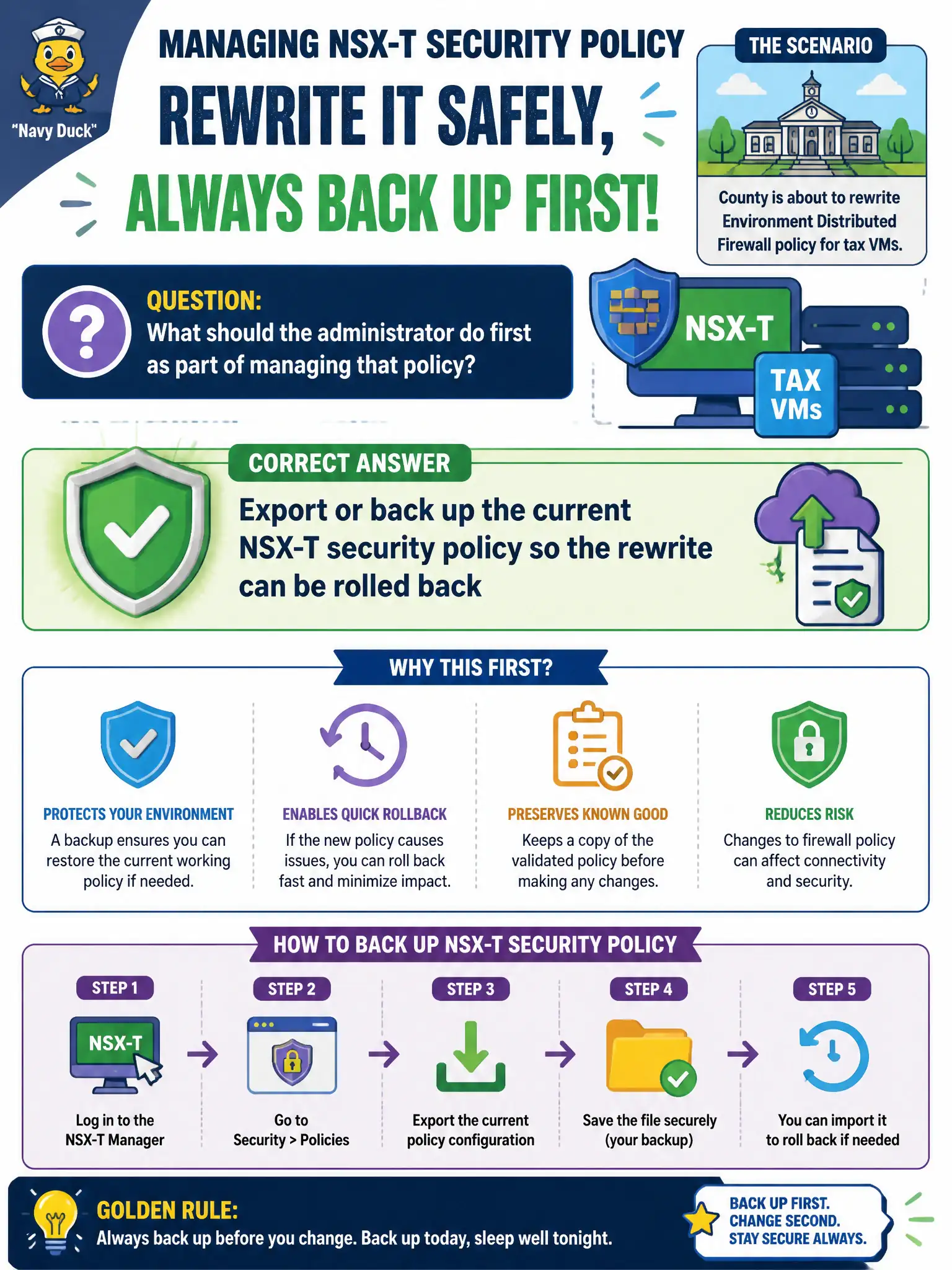
County is about to rewrite Environment Distributed Firewall policy for tax VMs. What should the administrator do first as part of managing that policy?
Select an answer to reveal the explanation.
Short Explanation
Rewriting tax-VM firewall policy without an export is like remodeling city hall with no photo of the old floor plan. Save the current NSX-T policy first so the county can put the walls back if the rewrite goes sideways.
Full Explanation
Before county rewrites Environment Distributed Firewall policy for tax VMs, the administrator should first export or back up the current NSX-T security policy so the rewrite can be rolled back. Treat the export as photocopying the tax-office rulebook before rewriting chapters so a bad edit can be restored. Deleting unused firewall categories so the rewrite starts from a clean slate with no backup fails by concept because deleting categories without a recoverable export destroys rollback and can remove still-needed structure. Snapshotting only vCenter and assuming Distributed Firewall policy is included fails because vCenter snapshots do not capture NSX-T security policy as the rollback artifact. Filing a business-impact analysis instead of an NSX-T policy export fails because a BIA documents risk; it does not restore Distributed Firewall objects after a bad rewrite. Exam caveat: operational firewall management includes NSX Manager or security-policy backup before major rewrites; vCenter snapshots and BIA papers are not NSX policy backups. Operational check: take an NSX Manager configuration backup or policy export, store it with the change ticket, perform the Environment rewrite, verify tax VM connectivity and hit counts, and rehearse restore steps in the county runbook.