
A state university has received documented approval for a sole-source contract to upgrade proprietary campus building-automation controllers, and the vendor submits a lump-sum quote with no cost breakdown. What should the buyer do during negotiations to establish price reasonableness?
Select an answer to reveal the explanation.
Short Explanation
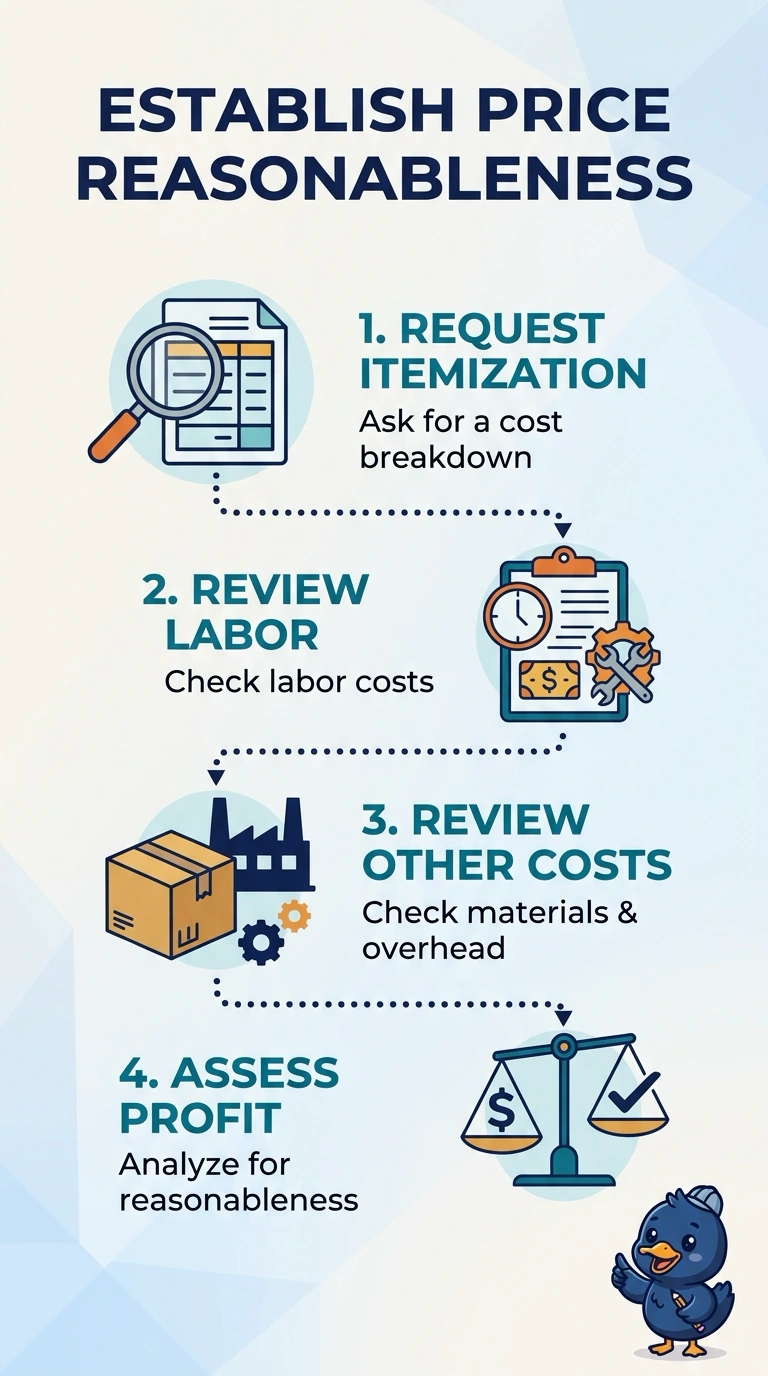
You’re right to pause before accepting a lump-sum quote when you have no way to see how it was priced. Sole-source approval doesn’t remove your duty to establish a fair price, so request an itemized cost breakdown of labor, materials, overhead, and profit for a defensible cost analysis.
Full Explanation
When competition is absent, market forces cannot validate pricing on their own, so you should request an itemized cost breakdown of labor, materials, overhead, and profit for cost analysis. Comparing individual cost elements with historical pricing or independent estimates helps you negotiate excessive markups and document price reasonableness in the procurement file. Accepting the lump-sum quote after a budget check fails the buyer’s fiduciary duty; noncompetitive awards require heightened price scrutiny. Issuing a public Invitation for Bids to seek lower quotes from unauthorized resellers contradicts the approved sole-source determination and wastes vendor and staff time on a solicitation that cannot be awarded competitively. Requiring the vendor to match the university’s internal budget figure substitutes an arbitrary spending cap for objective cost evaluation and may result in hidden scope cuts. One caveat: for commercial off-the-shelf items with published catalog pricing, price analysis against market rates may replace detailed cost data. As a practical check, prepare a written price-negotiation memorandum comparing each proposed cost element with your independent cost estimate before final execution.
Prefer to study offline? Printable PDF study book + test engine ($7.50, unofficial). These questions stay free here.