
A state agency receives fourteen proposals for a complex statewide broadband-mapping RFP, and five proposals score near the top while nine fall far short on technical capability and cost. How should the buyer manage the next evaluation phase efficiently and fairly?
Select an answer to reveal the explanation.
Short Explanation
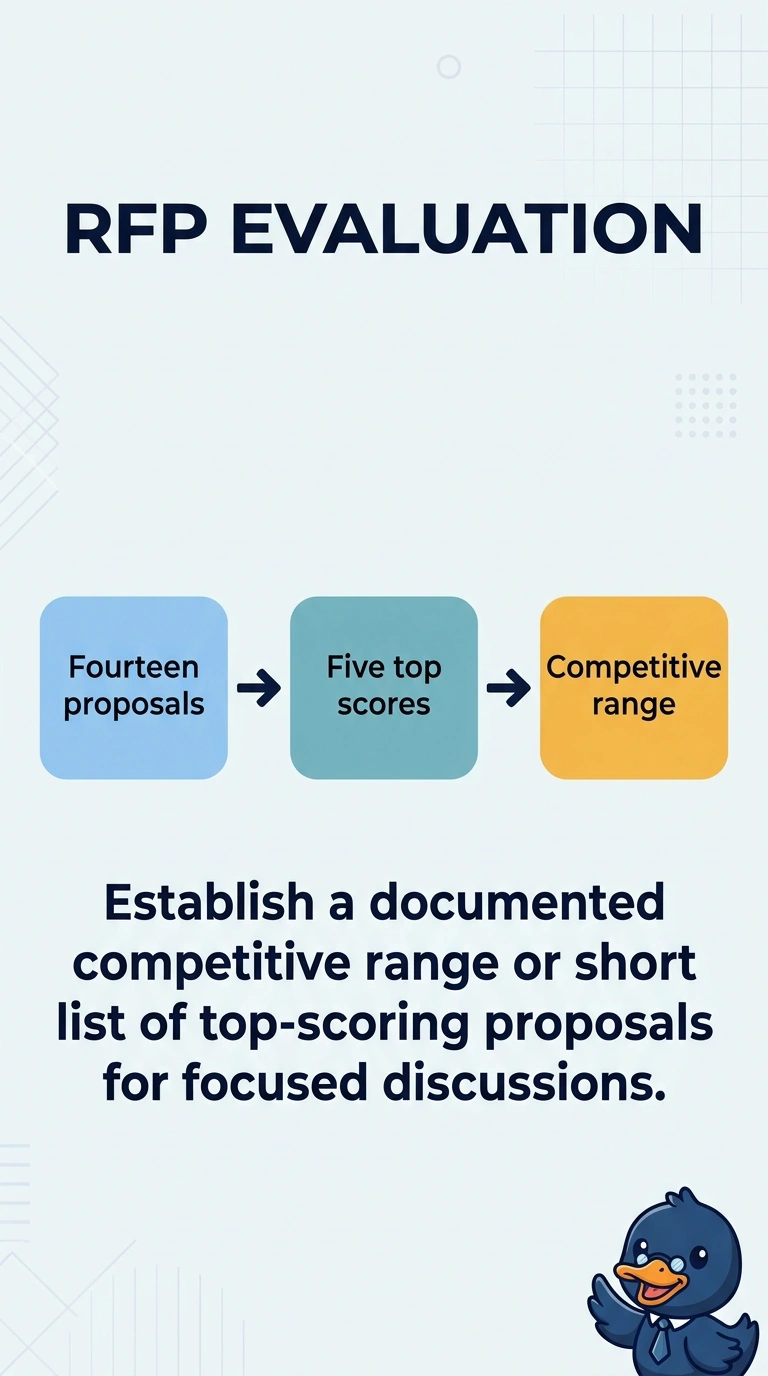
Shortlisting in an RFP is like narrowing fourteen job applicants down to the finalists who actually meet the bar before scheduling interviews. The trap is wasting weeks interviewing non-viable vendors—or skipping interviews altogether when discussions could clarify key risks. Set a documented competitive range or short list so you focus your committee on true contenders.
Full Explanation
In complex Request for Proposals evaluations, establishing a competitive range lets the agency concentrate discussions, clarifications, and demonstrations on proposals that have a reasonable chance of selection. Choosing to Establish a documented competitive range or short list of the top-scoring proposals for focused discussions balances administrative efficiency with fair, defensible competition. By contrast, choosing to Invite all fourteen proposers to full-day live demonstrations wastes committee and vendor resources on proposals that cannot realistically win. Opting to Cancel the RFP and issue an Invitation for Bids using the same specifications improperly abandons a viable negotiated procurement and imposes a price-only award method unsuited to complex technical mapping. Deciding to Select the highest-scoring initial proposal because initial scores are final once evaluation ends misstates the process, since initial scores support further discussions and best-and-final offers that can change rankings and improve value. As a caveat, the competitive range cutoff must follow the solicitation's published procedures and reflect a natural, objective break in scores rather than an arbitrary headcount. As an operational check, record the written competitive-range determination and issue prompt written notices to excluded offerors explaining the basis for their exclusion.
Prefer to study offline? Printable PDF study book + test engine ($7.50, unofficial). These questions stay free here.