
A county transportation department opens sealed bids under a formal Invitation for Bids for a bridge painting project. The apparent lowest responsive and responsible bidder submitted a required 5 percent bid bond, but after receiving the notice of award, the contractor notifies the buyer that it refuses to sign the contract because its estimator misjudged material costs and wants to walk away without penalty. Which action should the buyer take?
Select an answer to reveal the explanation.
Short Explanation
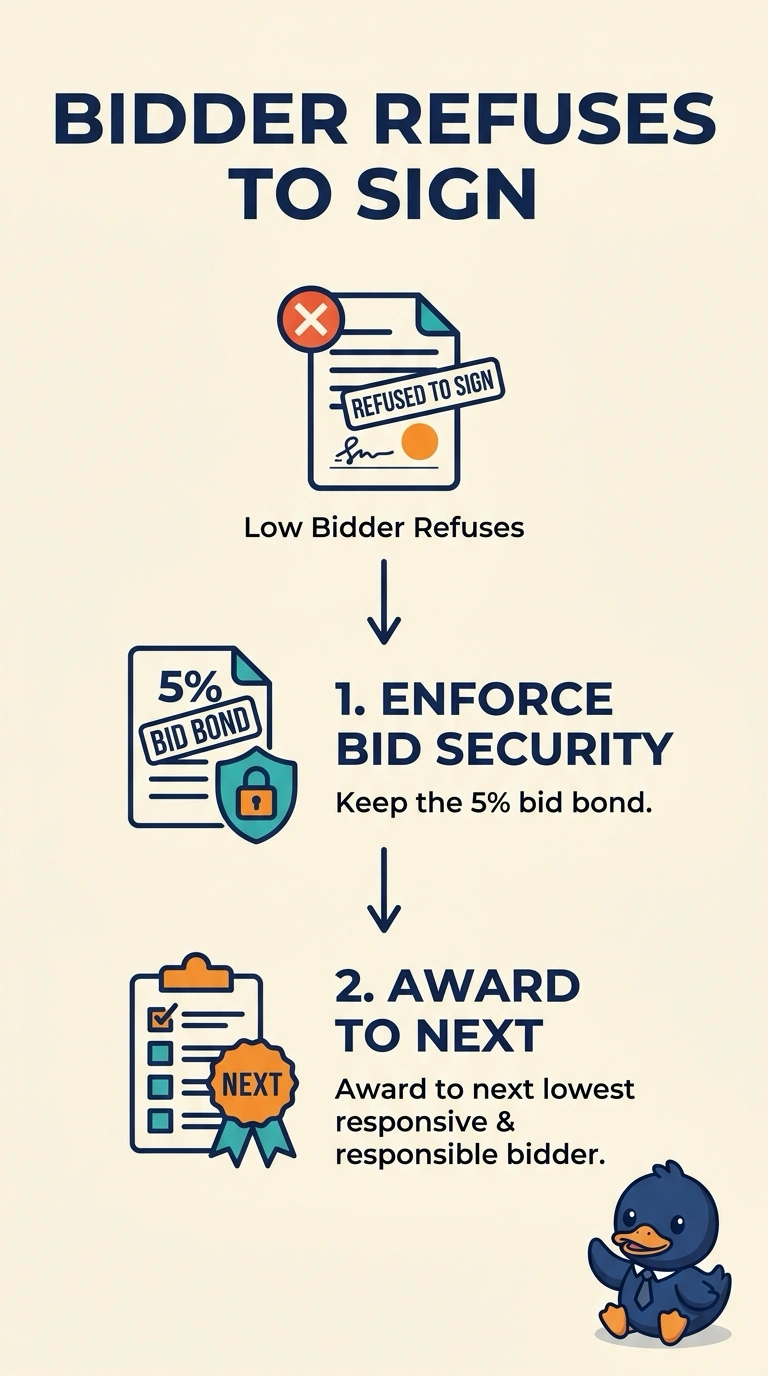
A bid bond is your agency's safety net when a winning bidder gets cold feet after award. While a buyer might feel tempted to negotiate a higher price or let the contractor walk away penalty-free, doing either breaks sealed-bid fairness and leaves taxpayers absorbing the risk. Instead, you hold the contractor to its bid security and move to the next lowest responsive, responsible bidder.
Full Explanation
When a winning bidder refuses to execute a contract after award because of a pricing misjudgment, the proper action is "Enforce the bid security and award to the next lowest responsive, responsible bidder". Bid security protects the public agency against the added cost and delay caused by a bidder failing to honor a binding offer, while moving to the next qualified bidder preserves competitive award momentum without restarting the procurement. Choosing to "Allow the contractor to withdraw without penalty and re-advertise the solicitation" treats a judgment error in cost estimating like a verifiable pre-award clerical mistake and forfeits the financial protection the bid bond was required to provide. Attempting to "Negotiate a price increase with the contractor to cover its underestimated material costs" is improper in sealed bidding because it alters the bid price after competition has closed and treats rival bidders unfairly. Trying to "Convert the solicitation to a Request for Proposals and invite all original bidders" delays award and abandons the sealed-bid method even though clear specifications and valid bids already exist. As a caveat, exact forfeiture amounts—such as recovering the price difference up to the bond face value—depend on state statute, local ordinance, and bond terms. Before taking action, verify the bid bond's validity and expiration date with legal counsel and confirm the next bidder's responsibility and willingness to hold its bid price.
Prefer to study offline? Printable PDF study book + test engine ($7.50, unofficial). These questions stay free here.