
During a public bid opening for a county's annual aggregate stone Invitation for Bids, the buyer discovers that the lowest-priced bid package contains a valid bid bond and complete unit pricing, but the signature line on the bid form is blank. Under sealed-bid responsiveness principles, how should the buyer classify this bid?
Select an answer to reveal the explanation.
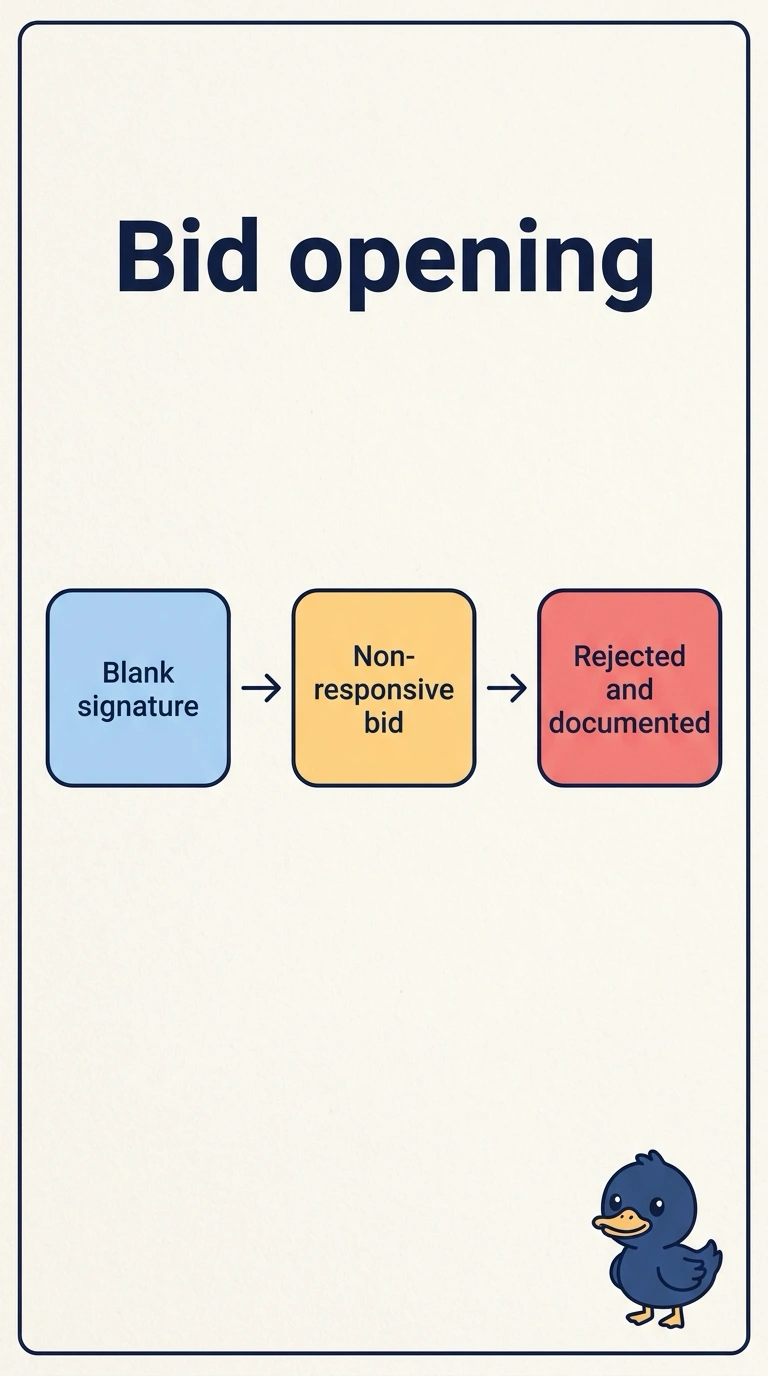
Short Explanation
You protect fairness by treating a missing signature as material. You should reject the bid as non-responsive and document it, because a bond does not cure the lack of binding intent.
Full Explanation
In sealed bidding, responsiveness is judged at opening and requires conformity in all material respects. A missing signature on the bid form is a material defect because the signature evidences binding intent to be bound, and a bid bond does not cure that defect, so rejecting as non-responsive and documenting it upholds competitive integrity, because allowing a bidder to decide after seeing competitors' prices whether to sign creates an unfair option to walk away. Accepting as a minor informality because the attached bid bond demonstrates intent fails because intent shown elsewhere does not supply the binding commitment that a signed offer provides and cannot be furnished after opening. Allowing a post-opening signature to obtain the lowest price gives one bidder an advantage denied to others and undermines equal treatment. Holding as conditionally responsible pending an interview confuses bidder responsibility with bid responsiveness. Materiality turns on whether waiver affects price, quantity, quality, delivery, or legal obligation. Record the missing signature on the bid tabulation and retain the rejected form in the file to preserve the audit trail.
Prefer to study offline? Printable PDF study book + test engine ($7.50, unofficial). These questions stay free here.