
While tabulating unit-price bids for a municipal sewer rehabilitation project, a buyer notices that the apparent low bidder priced early mobilization and excavation items far above market rates while pricing later pipe-lining items at one cent per foot. Which sourcing action should the buyer take?
Select an answer to reveal the explanation.
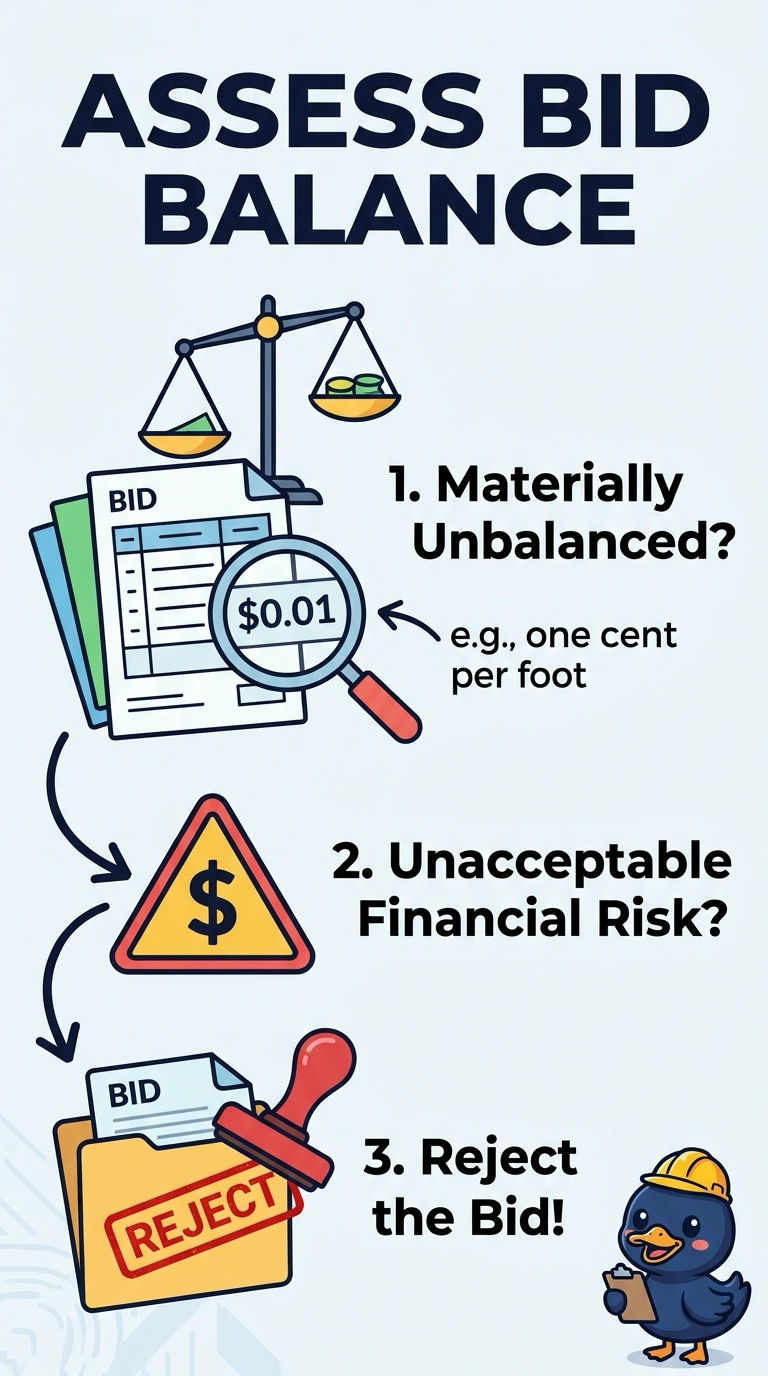
Short Explanation
Watch out when a bidder front-loads early work with sky-high prices and prices later items at a penny—that is a classic unbalanced bid. You could end up overpaying early in the project if quantities change or the contractor walks away before finishing. The trap is blindly awarding on the bottom-line total or letting the bidder shuffle prices after opening.
Full Explanation
In unit-price solicitations, a mathematically unbalanced bid places inflated prices on some line items and nominal prices on others, which becomes materially unbalanced if it creates reasonable doubt that the bid will yield the lowest ultimate cost or represents an advance payment risk. Choosing to Evaluate whether the bid is materially unbalanced and reject it if it poses unacceptable financial risk protects the agency from paying inflated amounts on early or increased-quantity items. Choosing to Award the contract to the apparent low bidder after confirming its extended totals are mathematically correct overlooks quantity-variation and front-loading risks that can inflate actual contract spending. Attempting to Allow the bidder to shift dollar amounts between line items after bid opening to balance prices violates sealed-bid rules against post-opening price negotiation or modification. Deciding to Eliminate the low-priced line items from the contract scope before executing the award alters the competitive basis of the solicitation and deprives other bidders of equal competition. Keep in mind that not every mathematically unbalanced bid is automatically rejected; rejection requires a documented determination of material risk under applicable rules. As an operational check, compare each line item to the independent estimate and review quantity certainty before recommending award.
Prefer to study offline? Printable PDF study book + test engine ($7.50, unofficial). These questions stay free here.