
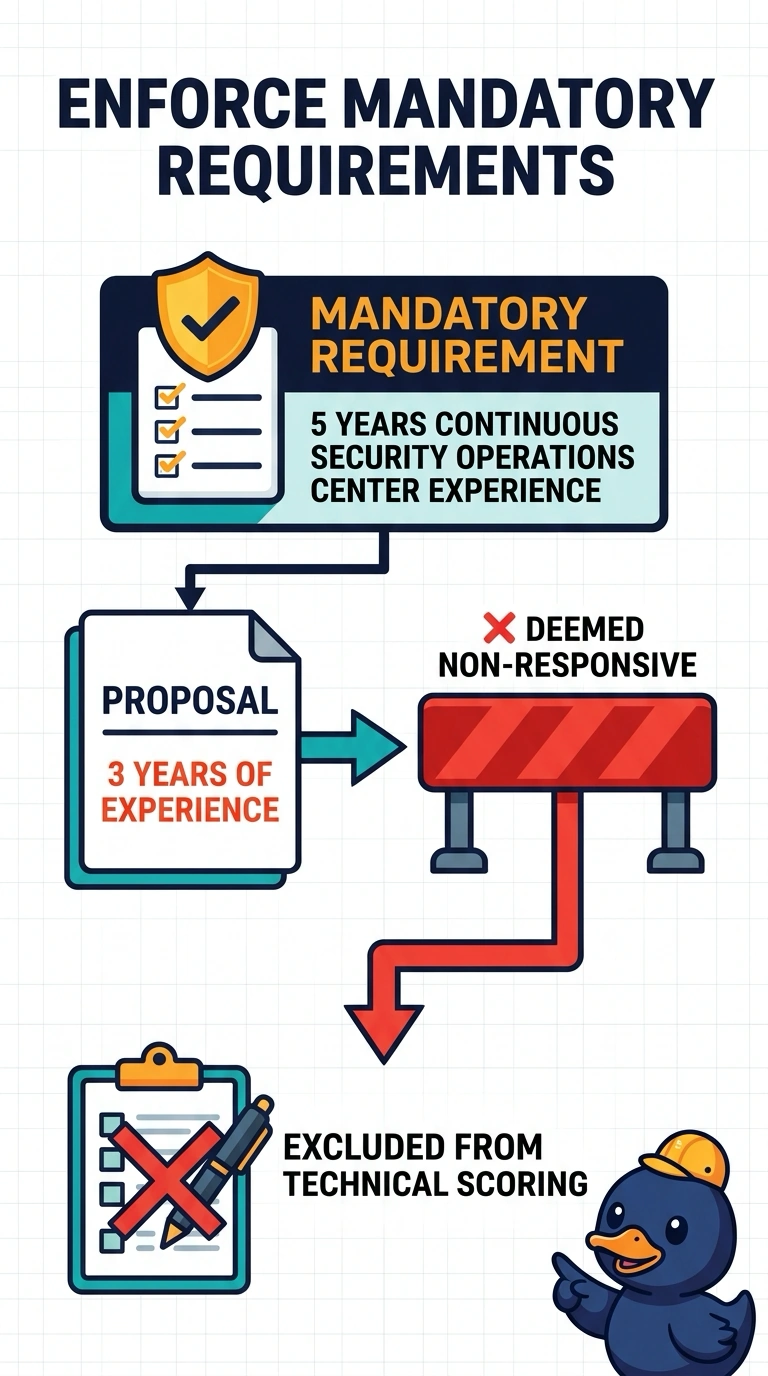
A state agency issues a Request for Proposals for managed cybersecurity monitoring that lists five years of continuous security operations center experience as a mandatory pass-fail minimum requirement. During initial compliance screening, the buyer finds that a well-known vendor has only three years of experience, and a program manager asks the evaluation committee to score the proposal anyway with a slight point penalty. How should the buyer handle this proposal?
Select an answer to reveal the explanation.
Short Explanation
Think of mandatory pass-fail criteria as the height bar at a roller coaster: if a rider does not clear the bar, you do not let them on and just deduct points from the ride. The trap is letting a strong brand tempt your committee into treating a threshold requirement like a scored preference. Once a solicitation sets a mandatory minimum, fairness to every other proposer requires excluding any submission that misses it.
Full Explanation
In public procurement, mandatory pass-fail requirements act as an objective threshold gate before qualitative evaluation begins, so the buyer must Deem the proposal non-responsive to the mandatory requirements and exclude it from technical scoring. Enforcing published minimum qualifications protects equal treatment because other potential vendors who lacked five years of experience may have chosen not to invest time in submitting a proposal. Choosing to Allow the committee to score the proposal and apply a discretionary point deduction for the missing experience improperly converts a binary eligibility rule into an unannounced weighted factor, creating strong grounds for a sustained bid protest. To Hold the proposal in reserve and score it only if the fully compliant proposers exceed the project budget is equally flawed, because budget pressure does not authorize evaluating a non-compliant submission; if compliant offers are unaffordable, the agency must cancel and re-solicit with revised requirements. Similarly, to Allow the proposer to substitute a subcontractor's experience after closing to meet the five-year threshold would grant an unfair post-deadline material modification unavailable to competitors. As a caveat, agencies should limit pass-fail gates to true baseline necessities so competition is not needlessly restricted. Operationally, the buyer should log a written responsiveness screening checklist before releasing proposals to evaluators.
Prefer to study offline? Printable PDF study book + test engine ($7.50, unofficial). These questions stay free here.