
A county library system opens sealed bids under a formal Invitation for Bids for roof replacements, and every responsive, responsible bid exceeds the approved capital budget by twenty-five percent. Under standard public procurement rules, what should the buyer do?
Select an answer to reveal the explanation.
Short Explanation
Think of a sealed bid like a locked envelope: once it opens over budget, you cannot quietly haggle behind closed doors. The trap is trying to negotiate an Invitation for Bids privately or award without funding instead of canceling and re-soliciting fairly.
Full Explanation
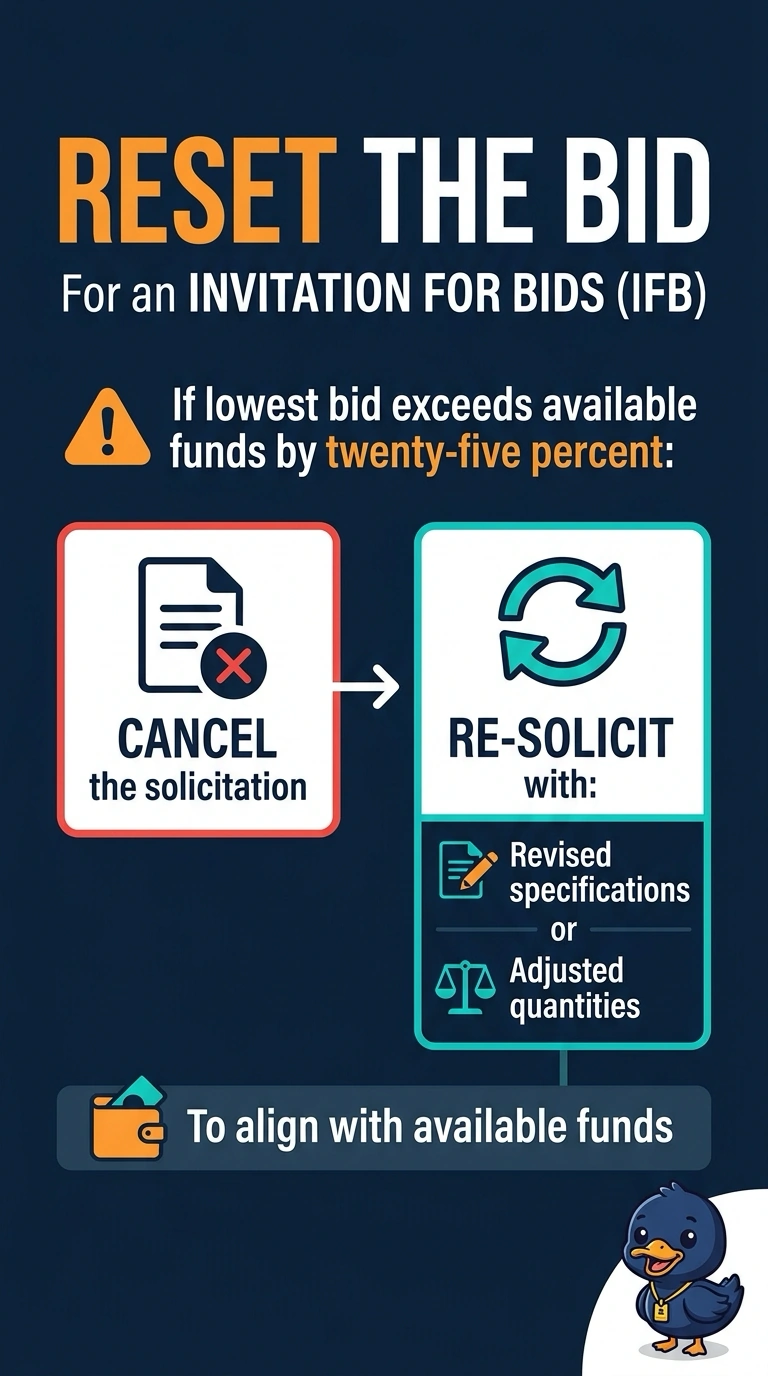
Selecting to Cancel the solicitation and re-solicit with revised specifications or adjusted quantities to align with available funds preserves the integrity of sealed bidding and respects legislative budget authority. Under an Invitation for Bids, award is based strictly on price among responsive, responsible bidders, so post-opening price negotiation would violate equal treatment and invite protests. Choosing to Negotiate price reductions privately with the lowest bidder while keeping the original Invitation for Bids open undermines competitive fairness because other bidders had no chance to price a reduced scope. Moving forward to Award the contract to the lowest bidder anyway and transfer funds from unrelated capital accounts later risks creating an unauthorized financial obligation if appropriations are unavailable. Trying to Split the original scope into smaller purchase orders below the formal sealed-bid threshold constitutes prohibited bid splitting designed to evade competitive rules. As a caveat, some jurisdictions allow limited negotiation with a sole or lowest bidder only under specific statutory conditions, so buyers must verify local code first. For an operational check, confirm written cancellation notices are posted to all bidders and document budget-realignment approvals before re-issuing.
Prefer to study offline? Printable PDF study book + test engine ($7.50, unofficial). These questions stay free here.