
While reviewing two years of regional highway maintenance bids, a state buyer notices that three paving contractors consistently bid only in their own adjacent counties and abruptly decline to quote jobs across county lines, even when capacity is available. Which compliance action should the buyer take?
Select an answer to reveal the explanation.
Short Explanation
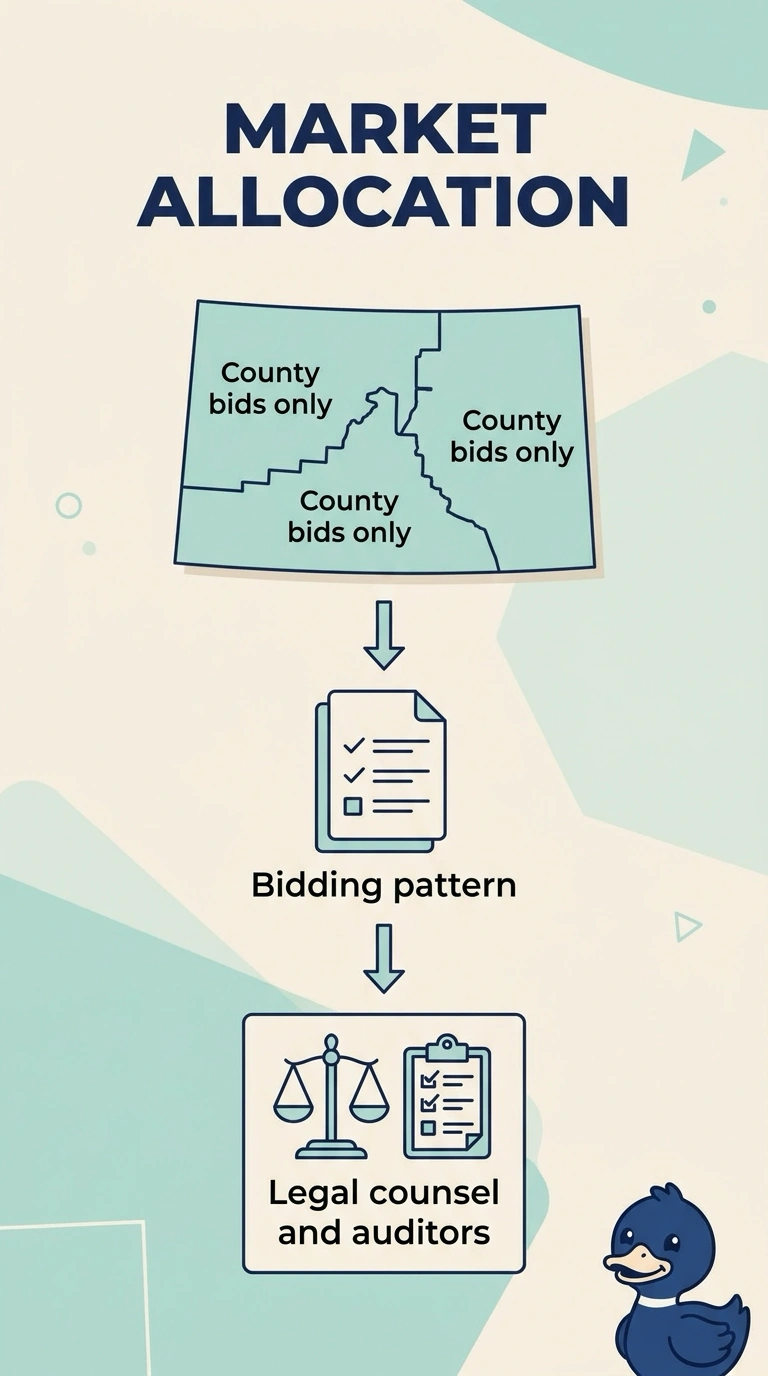
When competitors draw invisible lines on a map and never cross them, that may not be coincidence—it can signal market allocation. You should preserve the bidding pattern and escalate it to legal counsel and auditors; arranging future bids around the suspected territories or confronting the contractors together could worsen the risk, while ignoring the pattern overlooks a serious red flag.
Full Explanation
Territorial market allocation—where competing firms agree not to pursue work in one another’s geographic zones—violates antitrust principles and deprives taxpayers of genuine price competition. Documenting the bidding pattern and escalating suspected market allocation to legal counsel and auditors preserves an objective record and lets authorized reviewers assess whether collusion occurred. Dividing future solicitations into smaller regional lots so each contractor can keep its preferred territory would institutionalize the suspected division instead of challenging it. Calling the three contractors together for an informal meeting risks alerting potential wrongdoers and giving them an opportunity to coordinate explanations. Ignoring the pattern because each contractor is legally free to choose where it submits sealed bids overlooks a major red flag: repeated, reciprocal avoidance among capable firms across two years. A buyer should detect and escalate indicators, not confront vendors or make a final legal determination of guilt. As a practical check, compile bid tabulations, plan-holder lists, and non-bidder logs across multiple cycles before forwarding the records to legal counsel and internal audit.
Prefer to study offline? Printable PDF study book + test engine ($7.50, unofficial). These questions stay free here.