
After sealed bids are opened for a municipal paving contract, the apparent low bidder withdraws citing a minor scheduling conflict, and the second-lowest bidder—whose price is 18 percent higher—immediately names the withdrawing firm as its primary paving subcontractor. What should the buyer do?
Select an answer to reveal the explanation.
Short Explanation
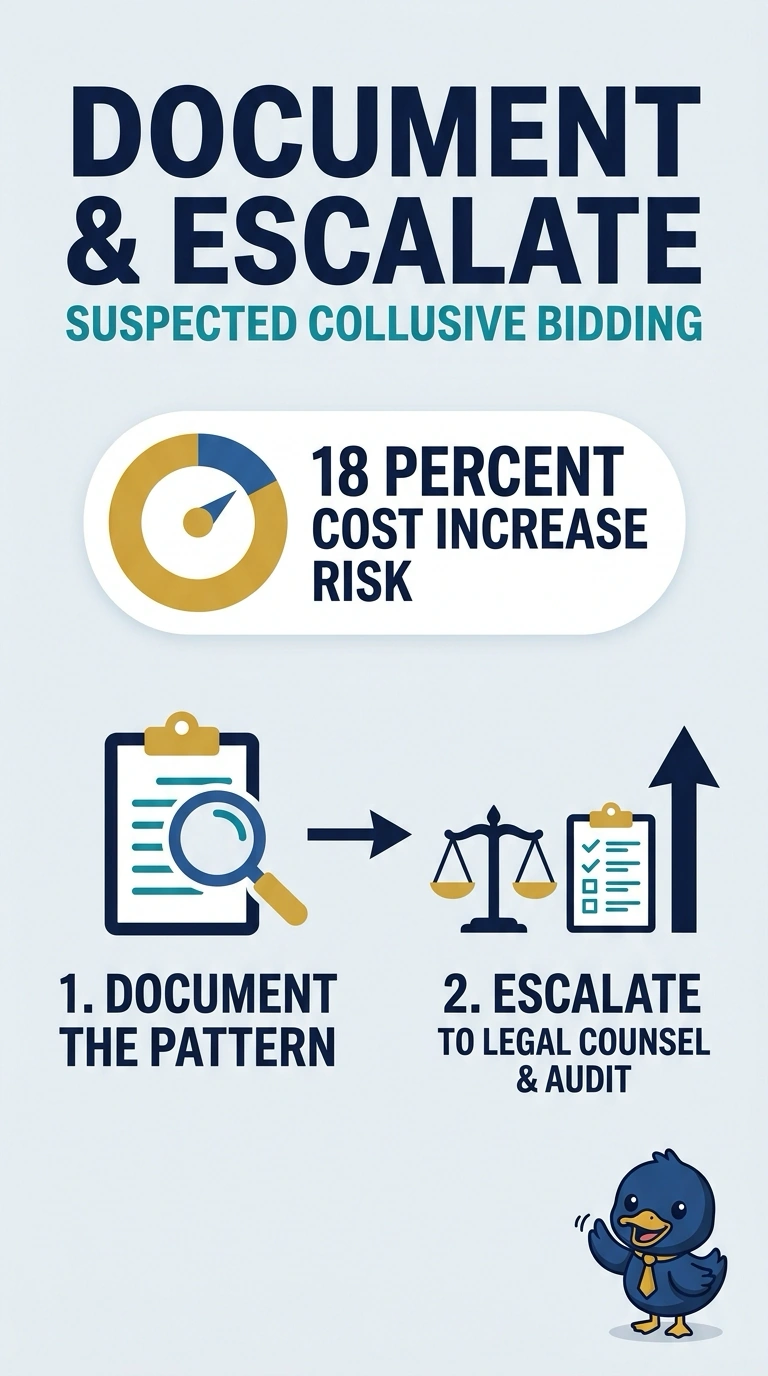
When the low bidder bows out and then reappears as the higher bidder’s subcontractor, your antitrust radar should be flashing red. You should preserve the record and escalate the pattern to legal counsel and internal audit rather than approve the subcontract or award on price verification alone. The trap is treating a suspicious withdrawal as routine business when it may be a bid-suppression scheme.
Full Explanation
A low bidder stepping aside only to become a subcontractor for a higher-priced competitor is a recognized red flag for bid suppression or collusive subcontracting. Documenting the pattern and escalating it to legal counsel and audit allows trained investigators to assess potential antitrust violations and decide whether to refer the matter to state or federal enforcement authorities. Approving the subcontract immediately because it preserves local workforce capacity ignores a serious integrity risk and could implicate the municipality in an unlawful market-allocation scheme. Barring the withdrawing bidder from submitting quotes for twelve months skips due-process debarment procedures and may alert the parties before evidence is secured. Awarding the contract to the second-lowest bidder after only standard price verification risks locking taxpayers into an artificially inflated price. One caveat: do not accuse a vendor of collusion directly or conduct independent sting operations; preserve records quietly and let legal counsel direct next steps. As a practical check, retain all bid envelopes, withdrawal letters, subcontractor listings, and timestamped correspondence in a restricted audit file.
Prefer to study offline? Printable PDF study book + test engine ($7.50, unofficial). These questions stay free here.