
Two days after a state agency posts a notice of intent to award a fleet maintenance contract, an unsuccessful bidder files a timely written protest alleging an evaluation scoring error. What should the buyer do first?
Select an answer to reveal the explanation.
Short Explanation
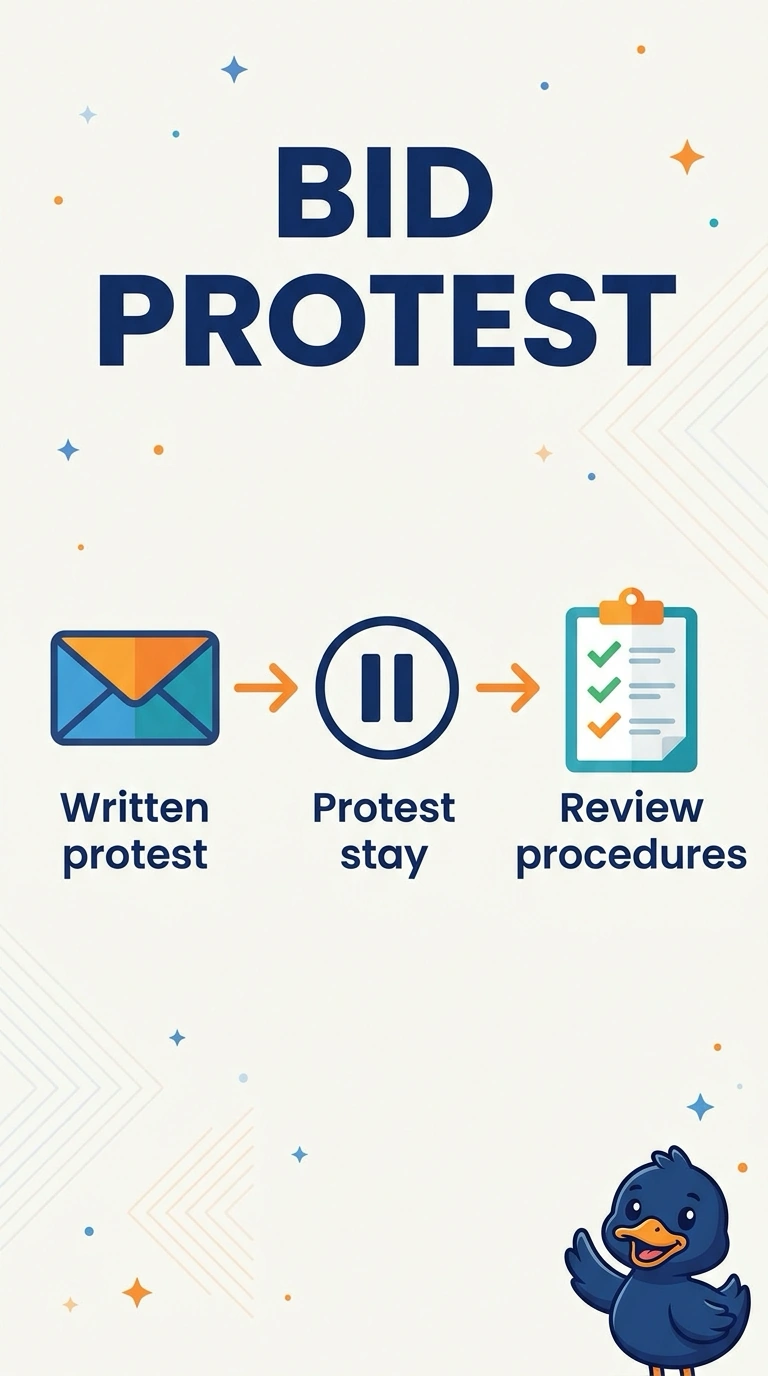
When a timely bid protest lands on your desk, hitting pause is how you protect the integrity of the whole procurement. The trap is rushing to sign the contract anyway, which can turn a fixable scoring review into a costly legal mess. Follow your agency's protest stay and review process before taking the next step.
Full Explanation
When a timely protest is filed, public procurement codes require the buyer to Follow statutory protest stay and review procedures—typically pausing contract execution while the procurement officer or designated authority reviews the record and issues a written determination. Rushing to Sign the contract immediately to lock in the award violates standard automatic-stay rules in most jurisdictions and risks invalidating the contract or incurring legal remedies. Choosing to Proceed to signature and answer the scoring claim in the protest response without a stay fails for the same reason, because the stay must precede any merits review and execution cannot continue while the protest is pending. Offering the protester a meeting to re-trade the scores before the agency writes a decision improperly negotiates evaluated criteria outside the formal review process and undermines impartial, record-based decision-making. Note that many procurement codes allow an agency head to override a protest stay only upon a written determination that urgent public necessity requires proceeding without delay. As an operational check, log the protest receipt timestamp, place an administrative hold on award execution, and assemble the complete evaluation record for review by the procurement officer and legal counsel.
Prefer to study offline? Printable PDF study book + test engine ($7.50, unofficial). These questions stay free here.