
While a city buyer is evaluating sealed proposals for a multi-year waste hauling contract, a submitting vendor delivers an expensive gift basket to the buyer's home with a note thanking them for considering the proposal. What should the buyer do?
Select an answer to reveal the explanation.
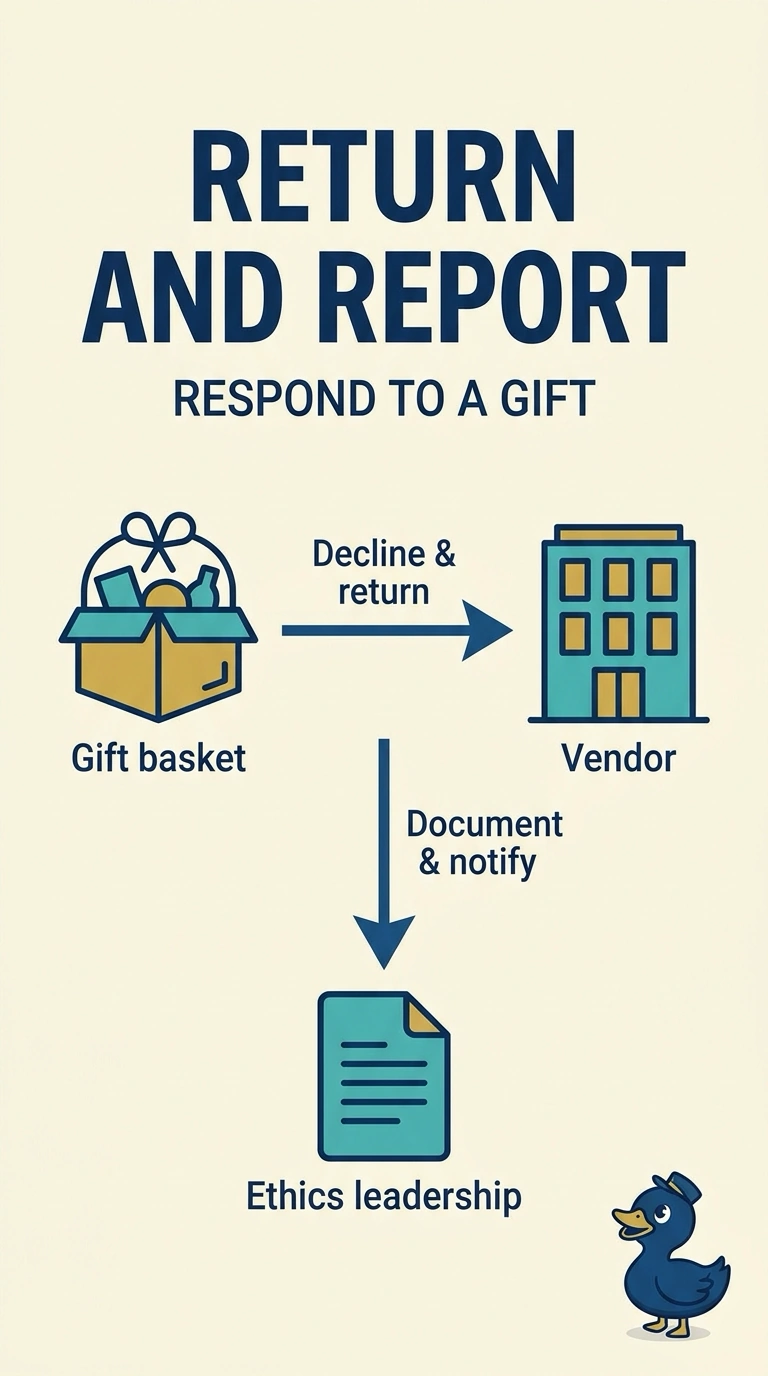
Short Explanation
You protect the integrity of an active evaluation when you decline the gift, return it, document what happened, and notify ethics leadership. A low value or sharing the basket with the committee does not make it harmless, and disqualifying the vendor without proper consultation skips due process.
Full Explanation
Public procurement ethics rules prohibit accepting gratuities that could influence, or appear to influence, an official procurement decision, especially during an active solicitation. Declining and returning the gift immediately, documenting the incident, and notifying ethics leadership protects both you and the integrity of the award while establishing a clear record for review. Keeping the gift basket because its estimated retail value falls below the city’s annual holiday limit still risks violating zero-tolerance or active-solicitation gratuity restrictions and creates a damaging conflict-of-interest appearance. Sharing the basket with the entire evaluation committee merely spreads the ethical compromise across the panel rather than eliminating it. Disqualifying the vendor’s proposal on the spot without consulting legal counsel or the supervisor bypasses due process and formal determination procedures that belong to authorized officials. As an exam caveat, if returning a perishable item is impractical, agency policy may require donating it to a public charity with a written receipt. As a practical check, log the delivery details, send the vendor a written refusal notice, and escalate the report to your procurement director and ethics officer.
Prefer to study offline? Printable PDF study book + test engine ($7.50, unofficial). These questions stay free here.