
A municipal utility is planning a multi-year custom billing software implementation and wants a payment structure that protects public funds if the vendor falls behind schedule. Which pre-solicitation financial approach is most appropriate?
Select an answer to reveal the explanation.
Short Explanation
Paying for custom software before you see working results is like paying for a whole house before the foundation is poured. Tying payments to verified milestones protects your agency’s cash and helps you avoid upfront lump sums.
Full Explanation
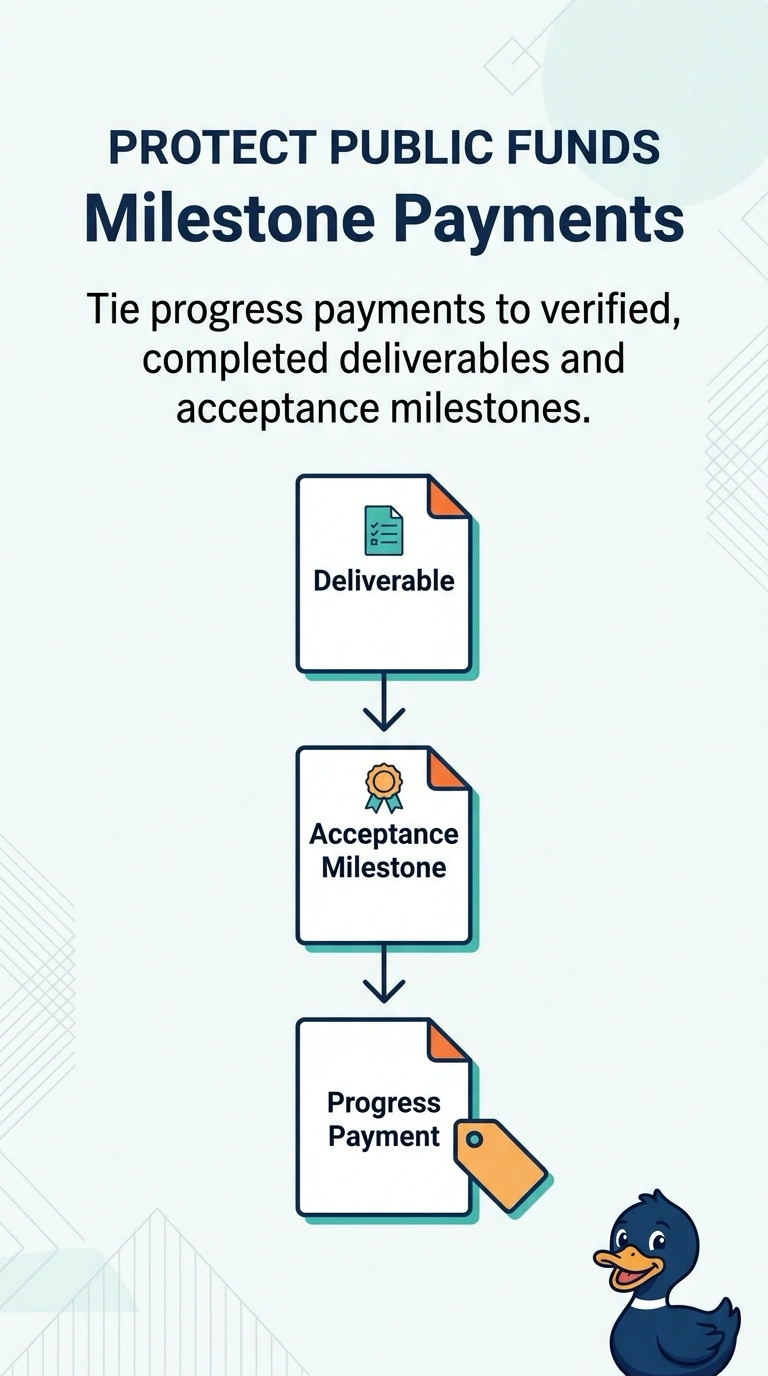
Tying progress payments to verified, completed deliverables and acceptance milestones aligns vendor cash flow with tangible progress, so public funds are disbursed only for accepted value. Milestone-based billing creates clear accountability and preserves your financial leverage if performance slips. Paying half of the multi-year contract price at signing to simplify accounts payable exposes the utility to severe financial loss if the vendor defaults or becomes insolvent mid-project. Paying each milestone when the vendor submits its invoice releases funds before acceptance, which surrenders leverage to require corrections and leaves the agency chasing rework after cash is gone. Holding back 90 percent of each payment until final acceptance of the whole system shifts unsustainable financing burdens onto suppliers, discouraging qualified firms from bidding or inflating bid prices. As a caveat, if your project requires modest initial software licensing fees, clearly itemize and cap them rather than bundling them into vague mobilization charges. As a practical check, confirm that each solicitation milestone defines objective acceptance criteria and designates who signs off before finance releases payment.
Prefer to study offline? Printable PDF study book + test engine ($7.50, unofficial). These questions stay free here.