
A county fleet maintenance warehouse experiences frequent stockouts on high-turnover hydraulic filters when supplier lead times fluctuate, yet budget rules prohibit overfilling shelves with slow-moving parts. Which inventory planning approach should the buyer and warehouse manager use?
Select an answer to reveal the explanation.
Short Explanation
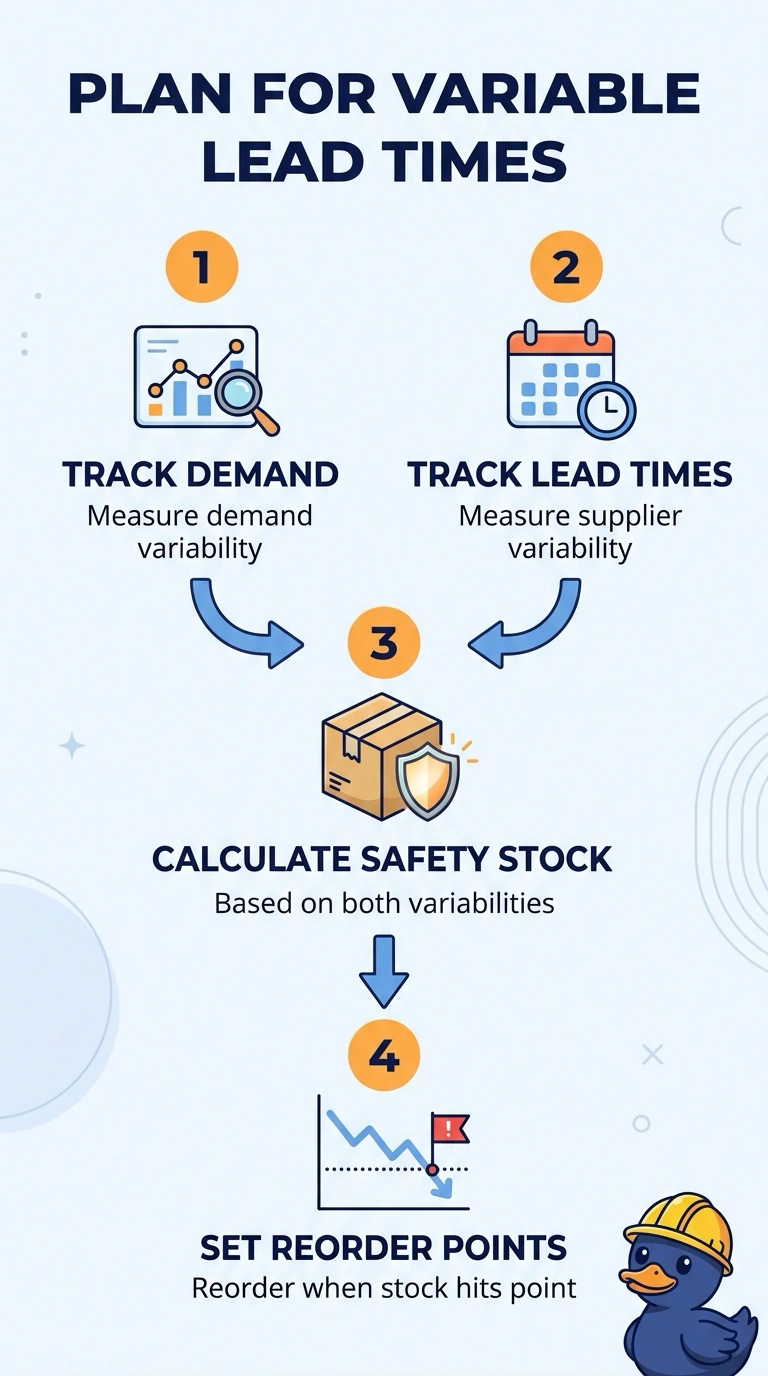
Running a parts warehouse is a balancing act between empty bins that sideline trucks and overstuffed shelves that tie up taxpayer cash. You need a systematic trigger that accounts for both normal usage and unpredictable shipping delays. The trap is swinging to extremes—either buying a full year's stock upfront or waiting until the bin hits zero.
Full Explanation
Effective inventory management balances carrying costs against the operational cost of stockouts. Choosing to Establish reorder points with calculated safety stock based on demand and lead-time variability triggers replenishment early enough to cover average consumption during transit plus a statistical buffer for supplier delays. Deciding to Order a six-month supply of each filter type at the start of each half-year inflates storage, obsolescence, and working-capital costs while violating space and budget constraints and still ignoring variability in usage and delivery. Choosing to Place orders when bin counts fall to average demand over average lead time, with no safety buffer covers only average conditions, so any spike in demand or delay in lead time causes stockouts on high-turnover filters. Trying to Set identical fixed monthly order quantities for all parts based on last year's average usage ignores differences in turnover and seasonal fleet usage, causing shortages during peak periods and excess inventory during slow periods. Remember that safety stock formulas should be adjusted when supplier lead times or fleet sizes change. As an operational check, review historical consumption and vendor delivery logs quarterly to recalibrate reorder points in the inventory system.
Prefer to study offline? Printable PDF study book + test engine ($7.50, unofficial). These questions stay free here.