
After a spring flood damages underground electrical conduits at a county wastewater plant, engineers cannot determine the full extent of repairs until excavation begins, yet restoration must start right away. Which contract pricing structure is most appropriate during pre-solicitation planning?
Select an answer to reveal the explanation.
Short Explanation
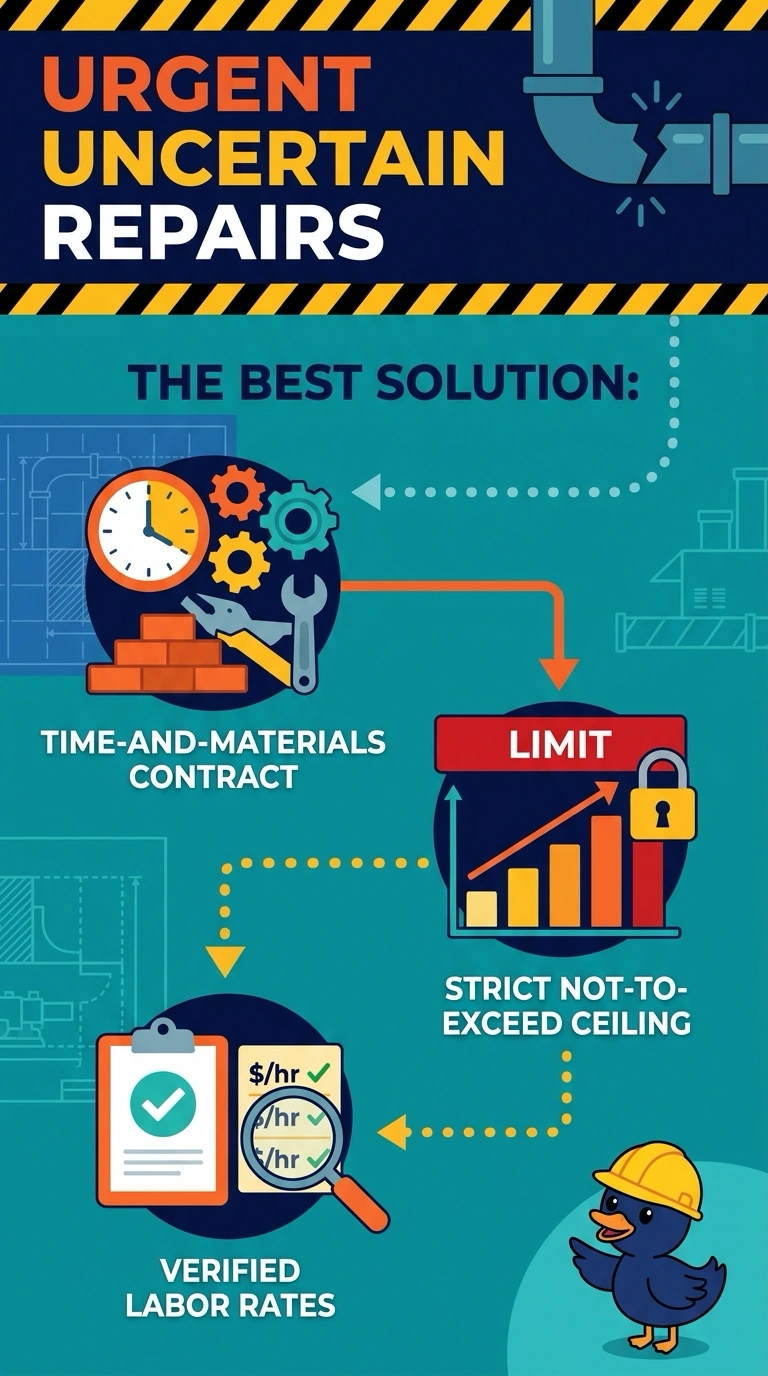
When buried damage is still unknown, you can’t expect an honest lump-sum price without contractors allowing for the risk. A time-and-materials contract with verified rates and a strict spending ceiling lets you start repairs while limiting costs. Avoid uncapped spending, unapproved hourly rates, and cost-plus-percentage-of-cost pricing.
Full Explanation
Contract pricing should match how clearly the work can be defined before award. A time-and-materials contract with a strict not-to-exceed ceiling and verified labor rates fits urgent repairs whose extent and duration cannot be estimated until excavation begins: it establishes labor rates in advance, pays actual material costs, and caps the agency’s exposure. A firm-fixed-price lump sum awarded before inspection would force bidders to price in large contingencies or could lead to change-order disputes when hidden damage is uncovered. An open-ended cost-plus-percentage-of-cost contract with no maximum funding limit is widely prohibited in public procurement, including under federal grant rules, because it rewards greater spending. A blanket agreement that lets the contractor invoice its standard hourly rates, with rates reviewed after the work is complete gives up basic cost control and auditability because rates are not approved in advance. The caveat is that time-and-materials contracts need heightened administration because contractors have limited incentive to work efficiently. As a practical check, document why the listed alternatives are unsuitable, require daily on-site sign-offs for labor and materials, and monitor spending against the ceiling.
Prefer to study offline? Printable PDF study book + test engine ($7.50, unofficial). These questions stay free here.