
A public school district replaces 12 aging maintenance vans that still hold resale value after removing district decals and fleet trackers. Which surplus disposition method best maximizes financial recovery while maintaining public transparency?
Select an answer to reveal the explanation.
Short Explanation
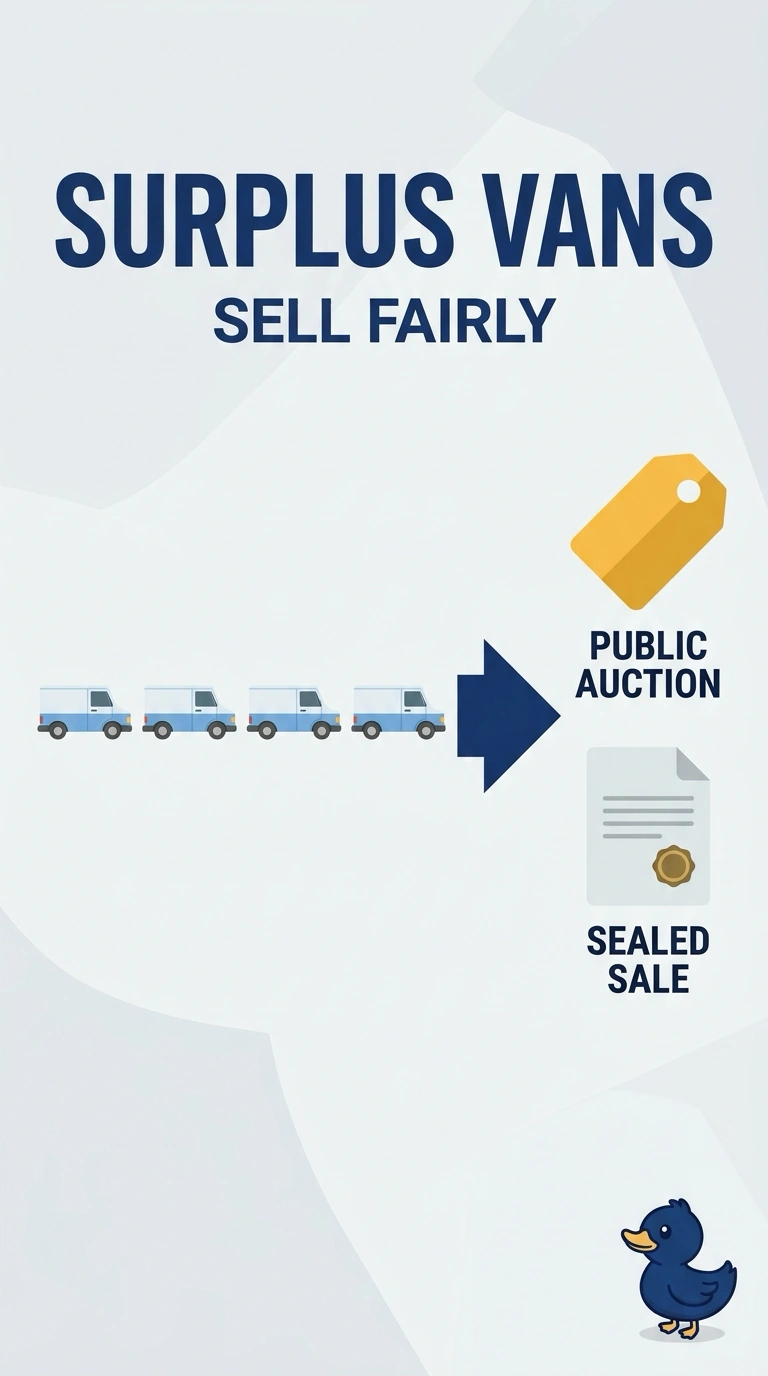
You’ll protect public trust and recover fair value by choosing a competitive public auction or sealed surplus sale open to eligible buyers. A fixed-price employee purchase, scrap sale, or donation can undermine fair pricing, waste usable value, or forgo recovery while still needing surplus approval.
Full Explanation
For usable public vehicles with resale value, conduct a competitive public auction or sealed surplus sale open to all eligible buyers. Advertising the sale and inviting eligible buyers to compete encourages broad participation, lets bidding establish a market price, and creates a transparent record of taxpayer-property disposition. Allowing district employees to purchase the vans at a fixed internal appraisal limits competition and can create an appearance of preferential access; an appraisal alone does not provide the same open price discovery. Selling the entire fleet as scrap metal ignores the vehicles’ remaining resale value and is likely to recover less than a sale to buyers seeking usable vans. Donating the vans to a local athletic booster club in the neighboring school district does not maximize financial recovery and still needs proper surplus authority and documented approval. Exam caveat: confirm the board has declared the vans surplus and check applicable disposal rules before advertising, since approval requirements vary. Practical check: reconcile asset tags, title transfers, and auction proceeds with the fixed-asset ledger before closing fleet records.
Prefer to study offline? Printable PDF study book + test engine ($7.50, unofficial). These questions stay free here.